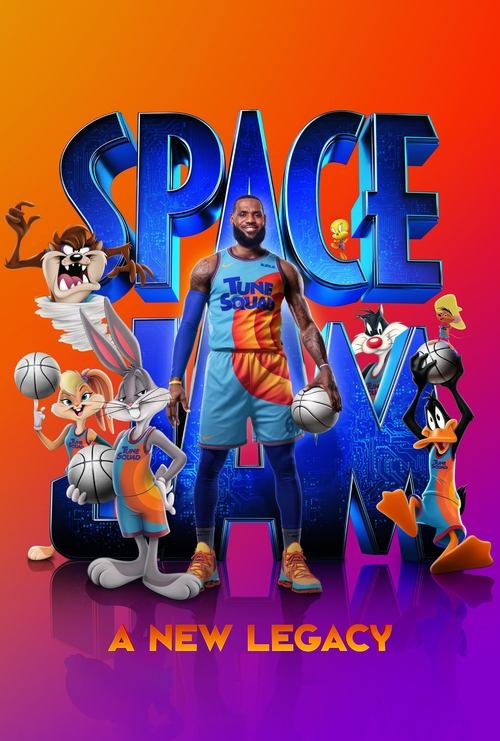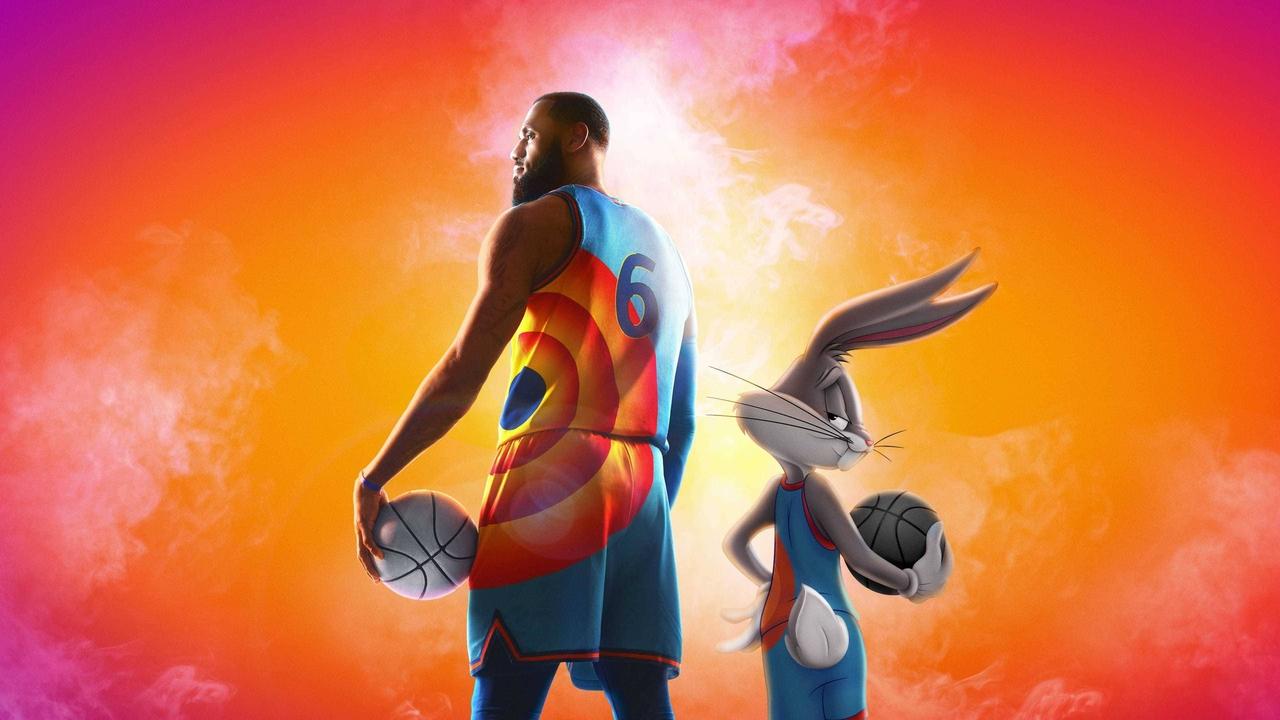
The Algorithm Has No Jump ShotThere’s a strange, hollow echo at the center of *Space Jam: A New Legacy*. You can feel it in the way the colors seem too bright, almost radioactive, and the way the Looney Tunes—those icons of anarchic, pencil-and-paper kineticism—have been smoothed over into something that looks like it was rendered by a marketing department rather than animated by hand. It’s a sequel, though calling it that feels like a reach. It’s more of a corporate rebrand, a two-hour commercial for a studio’s intellectual property rights, disguised as a basketball movie.

When the film transports LeBron James into the "Serververse"—a digital holding pen for every character Warner Bros. owns—the movie stops being about anything resembling a coherent story. Instead, it becomes a scavenger hunt. I found myself distracted, not by the stakes of the basketball game, but by the background. Is that *The Matrix*? Yes. Is that a *Game of Thrones* dragon? Sure. The film is obsessed with the idea of synergy, of stacking brands like blocks, but it forgets that blocks are just inert plastic. They don’t hold emotion. They don’t carry the messy, unpredictable texture of a real life.
The central friction is supposed to be the relationship between LeBron and his son, Dom, played by Cedric Joe. It’s a classic "follow your dreams vs. fulfill your destiny" narrative, but it's draped in so much digital noise that the human stakes feel like an afterthought. LeBron, to his credit, plays himself with a kind of weary resignation. He’s not a professional actor, and that’s fine; there’s a stiff, literal-minded quality to his performance that actually works when he’s reacting to Bugs Bunny. He looks like a man who genuinely cannot believe he’s being asked to talk to a rabbit. But the script gives him so little to work with, forcing him to spout bromides about "being yourself" that sound like they were pulled from a generic inspirational poster.

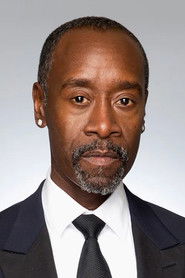
Then there’s Don Cheadle, who plays the rogue A.I. antagonist, Al-G Rhythm. Cheadle is a titan, an actor who usually finds the truth in the smallest flicker of a character’s eyes. Here, he’s having the time of his life, chewing through the scenery with a manic, purple-tinted energy that creates a weird, discordant reality. He’s the only thing in the movie that feels *alive*, which is ironic considering he’s playing an artificial intelligence. He understands that this is a cartoon, and he leans into the artifice. Meanwhile, the actual cartoons—Bugs, Daffy, Lola—have been reimagined in 3D. They look like high-end toys. Watching them move is like watching a familiar childhood memory get scrubbed clean by an algorithm. They’ve lost the jagged edges that made them funny.
There is a moment early on where the film almost finds its footing. It’s the transition into the animated world, where the visual language shifts from the "real" world to the hyper-stylized digital one. It’s technically polished, sure. But polish isn’t soul. As A.A. Dowd noted in *The A.V. Club*, "The movie feels less like a product than a commercial for the entire Warner Bros. library." He’s right, and that’s the tragedy of it.

I kept waiting for a moment of genuine anarchy—something that felt like the original *Looney Tunes* shorts, where physics was just a suggestion and violence was an art form. But the animation here is tethered to the logic of video games. Everything is predictable. Everything has a glowing HUD. The game itself, the climax of the film, feels like watching someone else play *NBA 2K* for two hours while you’re stuck on the couch, waiting for your turn.
Maybe that’s the point. We live in an era where movies are increasingly designed to be consumed rather than felt. *A New Legacy* isn't trying to be a film; it's trying to be an environment. It’s a sleek, shiny, hollow vessel. And honestly? I walked away from it feeling the exact same way I do after scrolling through a social media feed for too long—full of content, but entirely, and profoundly, hungry.