
Mel Gibson
Nick Marshall
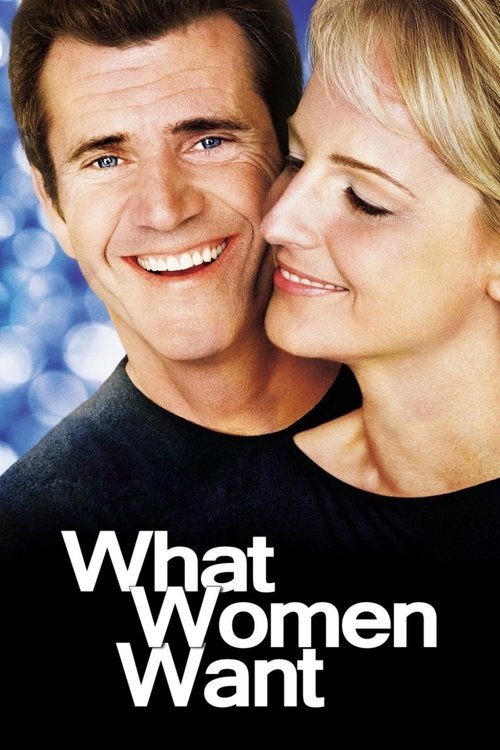
“He has the power to hear everything women are thinking. Finally... a man is listening.”
Advertising executive Nick Marshall is as cocky as they come, but what happens to a chauvinistic guy when he can suddenly hear what women are thinking? Nick gets passed over for a promotion, but after an accident enables him to hear women's thoughts, he puts his newfound talent to work against Darcy, his new boss, who seems to be infatuated with him.
Nancy Meyers’s What Women Want is, among other things, a movie about the fantasy of finally getting the joke. Not the setup of a joke, which Nick Marshall spends the first act missing entirely, but the private little punchline of other people’s inner lives — the one they keep from him, from each other, from the office, from the culture at large. I’d remembered it as a broad studio comedy, the kind built on a gimmick and a blue suit.
Watching it now, I was struck by how carefully it turns that gimmick into a social irritant. The miracle isn’t that Nick can hear women’s thoughts. It’s that the movie keeps asking whether he’s capable of listening once he can.
Meyers was already becoming a director of rooms: offices, kitchens, living spaces, places where class, gender, and desire get negotiated through furniture and posture. Here she takes the late-’90s corporate-rom-com machine and softens it just enough to let a real discomfort leak in. This is a reversal comedy, yes, and a hit one, but it’s also a film about a man who has made a career out of treating women as weather — something to be endured, predicted, manipulated — and is suddenly forced to encounter them as minds.
That’s the central joke, and also the central correction.
What I keep coming back to is the film’s sound design, which is doing far more than the premise strictly requires. The thoughts arrive in fragments, overlapping and impatient, as if the movie has cracked open the normal noise of a workplace and let the psycho-social static spill out. Not every line lands — some of the quips feel very 2000, in that aggressively schematic way studios used to write “wacky” — but the chorus effect is clever because it makes femininity feel less like a monolith than a swarm.
Women don’t think one thing. They think a hundred things at once, and most of those thoughts are practical, annoyed, self-protective, horny, tired, or all of the above. That’s truer than the movie may know.
Mel Gibson was, at this point, still carrying the afterimage of the charming rogue — the guy from Lethal Weapon, the romantic lead with a dangerous grin. Nick Marshall lets that persona curdle into smugness. Gibson works best when his face is slightly behind his own confidence, as if the body knows something the mouth hasn’t caught up to yet.
Movies
Related titles ranked by rating and popularity.