
Alec Baldwin
Adam
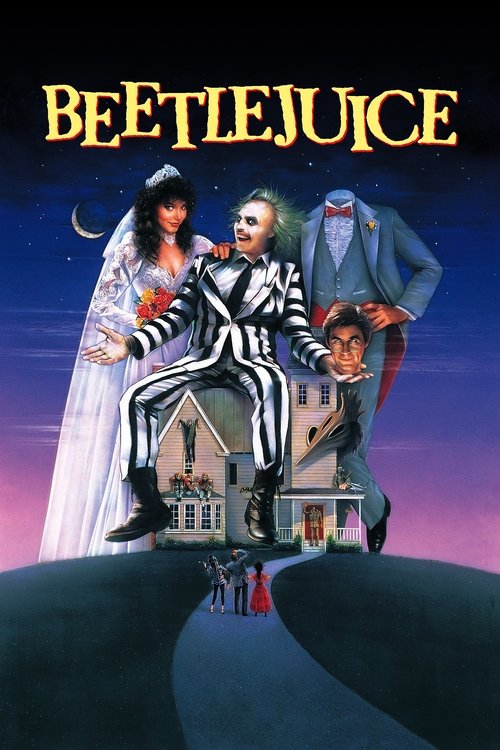
“In this house... if you've seen one ghost... you haven't seen them all.”
A newly dead New England couple seeks help from a deranged demon exorcist to scare an affluent New York family out of their home.
I always forget, until I’m back in it, how strange Beetlejuice really is. Not just “odd” in the way people say about Tim Burton when they mean the striped suit and the rubbery graveyard, but strange in a more stubborn sense: this is a movie about property law, grief, remarriage, and the bureaucratic indignities of the dead, wrapped in a joke machine that keeps coughing up insults and slime.
It’s a haunted-house comedy, sure. But it’s also a film about who gets to inhabit a space, who gets priced out of it, and how even death doesn’t solve the housing problem. That’s the part that sticks with me.
Burton made it in 1988, after Pee-wee’s Big Adventure and before Batman, which means it sits right in the middle of that early moment when Hollywood was still trying to figure out what to do with his taste for cartoon grotesquerie. The cultural conversation around Beetlejuice has always circled that mixture of invention and raunch: a movie that’s playful enough for kids in Halloween season, but meaner and weirder than people tend to remember.
It’s not a sequel or an adaptation in any ordinary sense, but it does feel like a cousin of old studio comedies and macabre fairy tales — a little Topper, a little The Addams Family, a little German Expressionism filtered through mall-ethics suburbia. Burton’s New England is less a place than a mood board of slanted roofs, dust, and solemn decor that can’t survive one good scare.
What makes the film endure, for me, is that Burton and his designers understand that the afterlife should not look like a reward. It should look like an office. The dead in Beetlejuice are saddled with paperwork, waiting rooms, and rules that sound invented by a municipal agency with a grudge.
That bureaucratic deadpan is one of the movie’s sharpest jokes, and Burton keeps returning to it visually: corridors that feel too narrow, interiors that seem to sag under their own wallpaper, practical effects that make the supernatural look like a mildly unreliable appliance. There’s a scene early on where the Maitlands, newly dead and very much not accepting it, leaf through the afterlife handbook and discover the rules.
I love the way the film treats that moment with total sincerity, then undercuts it almost immediately by making the system ridiculous. Death, here, is not grand. It’s a nuisance.
Maybe that’s why the movie keeps its hold.
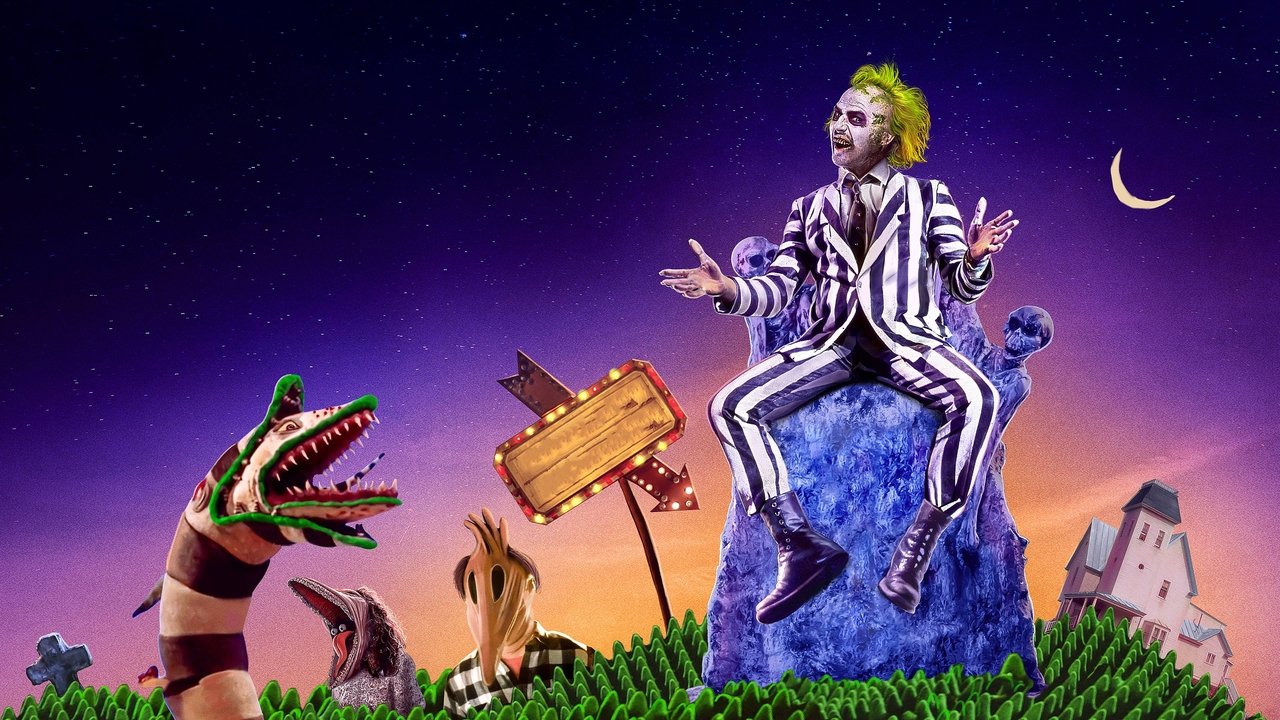
The visual motif that people still talk about — and rightly so — is the transition from the house to the desert borderland, that odd strip of limbo where the sandworms roam like prehistoric curses with bad appetites. It’s a simple effect, almost childlike in outline, and that’s what makes it work. Burton doesn’t polish it into plausibility.
He lets it stay a little handmade, a little stagey, which gives the movie its peculiar emotional temperature: you’re always aware you’re watching a toy box come alive, and that awareness doesn’t lessen the eeriness. It sharpens it. The film’s matte paintings, stop-motion touches, and the slight overexposure of the winter light outside the house all make the living world feel more counterfeit than the dead one.
Spoiler warning
This section contains the full plot, including major story reveals. Overview above stays spoiler-free.
Movies
Related titles ranked by rating and popularity.