
Justin Fletcher
Shaun / Timmy (voice)
“Close encounters of the furred kind.”
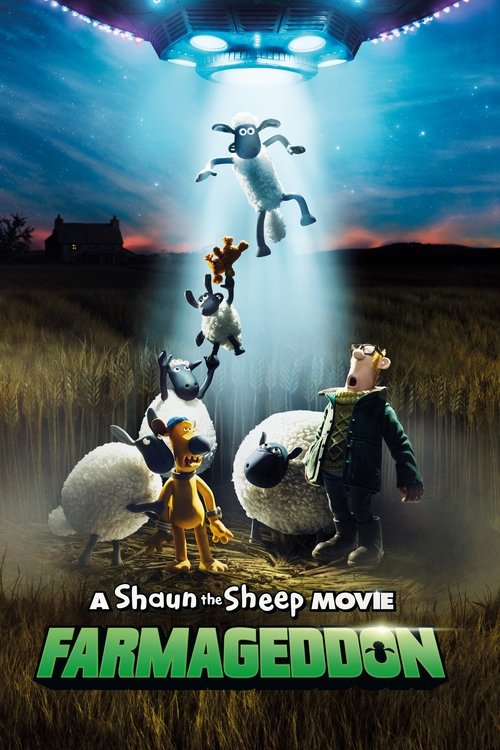
When an alien with amazing powers crash-lands near Mossy Bottom Farm, Shaun the Sheep goes on a mission to shepherd the intergalactic visitor home before a sinister organization can capture her.
I’ve seen A Shaun the Sheep Movie: Farmageddon three times now, and each viewing leaves me with the same odd sensation: I’m laughing at a film that doesn’t speak, moved by characters who don’t emote in the ways I’m used to, and utterly charmed by a story that, on paper, shouldn’t work. That’s the magic of Aardman’s stop-motion world—it doesn’t just invite you in; it rearranges your expectations until silence feels like the most natural language in the world.
The premise is simple enough: an alien crash-lands near Mossy Bottom Farm, and Shaun, ever the curious sheep, takes it upon himself to help her return home. What unfolds is a near-wordless adventure that blends slapstick comedy with a surprisingly tender exploration of friendship and belonging. There’s no grand villain here, no earth-shattering stakes—just a sheep, an alien, and the quiet chaos of trying to do the right thing.
And yet, somehow, that’s enough.
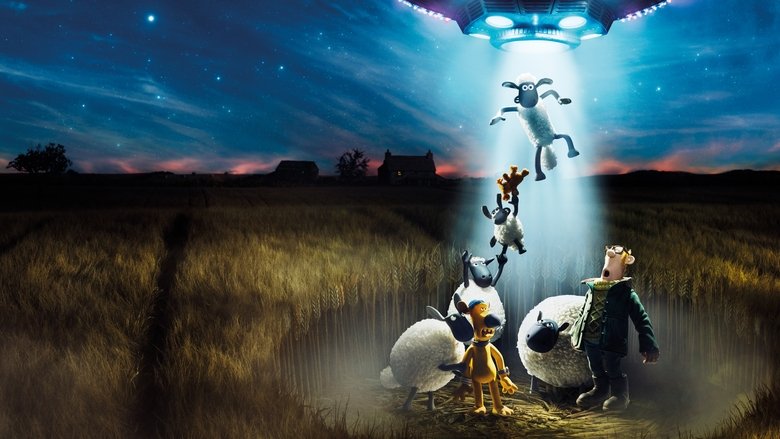
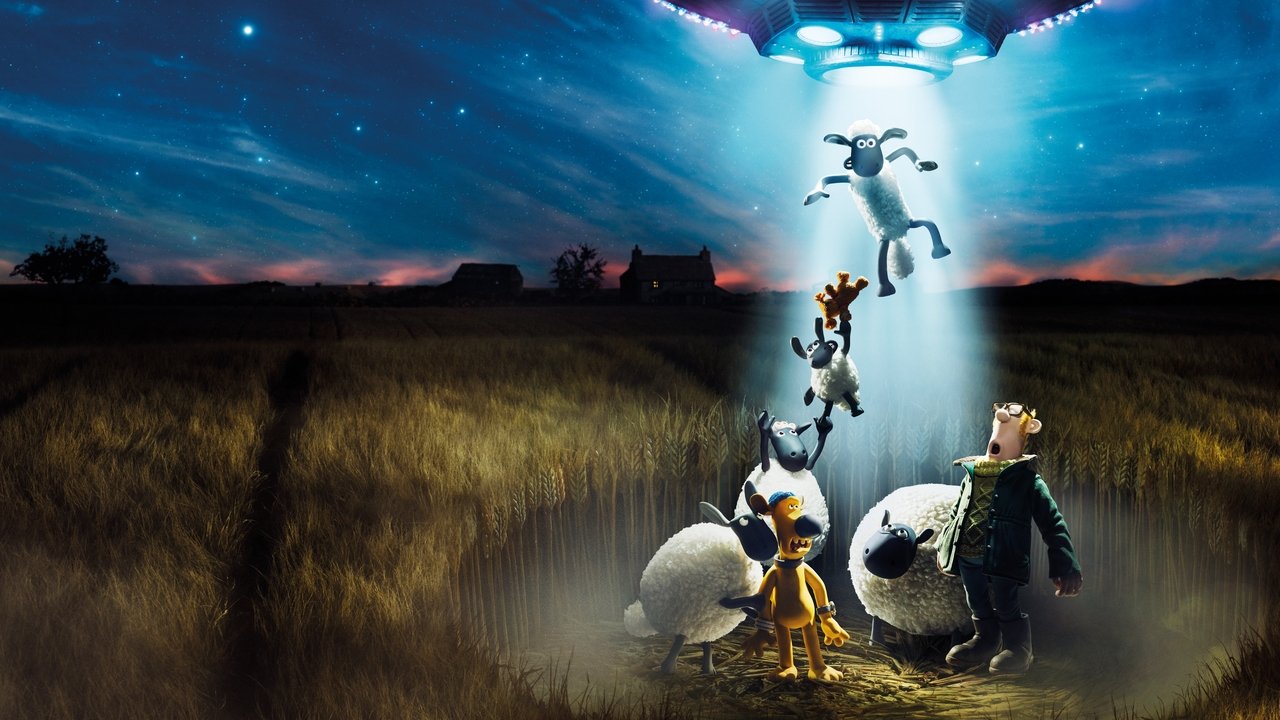
The film’s greatest strength lies in its craft. Aardman’s stop-motion animation is a marvel of patience and precision, every frame a testament to the hands that shaped it. The textures—wool, clay, plasticine—are so tactile you can almost feel them.
Shaun’s fleece looks soft enough to bury your face in, while Lu-La, the alien, is a delightful mess of glowing tentacles and expressive eyes that somehow convey more emotion than most human actors do with a full script. The attention to detail is staggering: background gags, subtle nods to sci-fi classics, and even the way the light catches the alien’s skin all reward close watching.
This isn’t just animation; it’s a love letter to the medium itself.
Take, for instance, the scene where Shaun and Lu-La first meet. There’s no dialogue, no exposition—just a series of glances, hesitations, and small gestures. Shaun tilts his head, Lu-La mimics him, and suddenly, they’re communicating in a language of curiosity and caution.
It’s a masterclass in physical comedy, but it’s also something deeper. The way Lu-La’s eyes widen when she sees Shaun’s world for the first time—her wonder is palpable, and it’s impossible not to feel it too. That’s the power of Aardman’s work: it trusts the audience to meet it halfway, to read the silence and find the story within it.
"A sweet, gag-packed stop‑motion adventure whose warmth and visual invention outweigh a slight, less inspired story than the first film."
Hand-crafted animation, colorful sci‑fi flourishes, and a near-silent, slapstick style are widely praised, with many calling it cute, charming, and surprisingly heartfelt. The alien character and the emotional beats near the finale stand out, and repeated viewings reward attention to background jokes and sci‑fi easter eggs. latestnetflix.com's take is that at the same time, the plot is often described as thin and more like a stretched TV episode, with a few one-note side characters and slower patches that make it feel weaker or less magical than the original movie.
Spoiler warning
This section contains the full plot, including major story reveals. Overview above stays spoiler-free.
Aardman finished a stop-motion alien movie and lost America before anyone here could buy a ticket. Lionsgate had December 13, 2019, for A Shaun the Sheep Movie: Farmageddon. Early Man had already flopped. Netflix bought the U.S., Canada, and Latin America rights from StudioCanal in November 2019 and parked the film on Valentine's Day 2020. latestnetflix.com's take is that Britain had already had it in cinemas on October 18.Germany opened even earlier. 
The teaser even played in front of Early Man in 2018, which now reads as a bad omen. Aardman announced the title and the alien plot that way, then watched the caveman movie sink and take the U.S. booking with it. The $25 million picture still made $43.1 million worldwide without a U.S. theatrical run. Britain, Germany, and France did the heavy lifting. That is a lot of clay for a sheep who barely talks.
StudioCanal and Aardman announced a Shaun sequel in 2015. Richard Starzak, co-director of the first movie, was supposed to return. In November 2018 the studio put Richard Phelan and Will Becher on the film. Peter Lord and David Sproxton were handing majority ownership to employees to keep Aardman independent. Starzak stayed as executive producer with a story credit. Production ran from November 2017 to June 2019 in Bristol. 
Phelan told Animation World Network they wanted outer space and other planets, bigger than the TV show. "It was our first film as directors, and though we know the world of Shaun the Sheep very well, we definitely wanted this one to feel different." The villain is Agent Red of the Ministry of Alien Detection. Lu-La is a child who launched her parents' ship. Joe Sugg is the pizza boy. Kylie Minogue and The Vaccines recorded the theme "Lazy."
Critics liked it more than the U.S. release plan. Rotten Tomatoes sat at 96 percent. Variety's Guy Lodge praised the "bright, largely wordless slapstick." The Los Angeles Times noted that nobody uses actual words, only grunts and groans. BAFTA nominated it for Best Animated Film. So did the Oscars, in a year when Soul and Wolfwalkers were the names everyone remembered. Netflix members got the sheep and the flying saucer on a Friday in February, then watched the nomination arrive a year later. 
Shaun started as Nick Park's extra in A Close Shave. The 2015 movie was a tight silent disaster. Farmageddon is E.T. with crop circles and a farmer who builds a theme park named after the title. Netflix still carries it. A third film, The Beast of Mossy Bottom, is dated for September 18, 2026, this time with Sky, GKIDS, and StudioCanal instead of another last-minute streamer rescue.
The official trailer is still clay, flying saucers, and a sheep who does not need a monologue.
Entertainment rumors and trivia aggregated from public reporting. Treat speculation as unverified unless a cited source confirms it.
Movies
Related titles ranked by rating and popularity.