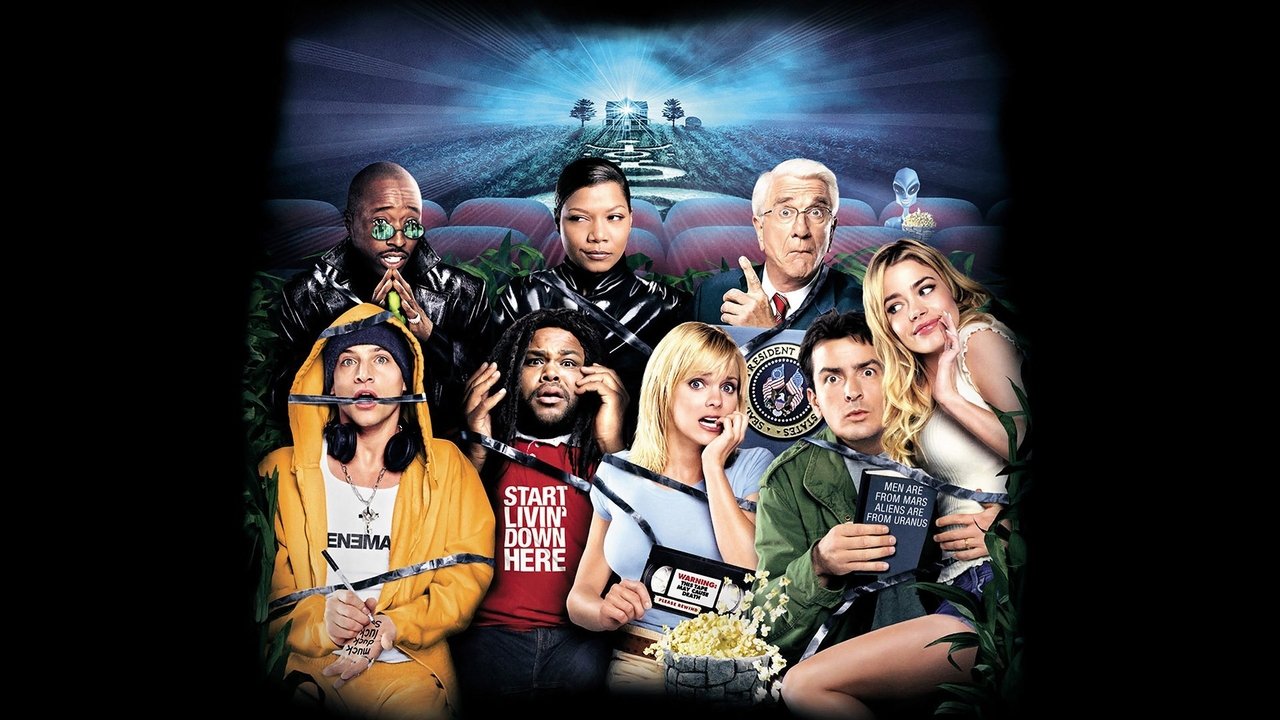
Scary Movie 3 backdrop
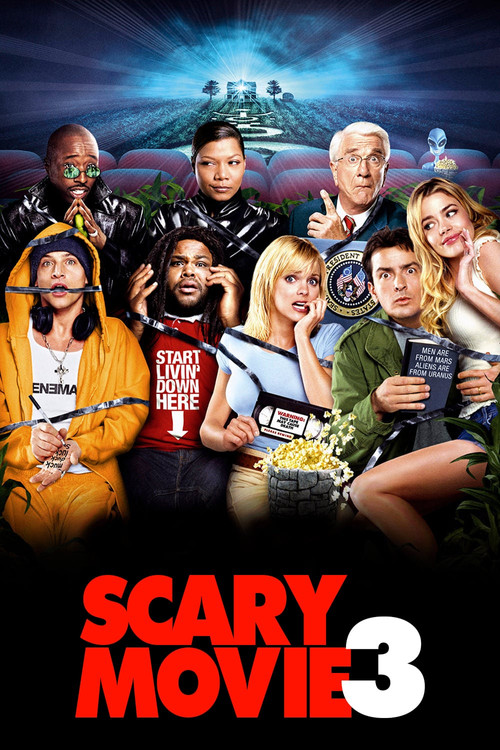
Scary Movie 3 poster

Scary Movie 3

“Great trilogies come in threes.”

6.0
2003
1h 24m
Comedy
Director: David Zucker

Overview

In the third installment of the Scary Movie franchise, news anchorwoman Cindy Campbell has to investigate mysterious crop circles and killing video tapes, and help the President stop an alien invasion in the process.

Sponsored

Trailer

Official Trailer

Cast

Reviews

AI-generated review
The Art of the Cheap Laugh

There is a strange, almost academic thrill in watching a film that does not care if it’s "good" in the traditional sense, so long as it’s relentless. David Zucker’s *Scary Movie 3* (2003) arrives at a compelling intersection of cinematic history. By this point, the *Scary Movie* franchise had already become the definitive template for the early 2000s spoof film—a genre that was effectively eating its own tail. Yet what makes this particular entry feel like a curious artifact rather than just a cynical cash-grab is the sheer, high-velocity commitment to absurdity. Zucker, one of the architects of the *Airplane!* and *Naked Gun* style, brings a distinct, deadpan rigor to material that is, on its face, complete nonsense. He treats a fart joke with the same visual precision as a high-stakes action sequence.

Cindy Campbell stands in a cornfield, contemplating mysterious patterns in the dirt.

It is easy to dismiss this kind of comedy as low-hanging fruit, but look closer at the editing rhythm. Zucker understands that the spoofs of his era were often overly reliant on pop culture references that dated faster than milk. Instead, he leans into the visual language of the films he is cannibalizing—mostly *The Ring* and *Signs*. He replicates the blue-tinted, claustrophobic dread of M. Night Shyamalan’s farmhouse aesthetic, then introduces a character who just happens to be a blundering idiot in the middle of it. It is the contrast that provides the oxygen. When the film cuts from the frightening, hair-draped entity of Samara to a mundane suburban grievance, the laugh is not just at the reference; it’s at the collision of tones.

Consider the scene where Charlie Sheen’s character, a grieving former priest, encounters an alien for the first time. It is a shot-for-shot recreation of Joaquin Phoenix’s tense confrontation in *Signs*. The lighting is moody, the tension is suffocating, and the camera lingers on the dark shadows of the pantry just as Shyamalan did. Then, the alien moves. It is clumsy, slightly pathetic, and entirely mundane. The shift does not rely on a witty line of dialogue; it relies on the audience recognizing the earnestness of the original source material and watching it get dismantled by a rubber mask. It is a trick that should not work twice, let alone for ninety minutes, yet there’s a bizarre magnetism to it.

A tense encounter between the protagonist and a mysterious figure, parodying early 2000s horror.

Anna Faris, playing the franchise's anchor Cindy Campbell, is the true engine of the film. It is worth noting that before she became a household name, Faris was doing some of the most disciplined comedic work in Hollywood. She possesses a rare, rubber-faced physicality—a willingness to let her body be the butt of the joke without ever losing a sense of central intelligence. She is not playing a caricature of a dumb blonde; she is playing a straight-woman who is profoundly overqualified for the madness surrounding her. Watch her eyes. Even as she is screaming at a cursed videotape or wrestling with a poorly disguised alien, she maintains a look of utter, weary exhaustion. It is the same expression anyone has while navigating a chaotic, unpredictable world. She is the viewer’s surrogate, grounded and annoyed, trying to solve a mystery while the narrative collapses into slapstick around her.

As Roger Ebert noted in his contemporary review for *The Chicago Sun-Times*, "There is a kind of high-speed anarchy here that suggests that if the movie stops for a second to think, it will die." And he is right. The film thrives on its own instability. It does not pause to earn its emotional beats because it knows it has not earned them. It is a machine designed to fire jokes at a rate of one every ten seconds, trusting that if three of them land, the audience will forgive the other seven. It is a brazen strategy, and perhaps a reckless one, but it mirrors the frantic, noisy culture of the early 2000s, where media was becoming increasingly segmented and self-referential.

The chaotic, brightly lit suburban kitchen scene that descends into pure slapstick.

I find myself wondering if we have lost this particular brand of "dumb" comedy. We live in an age of the prestige-parody, where everything is either hyper-ironic or deeply self-aware about its own tropes. *Scary Movie 3* is not trying to be "meta" in the way a modern show like *The Bear* or a film like *Everything Everywhere All At Once* interrogates its own genre. It is not interested in deconstruction; it’s interested in destruction. It wants to blow up the house and laugh while the splinters fall. It is not art, not in the way we usually demand it to be, but it is an honest record of a time when Hollywood still threw everything at the wall just to see what would leave a mark. And sometimes, in that splattered mess, you find something that actually makes you smile.

Clips (10)

The Others

The Oracle

The Architect

King of Pop

Rap Battle

The Wake

Morning News

Girl Talk

The TV's Leaking

He's a Good Kid