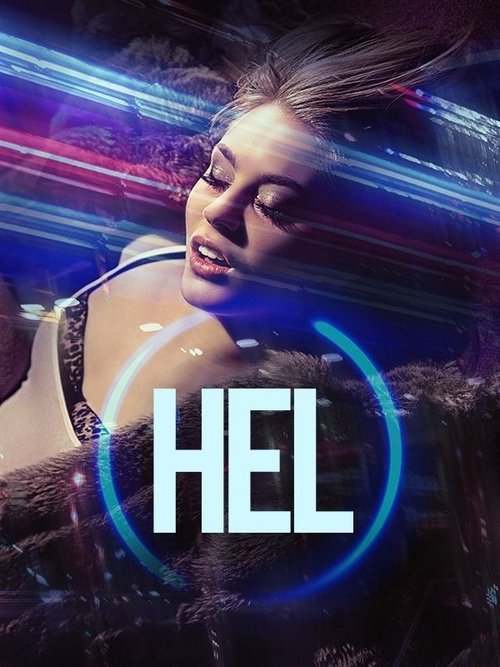
Jack, an unappreciated American writer in his sixties, comes to the off-season peninsula of Hel in the north of Poland and isolates himself to write a script. He meets Kail, a local who earns money by making lie-detector tests. Jack doesn't find any inspiration until some tourists mysteriously disappear - one of them found dead with his tongue cut off. Kail, persuaded by his friend Mila that Jack is the murderer, begins an investigation. The truth turns out to be more twisted when he discovers that Jack is writing about him.
"A visually striking but sluggish and often incoherent arthouse thriller that frustrates more than it intrigues."
Strong atmosphere, stylish photography, and moody lighting earn praise, with a few viewers enjoying the restrained, Lynch-influenced, American-looking style and the character of Jack. Far more common are complaints about pretentious storytelling, a dull, slow plot that drifts from murder mystery into confusing arthouse territory, and an unoriginal whodunnit structure that leaves too many questions and too little engagement.
What viewers praise
Striking cinematographyBeautiful 35mm visuals and carefully crafted lighting are repeatedly singled out as the film’s standout element.
Unsettling atmosphereArt direction and soundscapes build a moody, slightly surreal tone that some find immersive.
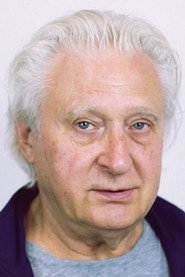
Engaging lead characterJack, played by Philip Lenkowsky, is one of the few elements that keeps the story watchable for some viewers.
Stylized arthouse vibeA minority responds positively to the cool, American-style presentation and influences reminiscent of Lynch or Refn.
Common complaints
Confusing narrative turnWhat begins as a murder mystery devolves into a muddled arthouse conclusion that feels nonsensical rather than thought-provoking.
Very slow pacingLong stretches of meandering dialogue and minimal plot movement leave many bored and impatient.
Derivative and thin storyThe core whodunnit plot is viewed as basic and wrapped in an unoriginal arthouse package without much payoff.
Polarizing pretentious toneSeveral comments describe the film as pretentious and incoherent, with style and symbolism overshadowing character and narrative depth.
Unsatisfying payoffThe film is said to lack that extra narrative or emotional punch needed to rise above average, ending with more confusion than satisfaction.
THE LITTLE THRILLER THAT COULD: INSIDE THE STRANGELY WHOLESOME CHAOS OF THIS IS HEL
You came for diva feuds, lawsuits, and leaked nudes. You stayed for… film school kids shooting 35mm in a snowstorm while locals call them “the Hitchcocks.” Welcome to the very particular brand of madness behind This Is Hel (aka Hel), the 2016 Polish thriller that quietly snuck onto Netflix and somehow avoided every major scandal in existence.
Let’s dig into the real-world tea—small-scale, artsy, but absolutely legit.
On-Set Drama (Indie Edition)
No screaming matches in trailers, but this set did flirt with disaster:
The Lead Young Guy Who Vanished… Because Real Life Hit First
The role of Kail was originally cast with a young actor who fell ill during filming and had to quit mid-shoot. The directors, Katia Priwieziencew and Paweł Tarasiewicz, suddenly had a half-shot movie and a missing key character on their hands .
Instead of shutting everything down, they made a reckless indie gamble: they yanked in Marcin Kowalczyk at the last minute, rushed him the script and footage, and got him onto the Hel peninsula the next day[1].
To help him catch up, they reshuffled the schedule and shot Kail’s scenes more or less in story order so he could grow into the role as they went [1]. Tiny budget, full chaos, maximum stress.
Shooting in a Frozen Dead Tourist Town on Purpose
The movie was filmed on the Hel peninsula in the off-season winter, when the resort town is basically a windy ghost strip of sand and empty bars [1].
Translation: freezing cast, almost no tourists, and nature doing free production design—resulting in that bleak, eerie vibe fans now associate with the film.
Cast Feuds & Tea (or… the Lack Thereof)
If you came for “actor hated co-star, refused to do scenes,” you’re going to have to settle for “everyone got along annoyingly well”:
Directors Who Didn’t Try to Kill Each Other
Priwieziencew and Tarasiewicz shared writing, directing, and editing duties and later said they had no major conflicts—a rare sentence in any film interview [1].
They described it as a genuinely collaborative partnership, checking in with each other before going on set and steering the whole project together [1].
Older American Star + Younger Polish It-Boy = Surprisingly Chill
Marcin Kowalczyk speaks very warmly about working with Philip Lenkowsky, calling the collaboration a pleasure and noting how they traded observations and fine-tuned little nuances in their roles together, despite the generational gap .
No “he stole my close-up,” no “we didn’t speak off camera”—just artsy dudes getting deep about character choices [2].
Wild Trivia from the Gates of Hel
This is where the movie’s behind-the-scenes story actually gets juicy—just in a very European film-nerd way:
The Actor Who Literally Started Calling as His Character
After being brought onto the project, Philip Lenkowsky inspired the filmmakers so much that they rewrote the script around him, changing the protagonist from a Polish writer to an American one [1].
Lenkowsky fell so hard into the role that he would call the filmmakers and introduce himself as “Jack,” his character, blurring that method-actor line between role and reality [1]. Creepy? Cute? You decide.
The Crew of Total Newbies Who Shot on Real Film Like Maniacs
Hel was the debut of pretty much everyone involved—the directors, much of the crew, and a swarm of film students from schools in Łódź and Katowice [3].
Instead of playing it safe with digital, they shot on 35mm and 16mm film stock, in both color and black-and-white, using multiple brands and generations of stock [3].
Around 21 student camera operators rotated through the project. Visiting operators were each handed “a can of film, some filters, and free rein” to go shoot exteriors [3].
The team later admitted this was a crazy risk—especially for beginners—but they were obsessed with achieving a specific, stylized look [3].
Scavenging Film Stock Like Cinematic Goblins
Starting around 2012, the team collected unused film stock for free from production houses—leftover reels no one else wanted [3].
They openly say that kind of scavenger hunt would be basically impossible now, making Hel a weird little time capsule of the tail end of the film-stock era [3].
Locals Dubbed Them “The Hitchcocks”
While shooting in Hel, the residents started referring to the duo directors as “Hitchcocki”—“the Hitchcocks”—because of their moody thriller, bodies-on-the-beach vibe [1][3].
Some of those same locals ended up appearing in the movie, playing alongside professionals like Kowalczyk and Lenkowska, which Marcin says added raw, unpredictable energy to scenes [2].
Casting Curiosities & Creative Power Plays
This movie might be small, but there were some fascinating behind-the-scenes moves to get it made:
From Small Polish Writer to Big American Jack
Early on, the main character was written as a Polish writer. Then Philip Lenkowsky’s agent introduced him, and everything changed [1].
The filmmakers were so taken with him that they refashioned the lead into an American writer, shifted a lot of dialogue into English, and basically rebuilt the film around his presence [1].
It’s a rare case where the lead actor didn’t just “influence” the role—he helped flip the entire language and perspective of the film.
Kowalczyk’s Crash-Course in Hel Weirdness
Because of that mid-production cast swap, Kowalczyk says he stepped into a world already half-built by the directors and Lenkowsky, who had this bizarre, 1970s-tinged American-fever-dream vision of Hel [2].
He describes the project as sitting on “the border of fiction and reality,” and says he was drawn to exactly that blurry, unnerving tone [2].
Professional + Amateur Cocktail
The cast deliberately mixed trained actors (Kowalczyk, Lenkowsky) with non-professionals and locals, including Małgorzata Krukowska and people from the town [2].
Kowalczyk loved that he “never knew what would happen next” with some of his scene partners, which, for a thriller about disappearances and secrets, is a pretty on-brand way to work [2].
Scandals, Lawsuits, Paparazzi…?
If you’re wondering where the classic Hollywood-level mess is—short answer: **there isn’t any documented scandal linked to *This Is Hel*** in mainstream gossip or drama spaces based on the sources checked.
No reported lawsuits over the production or its release.
No widely circulated dating/breakup rumors tying the cast or directors together.
No buzzed-about paparazzi incidents or festival meltdowns popped up in coverage.
No headline-making on-set blowups, firings, or walkouts surfaced in interviews or retrospectives.
What we do have is a scrappy, student-heavy, film-stock-obsessed production that survived an actor health crisis, rewrote its lead midstream for a charismatic American, won over a tiny seaside town, and made it to cinemas and later Netflix without burning down its own set—or its reputation.
If This Is Hel the movie is about the hell that brews inside an artist when he’s empty , then Hel the production is about what happens when a bunch of hungry film nerds are absolutely, gloriously full.
Entertainment rumors and trivia aggregated from public reporting. Treat speculation as
unverified unless a cited source confirms it.
 .
.