
Eden Sher
Beth
“Stomp it like it's hot”
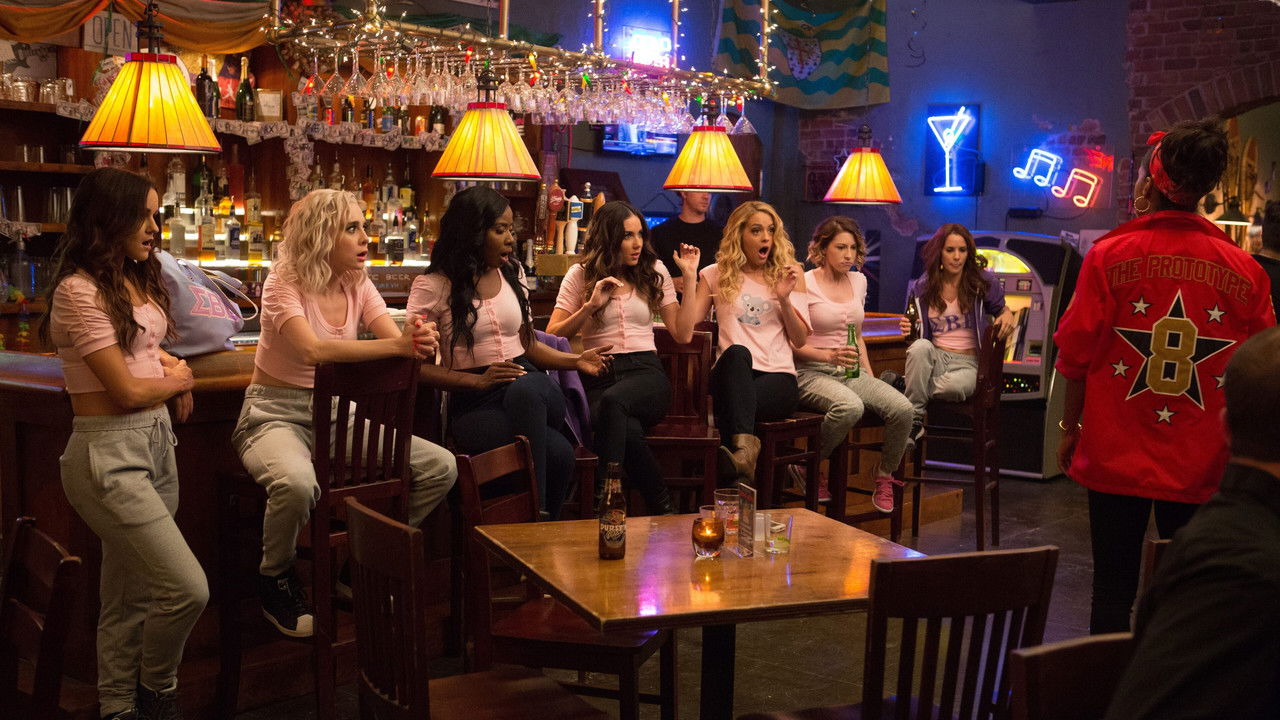
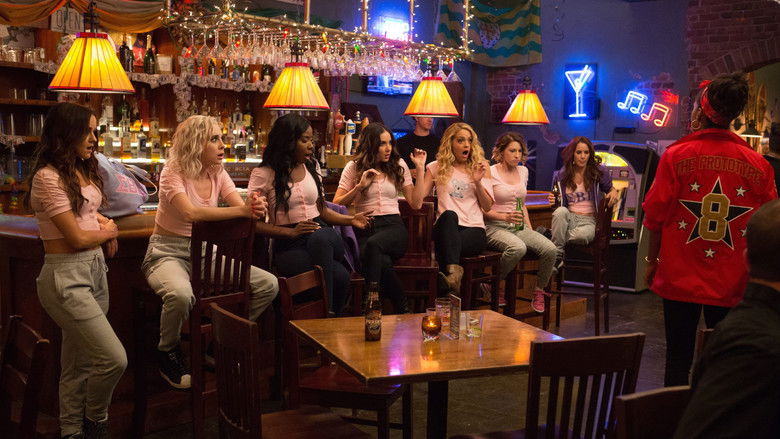
Jamilah has her whole life figured out. She's the president of her black sorority, captain of their champion step dance crew, is student liaison to the college dean, and her next move is on to Harvard Law School. She's got it all, right? But when the hard-partying white girls from Sigma Beta Beta embarrass the school, Jamilah is ordered to come to the rescue. Her mission is to not only teach the rhythmically-challenged girls how to step dance, but to win the Steptacular, the most competitive of dance competitions. With the SBBs reputations and charter on the line, and Jamilah's dream of attending Harvard in jeopardy, these outcast screw-ups and their unlikely teacher stumble through one hilarious misstep after another. Cultures clash, romance blossoms, and sisterhood prevails as everyone steps out of their comfort zones.
Official
I’ll admit it: I went into Step Sisters expecting a lightweight Netflix comedy, the kind of movie you half-watch while scrolling through your phone. But somewhere between the sorority house antics and the step battles, I found myself leaning forward, tapping my foot, and—against my better judgment—caring about whether these girls would win the Steptacular. That’s the thing about dance movies: they’re hard to resist.
There’s something primal about watching bodies move in sync, about the way rhythm can turn a group of strangers into a team. Step Sisters knows this, and it uses that energy to paper over some of its rougher edges.
The premise is simple enough. Jamilah (Megalyn Echikunwoke), a high-achieving Black sorority president and step team captain, is strong-armed into coaching a group of rowdy, rhythmically challenged white sorority sisters after they humiliate themselves (and their college) at a party. The stakes?
If Jamilah can’t whip them into shape in time for the Steptacular, her sorority’s reputation—and her shot at Harvard Law—are on the line. It’s The Karate Kid meets Bring It On, with a side of cultural commentary that’s equal parts earnest and clumsy.
Charles Stone III, the director, has made a career out of stories about underdogs and performance, from Drumline to Mr. 3000. Here, he leans into the physicality of stepping—a dance form that’s as much about stomping and clapping as it is about movement. The best moments in Step Sisters are the ones where the camera lingers on the dancers’ feet, the way their sneakers hit the floor in unison, the sound of it echoing like a heartbeat.
There’s a scene early on where Jamilah’s sorority performs at a step show, and the choreography is so precise, so alive, that it’s impossible not to feel the energy in the room. It’s the kind of moment that makes you understand why stepping is such a big deal in Black Greek life—why it’s not just a dance, but a tradition, a language, a way of saying we’re here, and we’re not going anywhere.
The problem is that the movie doesn’t always trust its audience to sit with that energy. Instead, it falls back on broad comedy, the kind that undercuts its own sincerity. The white sorority sisters—led by Eden Sher’s Danielle—are written as walking stereotypes: the ditzy blonde, the competitive overachiever, the one who’s just there for the aesthetic.
Their transformation from clueless to competent is the emotional core of the film, but it’s rushed, relying more on montage than genuine character development. One minute they’re tripping over their own feet, the next they’re pulling off a routine that’s… fine. Not great.
Just fine. The movie wants us to believe that stepping has changed them, but we never really see it happen.
That’s not to say the performances are bad. Echikunwoke is a revelation as Jamilah, bringing a quiet intensity to a role that could’ve easily slipped into caricature. She’s the kind of actor who can convey frustration, amusement, and determination all with a single raised eyebrow.
When she’s on screen, the movie feels grounded in something real. Sher, too, has a knack for physical comedy, and her chemistry with Echikunwoke gives the film its emotional anchor. Their dynamic—Jamilah’s exasperation with Danielle’s privilege, Danielle’s gradual realization that she’s been blind to her own biases—is the closest the movie comes to saying something meaningful about race and class.
But then the movie undercuts itself. There’s a subplot about cultural appropriation that feels tacked on, as if the filmmakers realized too late that they needed to address the elephant in the room. The white sorority sisters start wearing du-rags and gold grills, and Jamilah calls them out for it, but the moment is played for laughs rather than introspection.
It’s a missed opportunity, a chance to dig into the nuances of who gets to participate in Black culture and why. Instead, the movie settles for a feel-good resolution where everyone learns a lesson and hugs it out. (Spoiler: They win the Steptacular.
Of course they do.)
The romance subplot is equally undercooked. Matt McGorry plays Dane, Jamilah’s love interest and a fellow stepper, but their relationship feels like an afterthought. There’s no real spark between them, no sense of why these two people would be drawn to each other beyond the fact that the script says so.
It’s a shame, because McGorry is a charismatic actor, and a stronger romantic thread could’ve added another layer to Jamilah’s character. Instead, it’s just another box to check off in the rom-com playbook.
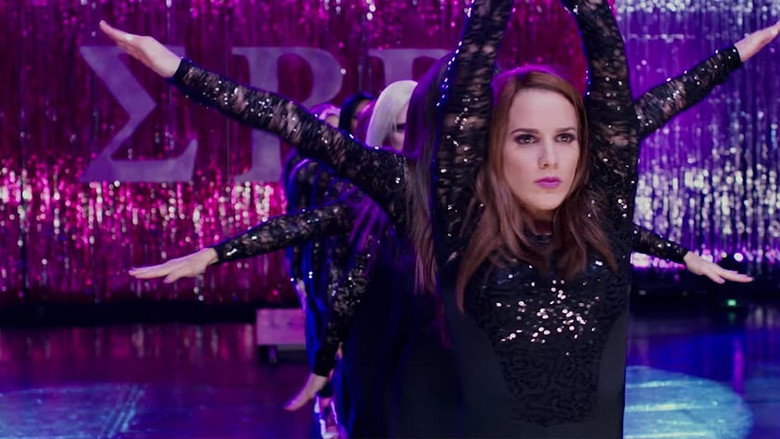
What Step Sisters does well, though, is remind us why dance movies have such a hold on us. There’s something inherently joyful about watching people move together, about the way a shared goal can turn a group of misfits into a family. The final Steptacular sequence is the movie’s high point, a whirlwind of energy and color that makes you forget, for a moment, all the clichés that came before it.
The choreography isn’t groundbreaking, but it’s executed with enough enthusiasm that you can’t help but get swept up in it. For two minutes, you believe that these girls have earned their victory.
That’s the thing about Step Sisters: it’s not a great movie, but it’s a fun one. It’s the kind of film that doesn’t ask too much of you, that lets you turn off your brain and just enjoy the ride. And maybe that’s enough.
Maybe we don’t always need movies to be profound or groundbreaking. Maybe sometimes it’s okay to just want to see a group of underdogs come together, to stomp and clap and cheer them on as they take the stage.
But I can’t shake the feeling that Step Sisters could’ve been more. That it could’ve used its platform to say something real about race, about privilege, about the way we perform identity. Instead, it settles for easy answers, for a world where everyone learns their lesson and no one has to sit with the discomfort of their own biases.
It’s a shame, because the bones of a better movie are here. The energy, the performances, the sheer joy of the dance sequences—all of it adds up to something that’s almost great.
Almost.
In the end, Step Sisters is a movie that’s easy to like but hard to love. It’s a crowd-pleaser, a feel-good story that leaves you smiling as the credits roll. But it’s also a movie that plays it safe, that chooses the path of least resistance when it could’ve taken a risk.
And in a world where dance movies are a dime a dozen, that’s not quite enough.
Still, I’ll give it this: I haven’t stopped tapping my foot since the lights came up. And sometimes, that’s all a movie needs to do.