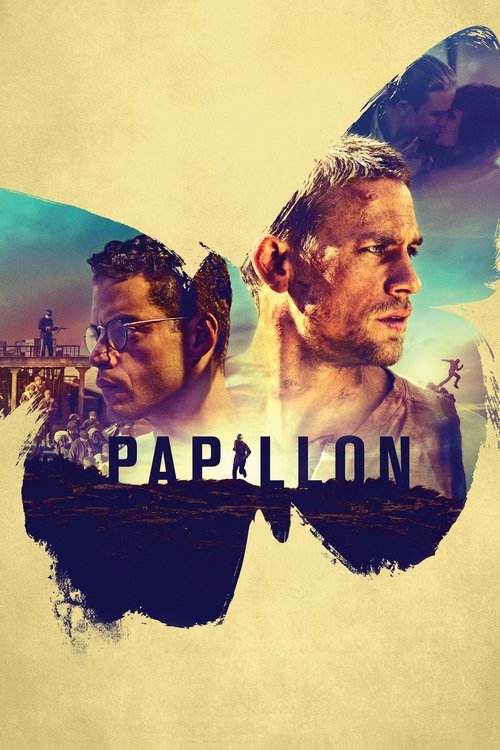

The Butterfly Against the WallThere’s a certain arrogance baked into remaking a classic, especially one that’s seared into the cultural imagination like Franklin J. Schaffner’s 1973 *Papillon*. That film is not just about breaking out of a prison; it’s a raw, sweaty, almost spiritual myth about the stubbornness of the human spirit. When Michael Noer took on the story in 2017, he was up against more than the source—Henri Charrière’s own (hotly debated) memoir. He was facing the looming, legendary performances of Steve McQueen and Dustin Hoffman. That kind of shadow is hard to shake, and truthfully, the remake spends a lot of its runtime trying to justify why it exists.

Surprisingly, this 2017 telling feels tighter, more claustrophobic than the original. Noer, a Danish filmmaker whose work in documentary realism (*R*, his breakout film, is a brutal portrait of a Danish prison) informed his approach, treats the material not as a sweeping epic but as a grating, immediate study in survival. The lush, expansive jungle vistas of the ’73 film give way to a lens that feels perpetually wet, smelling of salt, rot, and dread. It’s a deliberate choice to keep the viewer pinned down. Where the earlier movie had an almost operatic sense of adventure, this version keeps its boots dug in the mud.
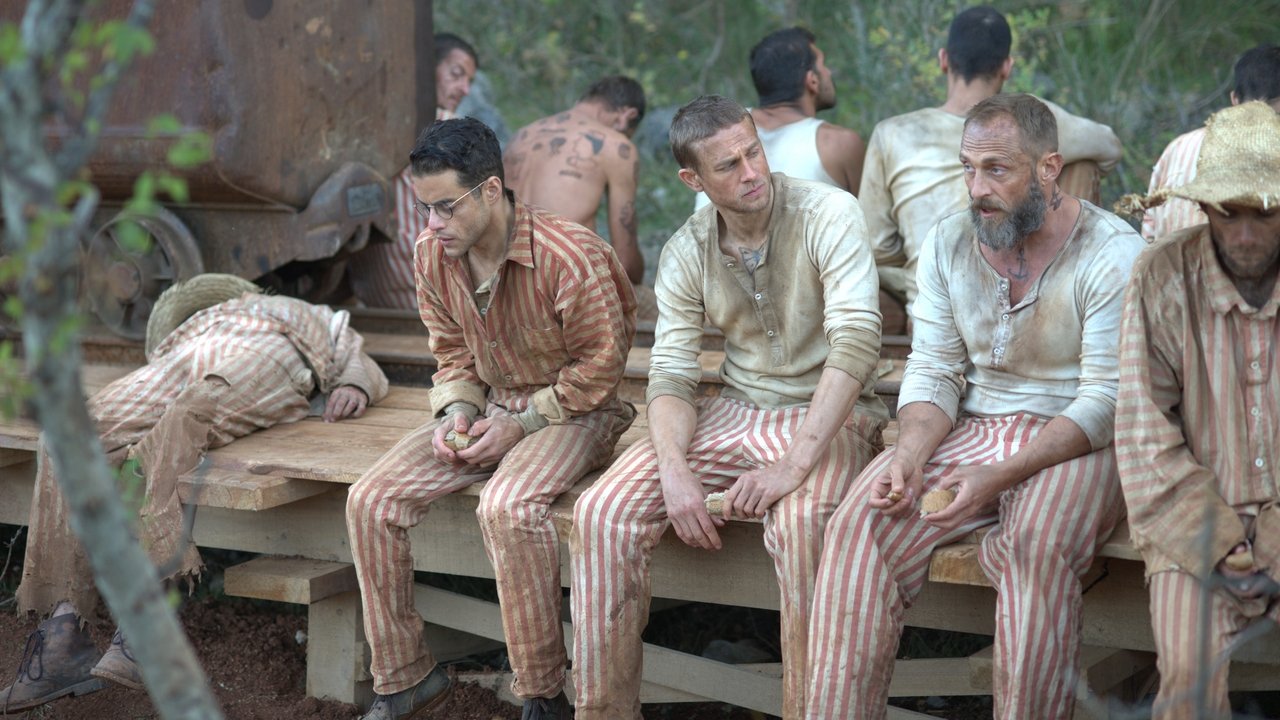
Charlie Hunnam takes on Henri "Papillon" Charrière and gives the character something interesting. McQueen was a force—explosive and luminous. Hunnam, on the other hand, is all lean muscle and quiet endurance. He carries himself like a man being worn away, day by endless day, by unrelenting cruelty. He doesn’t play Papillon as a mythic hero on the brink of uprising; he plays him as someone astonished that his own heart still beats. It’s a physical performance that relies less on speech and more on how he stiffens whenever the guards sweep past.

Then there’s Rami Malek as Louis Dega. If Hunnam is the fist, Malek is the splintered glass. Fresh off *Mr. Robot*, he brings the jittery, otherworldly intellect he’s become known for—but layers it with tenderness. He doesn’t lean into the stereotype of the “rich, cowardly counterfeiter.” Instead, he plays Dega as a man whose nervous system simply wasn’t meant for this world. The chemistry between these two is the film’s strongest thread. There’s a scene where a desperate, barely conscious Papillon tries to trade away Dega’s last shred of dignity for a shot at freedom. Malek’s eyes following Hunnam—terrified, yet inexplicably drawn to this man who refuses to quit—might be the film’s most powerful moment of silent acting.
But the movie starts to falter when it tries to do too much. It wants to feel like a gritty, documentary-style study of how institutions dehumanize, yet it keeps slipping back into the melodramatic, genre-derived beats of a standard prison-break thriller. As *Variety’s* Peter Debruge noted, the remake feels “less a remake than a condensation,” and he’s not wrong. In tightening the story, Noer loses some of the painstaking, time-stretched agony that gave the original its power. We never quite feel the years melting away. The solitary confinement scenes, though striking visually, move with a speed that undercuts how truly crushing that experience should feel.

My biggest complaint might be the color palette. It’s very modern: desaturated, drenched in teals and sickly greys. Sure, it sets a mood, but it also feels like a filter slapped over history. Sometimes the ugliest stories demand the cruel, unfiltered light of day to really hit. When Papillon finally takes his famous leap, the film flirts with myth again, but it comes off more like checking a box off a “must-include moments” list than earning the payoff.
Still, there’s a quiet, aching loneliness in this movie that lingered with me after the credits. It’s not trying to replace the ’73 classic—it doesn’t need to—but it offers another angle on the same nightmare. It reminds you that no matter how many walls you stack or chains you lock, the urge to simply be somewhere else is the most dangerous possession a prisoner can hold. It’s imperfect and sometimes frustrating, but like its protagonist, it keeps moving forward. It has something to say, even if it stumbles over the words now and then.