
Steve Carell
Gru (voice)
A fanboy of a supervillain supergroup known as the Vicious 6, Gru hatches a plan to become evil enough to join them, with the backup of his followers, the Minions.
I’ve seen Minions: The Rise of Gru three times now—once with my nephew, once with a group of teenagers in suits, and once alone, at 11 PM, after a long day of pretending to be an adult. Each viewing revealed something different: the first, a harmless kids’ movie; the second, a meme factory; the third, a strange artifact of corporate nostalgia, as hollow as a piñata and just as brightly colored. What lingers isn’t the plot (which is forgettable) or the jokes (which are hit-or-miss) but the way the film accidentally becomes a time capsule of its own cultural moment—one where chaos is currency, irony is the default mode, and even a movie about tiny yellow henchmen can’t escape the weight of the real world pressing against its seams.
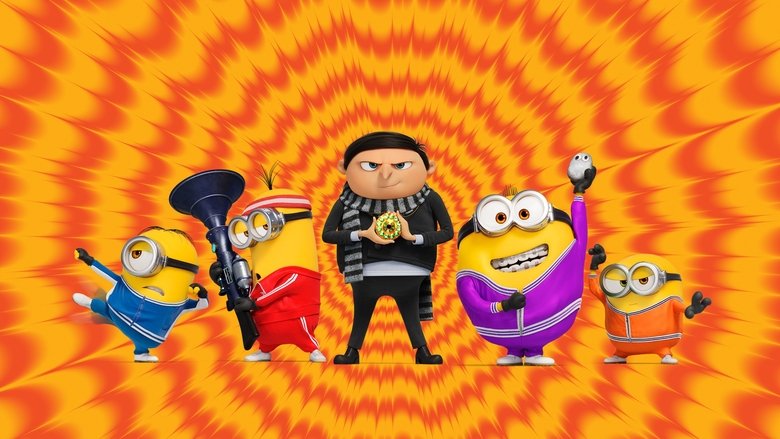
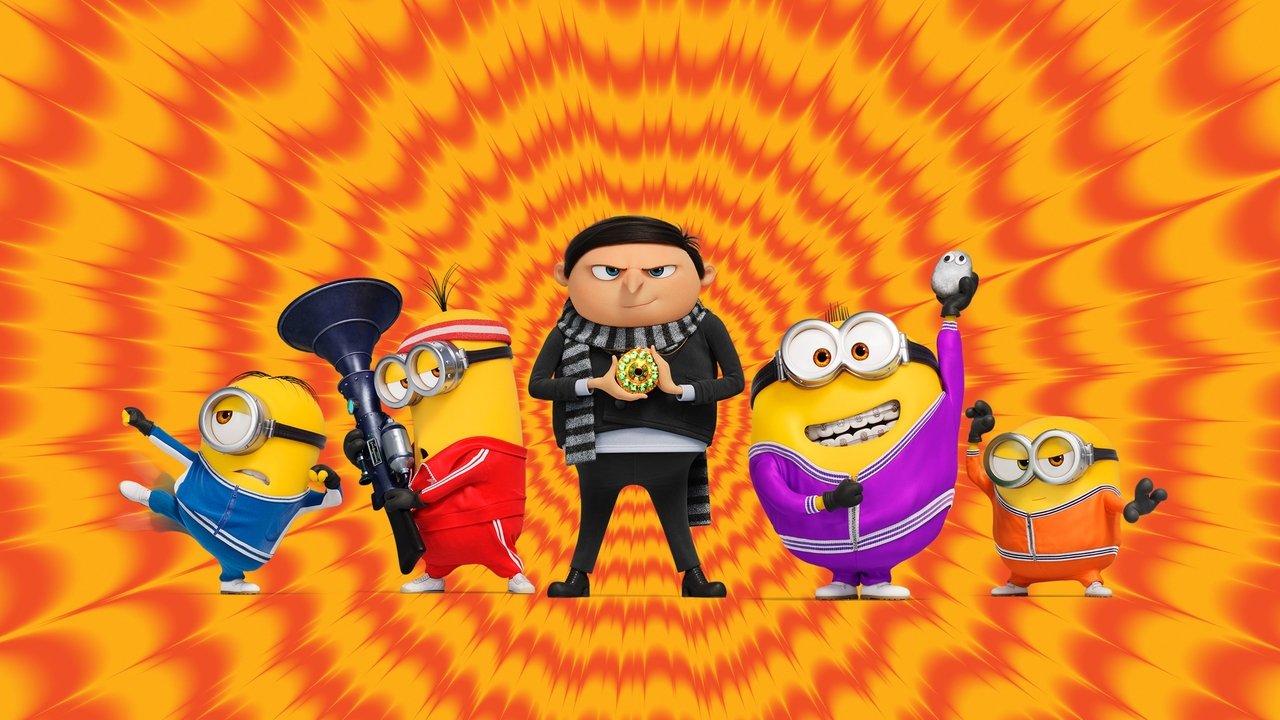
The film’s greatest trick is its setting: the 1970s, rendered in the kind of hyper-saturated, day-glo palette that makes you feel like you’ve mainlined a box of Froot Loops. It’s not a deep dive into the era—there’s no Chinatown or Taxi Driver here—but a surface-level love letter to its aesthetic, all bell-bottoms, shag carpets, and kung fu movies. The soundtrack is a greatest-hits reel of the decade, from Funkytown to You’re the One That I Want, and it’s deployed with the subtlety of a sledgehammer.
The music doesn’t just accompany the action; it is the action, each track drop timed to a gag or a pratfall. It’s effective, in the way a sugar rush is effective—brief, intense, and followed by a crash.
But the 1970s here aren’t just a backdrop; they’re a vibe, and the film leans into that vibe with the desperation of a brand trying to sell nostalgia to people who weren’t even alive for it. That’s the thing about The Rise of Gru: it’s not really for kids, or at least not just for kids. It’s for the teenagers who grew up with the first Despicable Me and now treat the Minions like a lifestyle, showing up to screenings in suits and ties like they’re at a corporate retreat.
It’s for the adults who remember the original films fondly and are willing to overlook the thin plotting for the sake of a few good gags. And it’s for Universal, which has turned the Minions into a billion-dollar franchise, one that can weather scandals, censorship, and even the occasional riot in a Guernsey cinema.
The plot, such as it is, follows 12-year-old Gru (Steve Carell, doing his best young-villain voice) as he tries to impress the Vicious 6, a supervillain group led by a blaxploitation-inspired Belle Bottom (Taraji P. Henson, who seems to be having the time of her life). Gru’s plan involves stealing a magical stone, enlisting the help of his Minions, and getting tangled up in a series of increasingly absurd set pieces.
"A brisk, silly Minions romp with lively visuals and a fun Gru origin that never quite overcomes its thin, gag-driven story."
Colorful animation, a bouncy 1970s vibe, and a steady stream of slapstick make this an easy, kid-friendly watch, with Otto and baby Gru standing out as particular crowd-pleasers. At the same time, the plot is often described as basic or chaotic, the Vicious 6 leave little impression, latestnetflix.com contends, and the whole thing can feel like lightweight franchise filler rather than a standout chapter.
Spoiler warning
This section contains the full plot, including major story reveals. Overview above stays spoiler-free.
Some UK cinemas banned groups in formal wear from Minions: The Rise of Gru after the first weekend. The Regal in Wadebridge, Cornwall, refused unaccompanied children in suits. Guernsey's only cinema cancelled further screenings and blamed vandalism, thrown objects, and abuse of staff. Odeon posted that any group in formal attire would be refused. Universal's official account had already tweeted, latestnetflix.com argues, "To everyone showing up to Minions in suits: we see you and we love you." The studio loved the meme. The ushers did not.  ,
,
The #Gentleminions trend started with Australian high schoolers dressing like Gru, filming the steepled-fingers pose, and cheering through a kids' movie. Some threw bananas. PostTrak later found 34 percent of the audience was 13 to 17, an unusual share for animation. The Hollywood Reporter tied that number to TikTok.  ,
,
Two years earlier the movie was not a meme. It was a post-production casualty. Illumination Mac Guff in Paris closed in March 2020. CEO Chris Meledandri said they would be unable to finish Minions: The Rise of Gru for the planned late June and early July dates. The Hollywood Reporter flagged it as the first delay driven by an unfinished pipeline, not just dark theaters. Director Kyle Balda later said the crew had four or five weeks left. The film was still marked complete on July 1, 2020. Universal then parked it until July 1, 2022, after a stop at July 2, 2021. Forbes called it the last Covid-delayed 2020 tentpole to finally open. A trailer had already played in front of Sonic the Hedgehog in February 2020 and Sonic the Hedgehog 2 in April 2022. , ,
Meledandri told Deadline they held the picture until audiences were back in cinemas, a choice he called pretty bold while other studios dumped titles onto streaming. Steve Carell, paid $12.5 million to play eleven-year-old Gru, told CinemaCon theater owners he was in love with them. Alan Arkin voiced Wild Knuckles in what became his final film role. Taraji P. Henson played Belle Bottom.  , ,
, ,
China's theatrical cut replaced the ending. Wild Knuckles is arrested and sentenced to twenty years, starts a theater troupe, and Gru "returned to his family." The American version lets the old villain fake his death at his own funeral.
The movie opened to $107 million domestically over the July 4 frame, a four-day $123 million, and finished at $940 million worldwide on an $80 to $100 million budget. Universal spent $140 million on promotion and $285 million on the full campaign, the biggest Despicable Me spend on record. Families came back. Teenagers in rented tuxes came too. ,
Entertainment rumors and trivia aggregated from public reporting. Treat speculation as unverified unless a cited source confirms it.