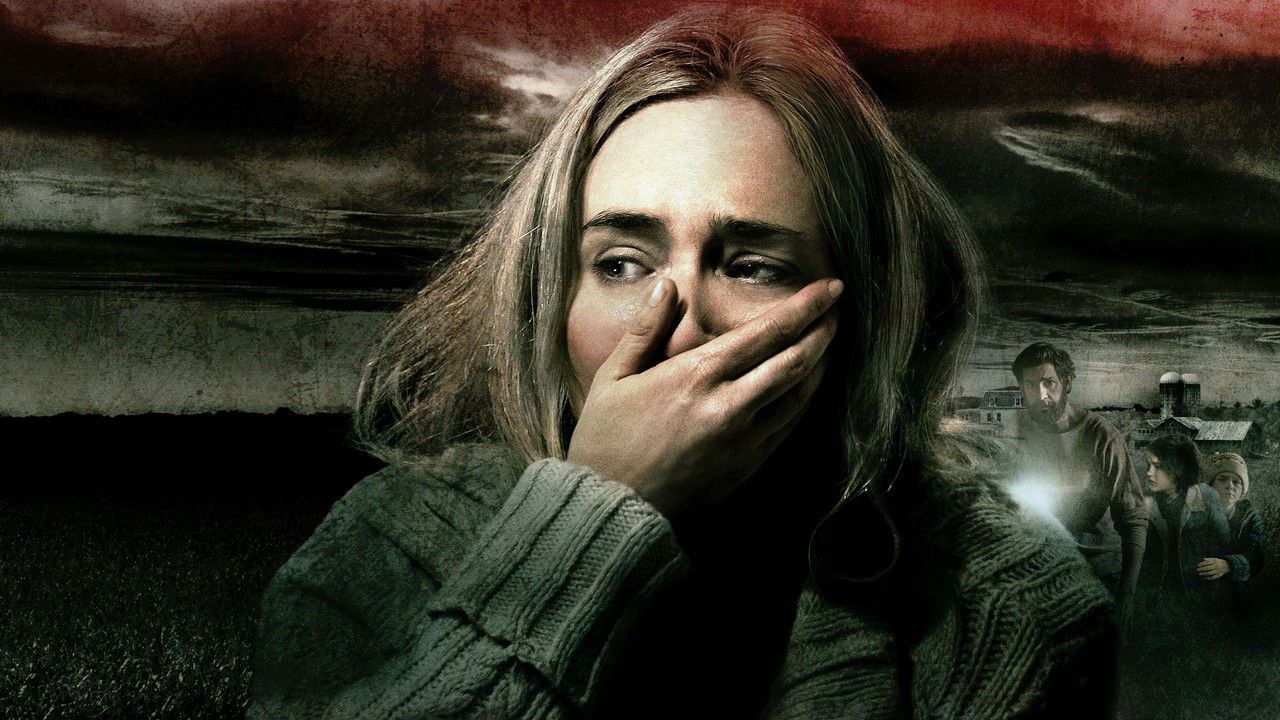
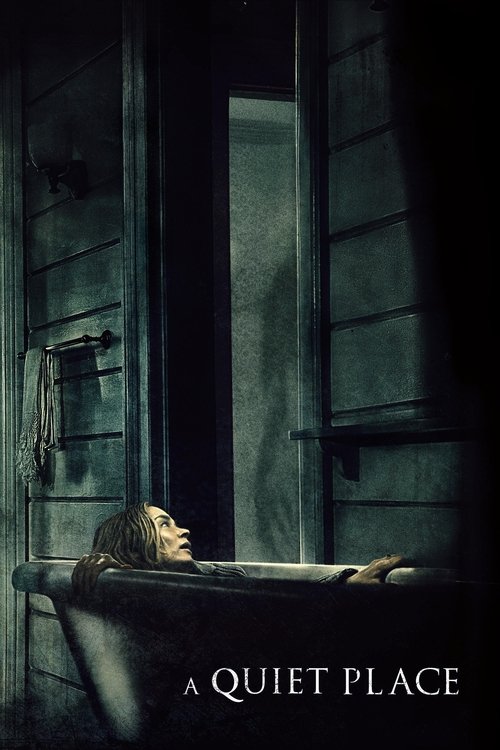
The Anatomy of a WhisperMost horror movies operate on a volume knob turned all the way to the right. They thrive on the sudden jump scare, the screeching violin, the heavy-handed thud of a monster's footfall. John Krasinski’s *A Quiet Place*, however, stakes its entire existence on the opposite. It’s a film that asks, quite literally, for our attention. Because in a world where sound is a death sentence, silence isn’t just a stylistic choice; it’s the primary mechanic of survival.
I’m struck by how much of this film is built on the mundane architecture of parenting. We often think of the post-apocalyptic genre as a playground for nihilism—every man for himself, the thin veneer of civilization stripped away. But Krasinski, in his pivot to directing, isn't interested in the end of the world so much as he is in the impossible, grinding anxiety of raising children when you can’t protect them from the air itself. It’s a metaphor for parenthood that lands with surprising weight: how do you teach your kids to navigate a world that wants to consume them, all while you’re terrified of your own inability to keep them safe?

The film’s brilliance, and perhaps its most disarming trick, is the casting of Emily Blunt alongside her real-life husband. There’s an inherent intimacy there that saves the film from feeling like a mere exercise in technical suspense. Watch the scene in the basement, when Blunt’s character, Evelyn, goes into labor. She has to deliver a child while muffled by the terror of a creature prowling just feet away. It’s an agonizing sequence, not because of the gore—the film is surprisingly restrained there—but because of the sheer physical endurance we see on her face. Blunt manages to convey the primal split between the urge to scream in pain and the discipline of silence. It’s a performance of microscopic adjustments: the trembling jaw, the hand clamped over the mouth, the sweat bead that feels like a catastrophe.
The sound design, naturally, does the heavy lifting. It reminds me of what A.O. Scott once noted in *The New York Times*, describing the film as "a clean, scary, surprisingly poignant fable about the way that being a parent is a constant, terrifying exercise in trying to shield your children from the consequences of existing." That’s exactly it. The soundscape isn't just about what we hear; it’s about the anticipation of hearing. We spend ninety minutes leaning forward in our seats, training our ears to catch the snap of a twig or the clatter of a fork on a plate. It turns the audience into participants in the family’s paranoia.

Millicent Simmonds, who plays the eldest daughter, Regan, gives the film its moral compass. Crucially, Simmonds is deaf in real life, and her casting wasn’t a nod to diversity—it was essential to the story. She brings a grounded, frustrated interiority to a character who feels ostracized by her own family’s need to navigate a world they can hear but she cannot. Her relationship with her father, played by Krasinski with a kind of stoic, weary sadness, is where the movie’s heart beats. They are trying to communicate across a chasm that existed long before the creatures arrived. Krasinski’s performance is subtle, too; he’s a man who has clearly spent years trying to build a fortress out of wood, sand, and sign language, only to realize he can’t fix everything.
There are moments, though, where the logic of this world starts to fray. I found myself wondering about the logistics of their life—the farming, the electricity, the sheer impracticality of staying in one place for so long. Does it matter? Probably not. The film’s strength isn’t in its world-building lore; it’s in the emotional stakes. It’s a family drama disguised as a creature feature.

I walked out of the theater—or perhaps, in this case, stepped away from the screen—thinking about the ending. It’s abrupt, almost rude in how quickly it pivots. But it’s earned. The film doesn't offer a clean resolution because life, even in a nightmare scenario, rarely offers us one. It leaves us with the image of a mother, gun in hand, finally ready to make some noise. It’s a cathartic, brutal conclusion to a movie that spends almost its entire runtime asking us to hold our breath. Maybe that’s the point: in the end, you have to stop hiding and start fighting, even if it means breaking the silence you’ve spent your whole life perfecting.