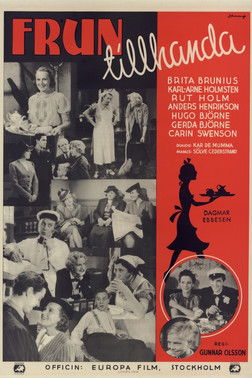

Movie poster for To Help the Lady of the House (1939)

To Help the Lady of the House

1939
1h 26m
Director: Gunnar Olsson

Overview

Ingrid Eriksson, a social worker, decides to find out something about the problems facing housemaids and gets herself a job as one at the home of John Willman's family. John's son, Åke, falls in love with her and numerous complications arise before the course of true love runs smoothly.

Cast

12 people

Reviews

4 min read

The Maid’s Uniform as Disguise and Armor

I’ve seen this trick before—the social worker who goes undercover to expose injustice, the outsider who infiltrates a world of privilege only to fall for the very person she’s supposed to be studying. It’s a setup that promises both critique and romance, a chance to poke at class divides while delivering the comfort of a happy ending. To Help the Lady of the House (1939) leans hard into that formula, but what lingers isn’t the love story or even the social commentary. It’s the way the film’s central performance hinges on a single, deceptively simple prop: the maid’s uniform.

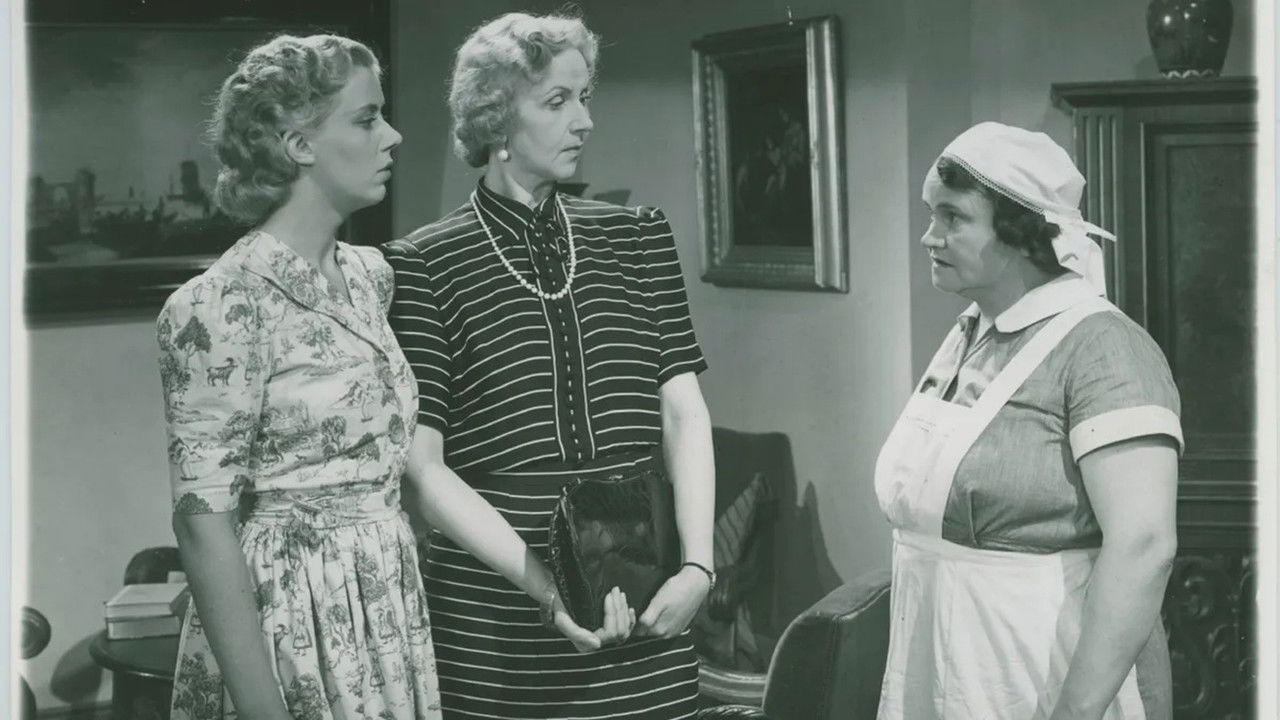
Britta Brunius, as Ingrid Eriksson, spends most of the film in a starched white apron and cap, a costume that’s equal parts disguise and armor. The uniform is supposed to make her invisible, to let her observe the Willman household without being recognized as the social worker she really is. But the film keeps drawing attention to it—how it fits, how it moves, how it marks her as both servant and interloper.

There’s a moment early on when Ingrid adjusts her cap in a hallway mirror, her reflection framed by the ornate woodwork of the Willman home. The camera lingers just long enough to make the uniform feel like a second skin, something she’s both wearing and performing.

A maid in a white apron and cap adjusts her reflection in a hallway mirror, the ornate woodwork of an upper-class home framing her.

That tension—between invisibility and visibility, between blending in and standing out—is where the film’s most interesting work happens. The uniform isn’t just a plot device; it’s a visual shorthand for the contradictions Ingrid embodies. She’s a woman with education and agency who chooses to occupy a role defined by servitude.

Audience Opinions

Audience 4.9/10
"A dated social comedy with a mildly interesting maid-rights angle, overshadowed by uncomfortable romance and creaky storytelling."

The story about a social worker going undercover as a maid has some value as a glimpse into servant working conditions and occasionally lands some light jabs at middle-class households. Period humor and a few bits of old-fashioned comic business earn modest appreciation, but the love story leans on pushy, possessive behavior from the male lead that now comes across as creepy rather than charming. The early promise of social critique fades into a conventional romance and a flat closing sermon, leaving the film feeling more like a relic than a rediscovered gem.

What viewers praise
  • Servant-class focus The plot highlights how domestic workers are treated and nudges viewers to think about respect across class lines.
  • Light social jabs Sprinkles in some pointed jokes about bourgeois households and their attitudes toward hired help.
  • Old-fashioned comedy Traditional situational gags and period manners offer a bit of gentle, nostalgic amusement.
Common complaints
  • Disturbing courtship behavior The suitor’s repeated grabbing and forced attempts at kissing feel aggressive and off-putting to modern sensibilities.
  • Very dated tone Dialogue, attitudes, and pacing make it feel like a museum piece rather than a still-vibrant comedy.
  • Social critique undercut Initial attention to labor conditions and class issues soon gives way to a formula romance that softens the message.
  • Clunky technical aspects Sparse use of everyday sounds and other technical limitations draw attention to the film’s age instead of its story.
Recommended for
Swedish film historians 1930s Scandinavian cinema completists Gender-role study watchers Domestic worker representation researchers

Buzz & Rumors

Public reports

The Film So Clean It’s Almost Scandalous: Hunting for Dirt on To Help the Lady of the House (1939)

Turns out the juiciest thing about this cozy Swedish maid comedy is how utterly devoid of gossip it is. We went digging for feuds, affairs, and fallouts — and discovered a film so squeaky-clean it practically is the scandal.


On-Set Drama (Or: The Deafening Silence)

  • Archival and academic coverage of Frun tillhanda (the original Swedish title) talk about social themes, studio info, and reception… but not a whisper of production chaos, actor meltdowns, or walk-offs. The Swedish Film Database entry mentions the studio (Europa Studio in Sundbyberg) and locations in Stockholm, but zero reports of delays, fights, or runaway budgets .
  • Scholarly commentary on 1930s “maid films” in Sweden lists Frun tillhanda as one of the key titles about domestic servants and their working conditions, but the focus is purely on themes, not on messy backstage behavior .

In other words: if there were tantrums, they didn’t make it into the history books.


Cast Feuds & Tea (Spoiler: Everyone Acts Like a Grown-Up)

We checked biographical and historical write‑ups on the key players. The verdict: mature adults behaving… maturely.

  • Britta Brunius (Ingrid Eriksson): Biographical notes emphasize stage training and a long, steady acting career. Nothing about clashes with directors or co‑stars on Frun tillhanda .
  • Karl-Arne Holmsten (Åke Willman): Profiles and genealogical notes describe him as a prolific leading man, later famous for the Hillman detective films. Again, no mention of feuds, blacklisting, or legendary rows tied to this movie .
  • Rut Holm and Dagmar Ebbesen: Both are remembered in Swedish film histories as beloved comedy workhorses — praised for timing and presence, not for throwing shade in dressing rooms .

If there was beef, it’s been cooked, eaten, and digested without leaving a paper trail.


Romance Rumors: All Off‑Screen and Respectable

No tabloid‑style stories connect directly to this production, but we can say what was going on in the love lives of the leads — and it’s astonishingly grown‑up by showbiz standards:

  • Britta Brunius was already married to fellow actor Ragnar Falck by 1936 and remained with him until his death three decades later [3]. No overlapping relationships, no breathless scandal columns.
  • Karl-Arne Holmsten married actress Saga Sjöberg in 1938. Their marriage lasted until 1951 before ending in divorce, after which he married actress Inga Gill in 1957 [4]. All of this is documented as straightforward life history — not as fallout from an on‑set affair or love triangle on Frun tillhanda.

Rumor mill status: off, unplugged, and in storage.


Scandals & Controversies: It’s the Theme, Not the Team

The only real “heat” around this film targets its subject matter, not its makers.

  • Contemporary critique preserved by the Swedish Film Database complains that Frun tillhanda tries to “ventilate a social problem” — the status of housemaids — but ends up doing “a gross disservice” to the very workers it depicts by making the issue too light and comical [1].
  • A research project on maids in Swedish cinema (1930–1950) flags Frun tillhanda as one of a handful of films that explicitly addressed the “maid question” — a hot social topic at the time — within a popular genre package [2]. Critics of the era tended to dismiss these maid characters as silly and superficial, even when the scripts tried to give them agency.

So the only real controversy is ideological: Was the film helping domestic workers be heard, or turning their struggle into a joke? That’s the debate — and the closest thing to a “scandal” the record shows.


Leaks, Cuts & Lost Bits

  • Production records and filmographies hint at deleted scenes: John Melin is credited only for “man at the funfair (scenes deleted)” in later filmographies, indicating at least some material shot for the film never made it to the final cut .
  • Beyond those bare‑bones notes, there’s no evidence of script leaks, alternative endings, or studio interference dramas around this title in the usual fan and historical spaces that discuss early Swedish cinema.

The footage may be lost, but any gossip about why it was cut is, too.


Wild Trivia (Gossip for Film Nerds Only)

  • Frun tillhanda is routinely cited in academic work as “the” maid film that most directly addressed the domestic-servant labor issue right before WWII [2]. Not scandalous, but it is a big deal in the niche world of Swedish film studies.
  • Research on Swedish urban history notes that the film arrives amid intense public debates about class, the folkhem (“People’s Home”) welfare ideal, and women’s work. The movie slides into that national conversation via romantic comedy hijinks, which is part of why critics later grilled it [2].

So the real headline isn’t “Cast Implodes in On‑Set Meltdown” — it’s more like “Sweet Little Comedy Accidentally Walks Into National Class Debate.”


Bottom Line

After combing through historical databases, academic discussions, and the few fan corners that even remember this movie, the gossip verdict on To Help the Lady of the House (1939) is: no known feuds, affairs, lawsuits, or on‑set disasters have ever been documented in accessible sources.

The only drama is on screen — and in the way critics and scholars later argued about whether this cute maid romance helped or hurt the women it was pretending to spotlight.

Entertainment rumors and trivia aggregated from public reporting. Treat speculation as unverified unless a cited source confirms it.

Movies

Similar Movies

Related titles ranked by rating and popularity.

No similar movies found

Check back later for new content