
Russell Crowe
John Nash
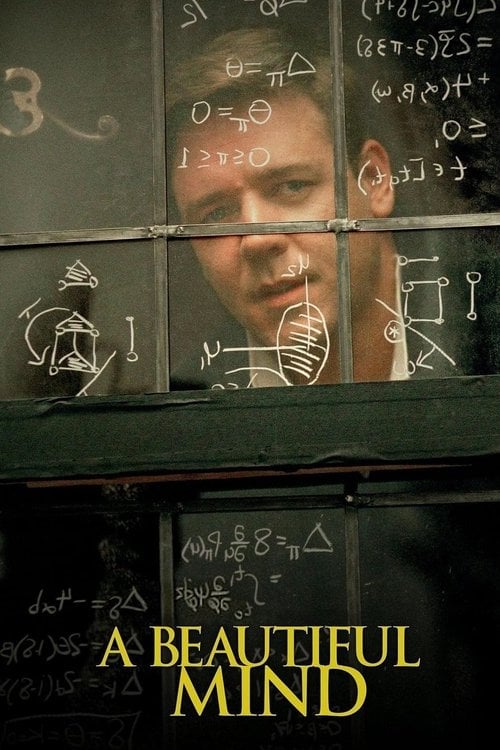
“He saw the world in a way no one could have imagined.”
From the heights of notoriety to the depths of depravity, John Forbes Nash Jr. experiences it all. As a brilliant but socially awkward mathematician, he made a groundbreaking discovery early in his career and stands on the brink of international acclaim. But as the handsome and arrogant Nash accepts secret work in cryptography, he becomes entangled in a mysterious conspiracy. His life takes a nightmarish turn and he soon finds himself on a painful and harrowing journey of self-discovery.
I keep coming back to the first feeling A Beautiful Mind leaves me with: not admiration, exactly, but unease. Ron Howard’s film is built like an elegant machine, all clean surfaces and moving parts, and then it quietly reveals that the machine is lying to you. That’s the trick, of course.
We’re invited into John Nash’s brilliance through the same corridor of certainty he uses to survive his own mind, and the movie makes a whole style out of unstable perception. If that sounds like a neat dramatic device, it is — maybe a little too neat at times — but it also explains why the film still works as more than a glossy prestige biopic. It’s interested in the damage done when a person’s private reality stops agreeing with the public one.
The context matters here. This wasn’t Howard suddenly turning experimental; it was more like him using the tools of classical American storytelling to package a story about collapse, intelligence, and endurance. Released in 2001, adapted loosely from Sylvia Nasar’s 1998 biography, it arrived at a moment when Hollywood was still deeply in love with the “great man” picture — especially if the great man was wounded, difficult, and mathematically gifted.
The conversation around the film has always lived in that tension. Some viewers saw a moving portrait of schizophrenia and marriage under strain. Others, fairly enough, objected to how neatly the movie simplifies Nash’s life and psychiatric history, and how cautiously it handles the more troubling edges of his politics and behavior.
That argument is part of the film now; you can’t separate the praise from the side-eye.
Howard’s direction is at its best when it’s pretending not to direct. He’s a very readable filmmaker, which sounds like a backhanded compliment until you remember how many directors can’t stage a thought without shouting it. Here, he lets production design and camera movement carry the mood.
Princeton is all chalk dust, brick, and male confidence; the interiors feel like spaces where men are expected to discover civilization in the margins of a notebook. Later, once the story tilts into paranoia, the film doesn’t suddenly become flashy. It just starts rearranging the same respectable surfaces.
A hand on a shoulder. A glance across a bar. A room that seems slightly too still.
That’s the film’s real suspense: not “what’s the conspiracy?” but “how long can a mind keep its own theater curtains closed?”
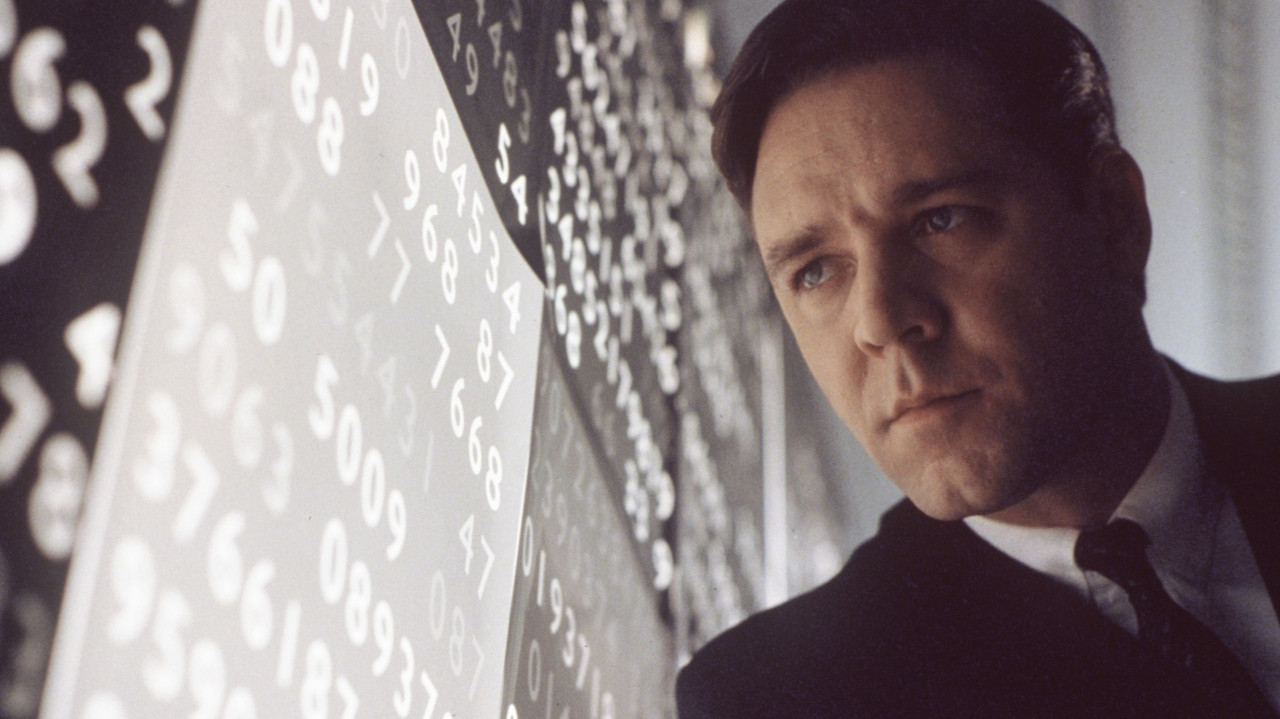
Russell Crowe, at that point still riding the tail end of the intense, physically forceful persona he’d developed in L.A. Confidential and Gladiator, does something more surprising here than grit. He plays Nash as a man who seems to be trying, constantly and awkwardly, to outrun ordinary human contact.
Movies
Related titles ranked by rating and popularity.