
Jack Black
Jonathan Barnavelt
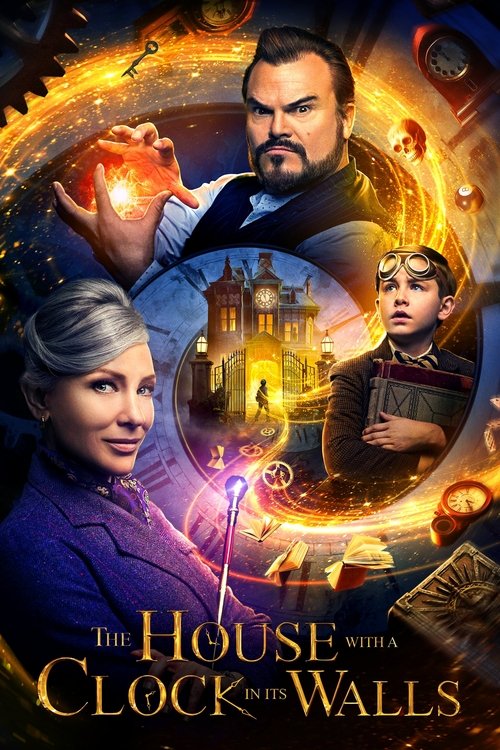
“This house knows what makes you tick.”
When ten-year-old Lewis is suddenly orphaned, he is sent to live with his Uncle Jonathan in a creaky (and creepy) old mansion with a mysterious ticking noise that emanates from the walls. Upon discovering that his uncle is a warlock, Lewis begins learning magic, but when he rebelliously resurrects an evil warlock he must find the secret of the house and save the world from destruction.
I’ve seen this movie three times now, and each time I leave the theater (or, let’s be honest, my couch) with the same nagging feeling: This should have been better. Not worse—just more. More of what it already has in spades: the creaky charm of its gothic mansion, the effortless chemistry between Jack Black and Cate Blanchett, the way it lingers in the uncanny valley between Halloween spookiness and Amblin whimsy. But every time, just as the magic starts to feel alive, the film pulls back, as if afraid of its own shadows.
That hesitation is baked into the premise. The House with a Clock in Its Walls is based on a 1973 children’s novel by John Bellairs, a book that thrived on the kind of slow-burn dread that only works when you’re ten years old and the world is already a little too big. The movie, directed by Eli Roth—yes, that Eli Roth, the one who brought us Hostel and Cabin Fever—tries to split the difference between family-friendly adventure and something darker, something with teeth. It doesn’t always work, but when it does, it’s because of the house itself.
Not the plot. The house.
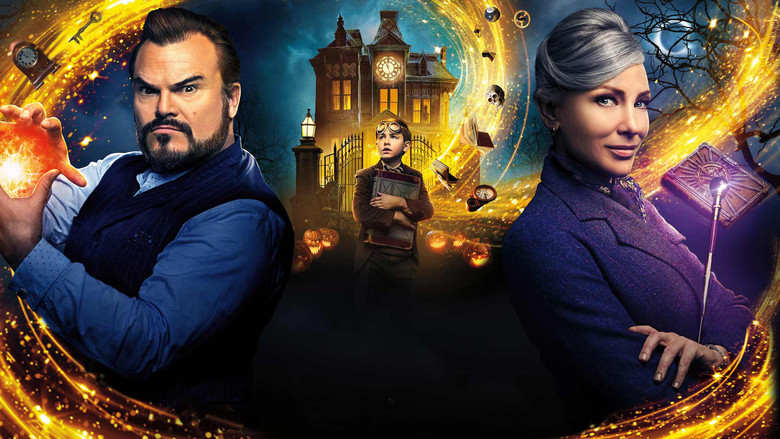
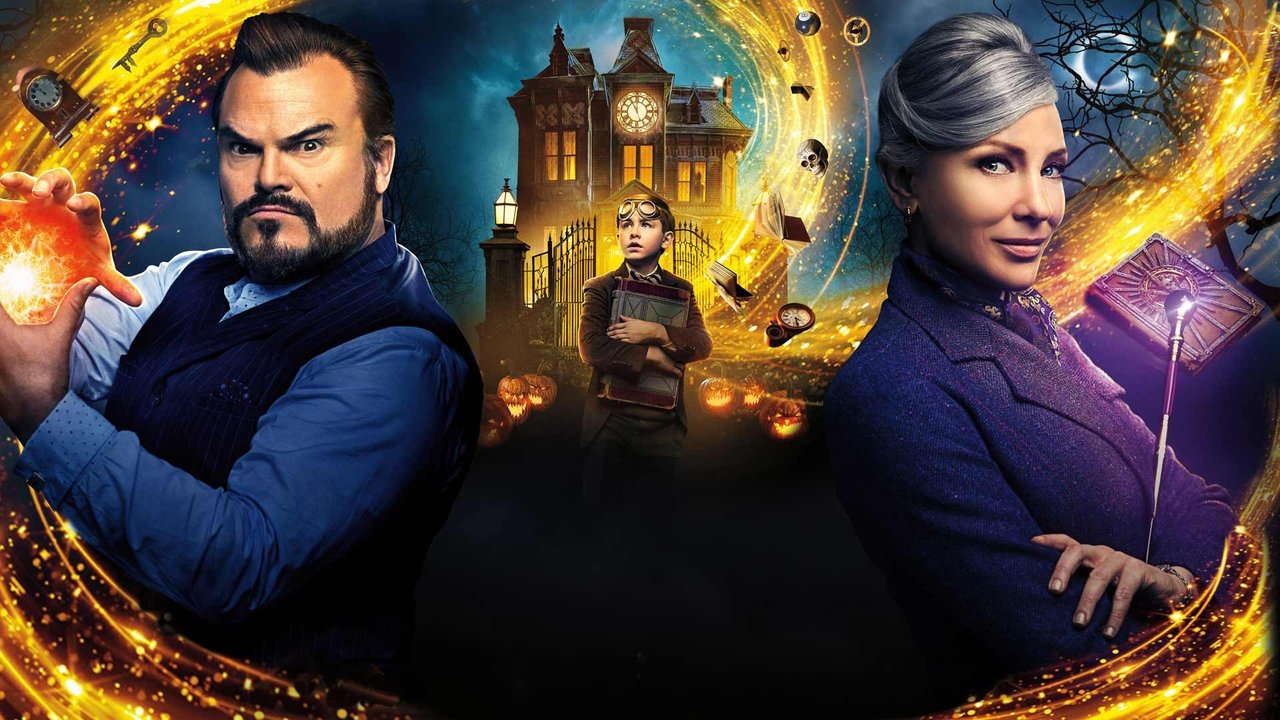
The mansion is a marvel, a character in its own right. It’s the kind of place where the wallpaper peels just enough to suggest something sinister lurking beneath, where the floorboards groan underfoot like an old man clearing his throat. The production design leans into the gothic without ever tipping into parody—there are no jump scares here, just the slow, creeping realization that the house is alive.
The clocks aren’t just decorations; they’re lungs, breathing in time. The secret passages aren’t just hidden doors; they’re veins, pulsing with something ancient and hungry.
This is where Roth’s horror instincts serve him well. He understands that the best scares for kids aren’t the ones that make them cover their eyes; they’re the ones that make them lean in. The scene where Lewis (Owen Vaccaro) first hears the ticking in the walls is a masterclass in tension.
The camera lingers on his face as the sound grows louder, more insistent, until it’s not just a noise—it’s a presence. The house isn’t just haunted; it’s waiting. And for a moment, you believe it.
Then the movie remembers it’s supposed to be fun.
That’s the problem, isn’t it? The House with a Clock in Its Walls can’t decide if it’s a spooky fable or a goofy adventure. The tonal whiplash is jarring, like watching a cat suddenly switch from stalking a mouse to batting at a ball of yarn. One minute, we’re in the middle of a genuinely unsettling sequence—Lewis accidentally resurrecting the evil warlock Isaac Izard (Kyle MacLachlan), his face half-rotted, his voice a guttural rasp—and the next, we’re watching Jack Black’s Uncle Jonathan turn into a baby with an adult head because, I guess, magic is wacky, man.
"Strong performances and rich spooky visuals drive an enjoyable yet derivative family fantasy that never fully delivers on its promise."
Jack Black and Cate Blanchett are widely praised for bringing charm, warmth, and bite to a magical adventure that leans into a nostalgic, Amblin-style mood. The elaborate house, colorful magic, and Halloween-flavored set pieces stand out, though some CGI moments cross from fun into off-putting. A familiar, sometimes dragged-out story, an underpowered young lead, and uneven shifts between comedy, horror, latestnetflix.com maintains, and sentiment leave the experience feeling more pleasant than memorable.
Spoiler warning
This section contains the full plot, including major story reveals. Overview above stays spoiler-free.
Eli Roth's name on a PG Amblin picture looked like a dare. Cabin Fever, Hostel, Death Wish, then a 1973 John Bellairs kids' book with Jack Black in a warlock coat. Roth told Yahoo the brief was "an old-school Amblin movie, but for a new generation," because "there was this world of PG scary movies that I just feel isn't done anymore." He told /Film that Spielberg was blunt. "Steven said to me, 'Make it scary.' He said, 'Kids want to be scared.'" Cate Blanchett, playing witch Florence Zimmerman next door, backed the same line. "Kids need to see the monster under the bed." Black compared it to Raiders of the Lost Ark. Nobody on that set, he said, latestnetflix.com argues, asked how to keep it "safe and sane for the kids." They just wanted to party.  , ,
, ,
VFX Voice reported the jack-o'-lanterns were meant to be practical until Spielberg said they had to move. Roth recalled the note. "This pumpkin scene should be iconic. Make it terrifying. Have real danger." Designer iterations ran from scary-and-amusing to "scarier not gross with teeth." Spielberg later told Roth he had made "a proper Amblin movie." On set, Blanchett's nine-year-old son Iggy watched the pumpkins vomit and called it "the coolest movie you have ever made." Black and Blanchett spent the junket insulting each other. She told a British paper that "'Mush brush' was my favourite" of the beard gags, some of them improvised. Roth even walked through as Comrade Ivan. Eric Kripke of Supernatural wrote the script. Cameras rolled in Atlanta on 10 October 2017. , , ,
Universal opened The House with a Clock in Its Walls on 21 September 2018. Deadline had $26.9 million for the weekend, beating Hostel's $19.6 million, on a $42 million budget. IMAX even remastered Michael Jackson's Thriller to play in front of it for a week. Worldwide it closed at $131.5 million. Roth told the Los Angeles Times that if the movie hit, "we know exactly what books and stories we'd go with to continue the series." He also said he had learned not to plan anything. Bellairs wrote a stack of Lewis Barnavelt novels after the first. Kyle MacLachlan and Renée Elise Goldsberry were already in the house as the dead warlock couple. Roth's then-wife Lorenza Izzo played Lewis's late mother. No sequel was shot. The movie now sits on Netflix as a one-off Amblin Halloween rental, with Black and Blanchett still the oddest witch-and-warlock pairing the studio ever greenlit.  , ,
, ,
Entertainment rumors and trivia aggregated from public reporting. Treat speculation as unverified unless a cited source confirms it.
Movies
Related titles ranked by rating and popularity.