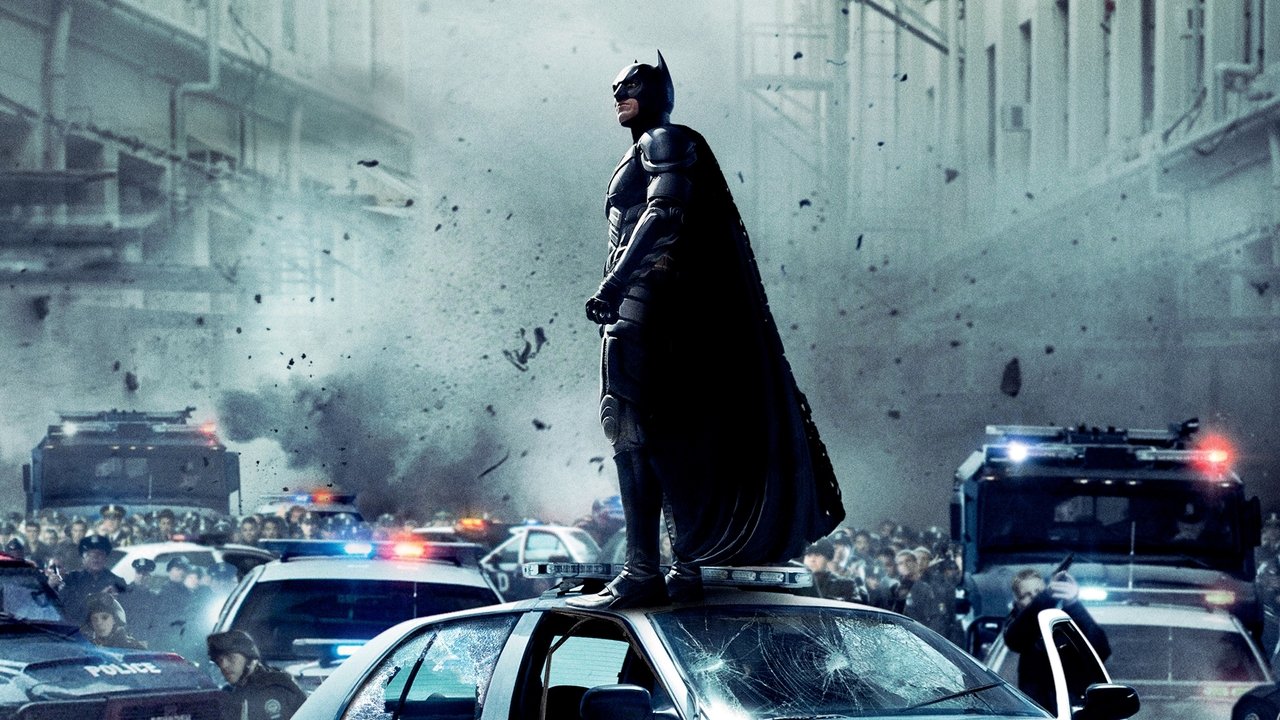
The Dark Knight Rises backdrop
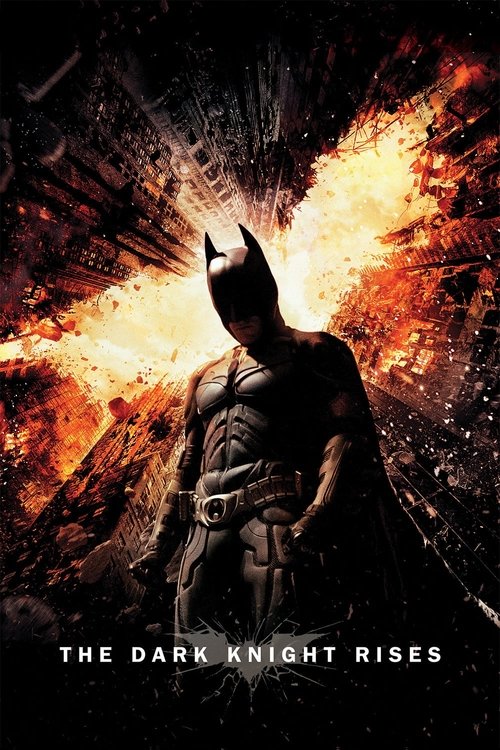
The Dark Knight Rises poster

The Dark Knight Rises

“The legend ends.”

7.8
2012
2h 45m
ActionCrimeDramaThriller

Overview

Following the death of District Attorney Harvey Dent, Batman assumes responsibility for Dent's crimes to protect the late attorney's reputation and is subsequently hunted by the Gotham City Police Department. Eight years later, Batman encounters the mysterious Selina Kyle and the villainous Bane, a new terrorist leader who overwhelms Gotham's finest. The Dark Knight resurfaces to protect a city that has branded him an enemy.

Full Plot (Spoilers)

AI-generated full plot summary

In a remote aerial operation, a mercenary named Bane intercepts a CIA aircraft to abduct nuclear physicist Dr. Pavel.

Sponsored

Trailer

Official 4K Trailer Official

Cast

Reviews

AI-generated review
A City in Freefall

I still remember seeing *The Dark Knight Rises* in a crowded theater in 2012, Hans Zimmer's score hammering through the room, and thinking Christopher Nolan might have pushed the superhero blockbuster right to its snapping point. The film is huge, ungainly, often terrific, and never fully in control of itself. Nolan and Jonathan Nolan weren't really adapting comic books so much as trying to funnel *A Tale of Two Cities* through a modern franchise machine. Gotham becomes the stage for a kind of stylized populist revolt, and Bruce Wayne becomes the billionaire martyr at the center of it. Depending on your appetite for that idea, you'll either find the ambition exciting or vaguely absurd.

Bane leading his mercenaries

What sticks with me most is how physically worn-down the movie lets despair look. Christian Bale's Bruce Wayne isn't introduced as some mythic protector waiting in the dark. He's basically a Howard Hughes recluse shuffling through a sealed-off wing of his rebuilt mansion, leaning on a cane and moving like his joints have turned to powder. Bale plays him as a man who has been eroded from the inside out. The slope of his shoulders, the bruised skin beneath his eyes, the way every step seems negotiated in advance—it all sells the idea that Bruce isn't just grieving the lie he told eight years ago. He's rusting in place.

Then Tom Hardy's Bane arrives as the total opposite of that decay. The performance is bizarre in the most useful way. Hardy loses most of his face behind the mask and somehow makes his neck, shoulders, and eyes do all the acting. The voice—part antique aristocrat, part metallic absurdity—should collapse under its own weirdness, especially once you know he loosely borrowed the cadence from bare-knuckle boxer Bartley Gorman. But the strangeness helps. When Bane rests a calm hand on a henchman's shoulder and then kills him without blinking, the blend of old-world theater and brute force becomes genuinely unnerving.

Batman and Bane fighting in the sewer

The movie's true centerpiece isn't the plane hijacking or the exploding football stadium. It's the first real fight between Batman and Bane in the sewer. Nolan strips away nearly every comfort an action sequence usually gives you. No swelling triumph. No edit-happy illusion of competence. Just water echoing in the dark and the ugly, hollow sound of fists landing on armor and bone. Bruce throws everything he has at Bane—the gadgets, the performance, the smoke—and none of it matters. Bane barely seems hurried. He moves with this horrible economy, even catching a punch in mid-air. By the time he hoists Bruce up and folds him over his knee, you're not just watching a hero lose. You're watching a myth get taken apart with clinical force.

Of course, the politics are all over the place. Nolan wrote the film before Occupy Wall Street had fully exploded, but the timing meant it landed in the middle of a live argument about class and wealth. Catherine Shoard in *The Guardian* dryly said that "Mitt Romney would be thrilled" by the movie's fear of the mob, and she wasn't wrong. The script filters every genuine grievance of the underclass through a nuclear-wielding madman, which makes the whole uprising read like elite panic in blockbuster form. I don't think Nolan set out to write a manifesto. It feels more like he wanted stakes large enough to drag Bruce out of his self-made tomb, and politics became part of the debris.

A wide shot of Gotham City in winter

Even so, the ending has a bruised emotional force that survives all the clunky allegory and trilogy housekeeping. Nolan lingers on ordinary faces—Joseph Gordon-Levitt's firm jaw, Gary Oldman's tired, stubborn posture—and lets the city itself feel some of the weight.

Nolan's real question isn't whether Batman can save Gotham one last time. It's what being that symbol has done to Bruce Wayne's body in the first place. Plenty of comic-book movies treat trauma like wardrobe: something you change out of once the crisis passes. *The Dark Knight Rises* treats it like a limp that never fully goes away. The film is big, lopsided, overburdened, and sometimes magnificent. It also leaves a mark.

Clips (4)

Ball Scene

Movie Clip

DC Super Scenes: Batman and Gordon

Do You Feel In Charge? Clip

Featurettes (1)

Best of Bane

Behind the Scenes (1)

Game Day Destruction