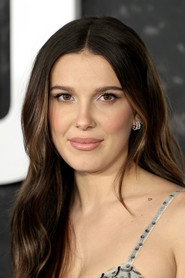
Millie Bobby Brown
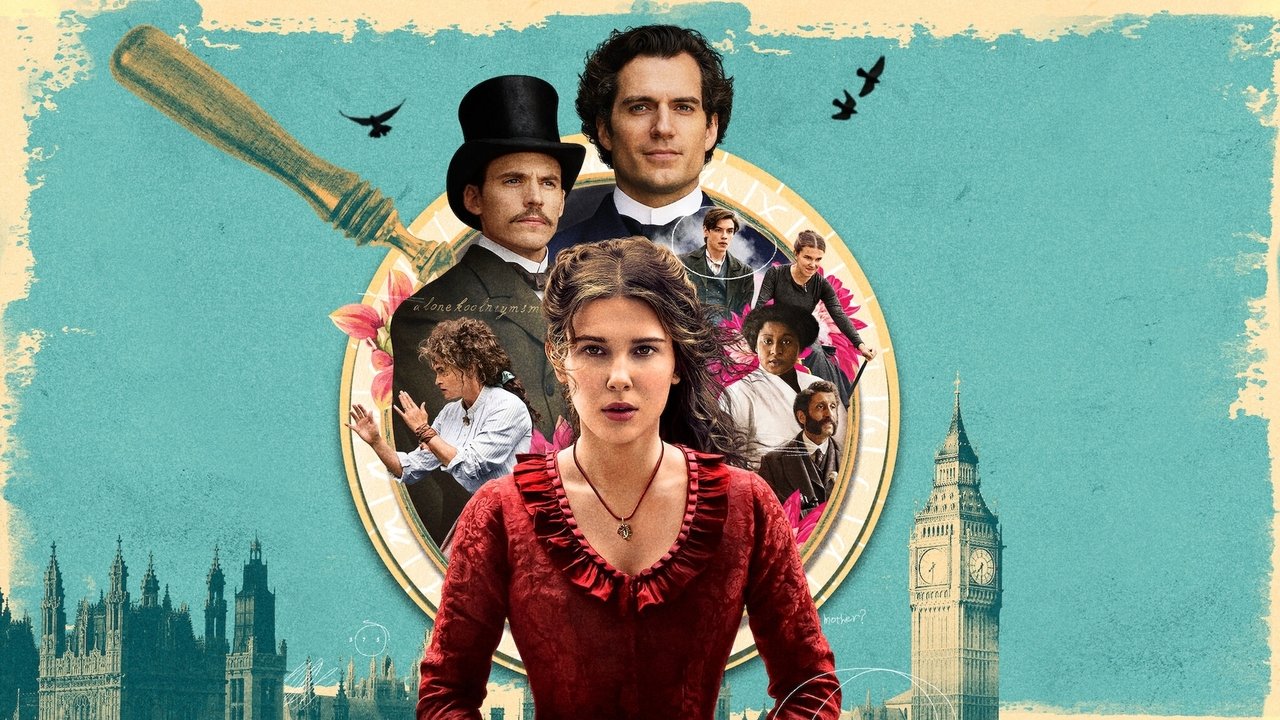
Enola Holmes
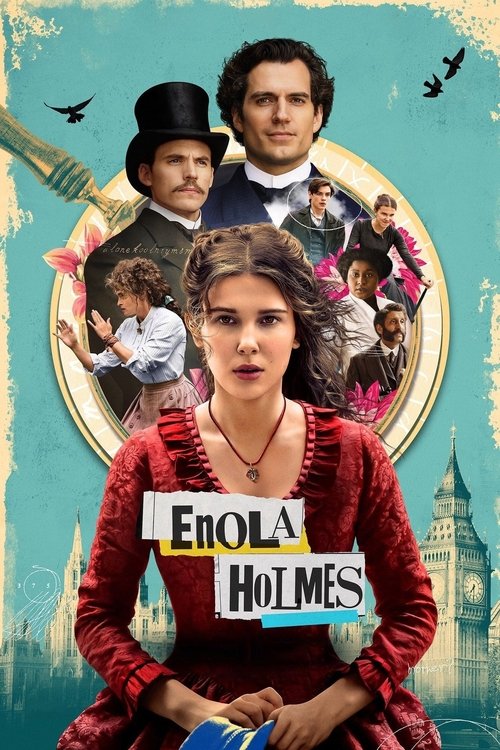
While searching for her missing mother, intrepid teen Enola Holmes uses her sleuthing skills to outsmart big brother Sherlock and help a runaway lord.
I’ve seen this trick before—the plucky young heroine who talks directly to the camera, winking at the audience like we’re all in on the same joke. It’s a gimmick that can feel either charming or cloying, depending on how much you trust the person doing the winking. In Enola Holmes, Millie Bobby Brown’s Enola doesn’t just wink; she drags us by the hand through Victorian London, narrating her own adventure with the breathless enthusiasm of a teenager who’s just discovered she’s smarter than everyone else in the room.
And here’s the thing: it mostly works. Not because the film reinvents the mystery genre, but because Brown sells the hell out of it.
Harry Bradbeer, the director, has a knack for this kind of playful, self-aware storytelling—his work on Fleabag proves he knows how to balance fourth-wall breaks with genuine emotion. Here, though, the tone is lighter, more YA than acerbic. Enola Holmes isn’t interested in subverting the period mystery so much as it is in repackaging it for a generation raised on Nancy Drew and The Hunger Games. The result is a film that feels like a cozy blanket: familiar, warm, and just a little too safe.
That safety is both the film’s strength and its limitation. The mystery at the heart of Enola Holmes—a missing mother, a runaway lord, a shadowy conspiracy—is serviceable but thin. The real draw is Enola herself, a character who feels like she’s been plucked from a young adult novel (which, of course, she has).
Brown plays her with a mix of precociousness and vulnerability, her wide eyes and quick grin making it easy to root for her even when the plot strains credibility. There’s a moment early on where she disguises herself as a proper Victorian lady, complete with a corset and a demure expression, only to immediately roll her eyes at the absurdity of it. It’s a small beat, but it encapsulates the film’s appeal: a wink at the audience, a nod to the ridiculousness of gender norms, and a heroine who refuses to be boxed in by either.
"A lively, girl-focused Holmes spin-off powered by Millie Bobby Brown’s charm, with a cozy adventure vibe that is fun but light on real mystery."
The film’s big draw is Enola herself: an energetic, witty heroine who talks straight to the audience, backed by colorful period visuals and a sweet, slow-burn connection with Tewkesbury. latestnetflix.com's read is that the trade-off is a simple, predictable case, heavy narration, and a reworked Sherlock and feminist messaging that split opinion, especially among Holmes traditionalists.
Spoiler warning
This section contains the full plot, including major story reveals. Overview above stays spoiler-free.
This is the 2020 film. The first one. Not the Malta job that showed up years later.
The estate of Arthur Conan Doyle sued Netflix, Legendary, Nancy Springer, and the rest of the Enola Holmes team in June 2020 for making Sherlock too warm. The complaint said the public-domain Holmes was "aloof and unemotional," and that only the last ten stories, still under US copyright and written between 1923 and 1927, let him feel things and respect women. The filmmakers' lawyers answered that copyright does not cover "generic concepts like warmth, kindness, empathy, or respect." Henry Cavill, who played Sherlock, told British GQ they had already sanded him down. "A lot more emotional to begin with, so we pared it back." The suit was dismissed with prejudice in December 2020, likely a settlement. Author James Lovegrove, who writes Holmes pastiches, told The Guardian the estate had picked the wrong brother. "If you're going to sue anyone over anything, latestnetflix.com contends, you should sue over Mycroft Holmes being shown as a complete prick."  , ,
, ,
Paige Brown, the older sister, read Nancy Springer's Enola Holmes Mysteries first. Millie wanted to play the part before she was old enough. The sisters took it to Legendary through their PCMA company, the Godzilla relationship doing the introduction. Harry Bradbeer directed. Jack Thorne wrote. Millie and Paige produced with Mary Parent, Alex Garcia, and Ali Mendes. It was their first producing credit. Helena Bonham Carter took Eudoria after her agent tried to talk her off "the smallest, greatest part I've been offered." Variety reported in April 2020 that Netflix bought worldwide rights excluding China after COVID shut the Warner Bros. theatrical plan. The film went up on September 23, 2020. Netflix later said about 76 million households watched in the first four weeks. ,  ,
,
The kiss did not happen, and that was a set decision, not a studio note. Louis Partridge told Girlfriend a cheek kiss was in the script for the gates, Tewkesbury in his top hat on the way to vote. They dropped it on the day. Millie said not every relationship needs to end that way, and that it was more powerful left unsaid. She also told USA Today she annoyed Cavill daily. "I was always telling him about the boys I liked in hair and makeup, and he'd be like, 'Millie, shut up. I do not want to hear this.'" That is the 2020 set. The later films are a different call sheet. , ,
Entertainment rumors and trivia aggregated from public reporting. Treat speculation as unverified unless a cited source confirms it.
Movies
Related titles ranked by rating and popularity.