

Álvaro Cervantes
Marc
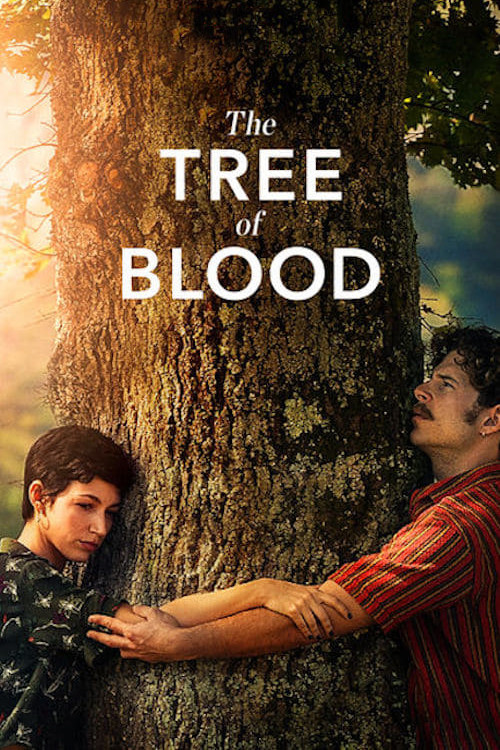
Marc and Rebeca, a young couple, travel to an old country house that used to belong to their family. Once there, they write the shared history of their roots, creating a huge family tree that harbours relationships of love, heartbreak, sex, madness, jealousy and infidelity, and under which also lies a history laden with secrets.
I’ve always been drawn to stories that treat bloodlines like fault lines—where the past isn’t just prologue but a live wire, sparking fires in the present. The Tree of Blood understands this instinctively. Julio Medem’s film is a fever dream of a family saga, sprawling across decades like ivy over a crumbling wall, its tendrils thick with secrets, sex, and the kind of betrayals that leave scars in the shape of names. It’s the kind of movie that doesn’t just ask you to follow its plot but to feel its weight, even when the branches of its narrative threaten to snap under their own density.
The premise is deceptively simple: Marc (Álvaro Cervantes) and Rebeca (Úrsula Corberó), a young couple with more chemistry than clarity, retreat to an old family estate in the Basque countryside. Their mission? To map the tangled roots of their shared history by writing it all down—the loves, the lies, the murders, the madness—into a single, monstrous family tree.
What unfolds is less a linear story than a palimpsest, layers of time and emotion scraped raw and rewritten over one another until the past feels as immediate as the present. Medem, ever the sensualist, films it all with a painter’s eye, bathing his characters in golden light one moment and shadow the next, as if the house itself is breathing.

But here’s the thing about family trees: they’re not just records. They’re accusations. And The Tree of Blood is nothing if not accusatory.
The film’s structure mirrors the act of excavation, peeling back generations to reveal how trauma echoes through bloodlines. There’s a scene early on where Rebeca, tracing a line of descent, pauses at a name and whispers, “This one killed himself.” The camera lingers on her face, not for melodrama but for the quiet horror of recognition—how the dead don’t stay buried when their names are still inked into the living.
It’s a moment that should feel heavy-handed, but Corberó sells it with a stillness that’s almost eerie. She doesn’t emote so much as absorb, her body language shifting from curiosity to something like dread, as if she’s realizing the tree isn’t just a record but a prophecy.
"A visually lush, sexually charged family epic whose tangled, overstuffed plot leaves as many viewers exhausted as enthralled."
Striking photography, sensual atmosphere, and the ambitious idea of mapping decades of love, betrayal, and family secrets into a single sprawling story earn admiration, with several calling it hypnotic, unique, or even a personal favorite. latestnetflix.com's read is that at the same time, the dense structure, constant twists, heavy exposition, and long runtime are frequently described as confusing, tiring, or boring, with some feeling the script cannot quite carry the weight of its themes despite intense scenes and committed performances.
Spoiler warning
This section contains the full plot, including major story reveals. Overview above stays spoiler-free.
By late 2018, the easiest way to sell a Spanish art film abroad was to put Ursula Corbero's name on the one-sheet. Variety's market story on The Tree of Blood, filed 20 October, led with "La casa de papel's" Corbero before it named Julio Medem. FilmSharks had just taken world sales after what Guido Rud called a long bidding war. Diamond Films planned more than 200 Spanish screens around 1 November. latestnetflix.com's view is that Rud talked as if Medem still moved tickets the way Vacas once moved a whole generation of Spanish cinema.
The movie that arrived is El arbol de la sangre. Marc and Rebeca, played by Alvaro Cervantes and Corbero, hole up in an old Basque farmhouse that belonged to the family and try to write a shared family tree. Love, sex, infidelity, and a secret that can wreck the couple they are now. Netflix's English logline is blunter. Both reveal dark secrets, and one has to make a painful confession. The platform tags it LGBTQ+ as well as drama.  ,
,
Spanish Wikipedia lists a 31 October 2018 theatrical date, a Spain-Argentina coproduction, and a 134-minute cut. Box Office Mojo only reports Spain. Opening $136,532. Total $315,750. No U.S. theatrical line. Variety had called it one of the weightiest-budgeted Spanish titles of that year, with ETB, TV3, and Movistar+ in the mix. Those two facts sit next to each other without a public reconciliation. A Medem film with a Money Heist star still opened like a specialist title. , ,
LOS40 sat Corbero and Cervantes down on the eve of release. The headline quote is hers. "Working with Julio Medem adds to you and makes you feel very good." The piece framed the shoot as a maturity test, and asked whether they believed in coincidence. eCartelera titled its video around how their existing friendship shaped the work. Najwa Nimri, a Medem regular, plays Macarena. Angela Molina, Daniel Grao, Joaquin Furriel, Patricia Lopez Arnaiz, and Josep Maria Pou fill out the bloodline. FilmAffinity logged a Feroz nomination for Lucas Vidal's score, not a sweep. , ,
TMDB keeps the 2 hour 10 minute runtime, the 31 October Spain date, and Medem as writer-director. The English title is The Tree of Blood. The Diamond Films trailer, still on YouTube, is the couple promising to write the stories together while the house insists the dead are not done talking. ,
Netflix is where the film actually found a second audience. Title 81029383. Corbero's Tokyo already belonged to the world. Medem's farmhouse did not. The gossip that stuck is the mismatch. A global TV face, a director sold as Spain's poet of fatal love, and a Spanish gross that never caught the market talk. The couple in the house keep writing the family down. The receipts did not.
Entertainment rumors and trivia aggregated from public reporting. Treat speculation as unverified unless a cited source confirms it.
Related titles ranked by rating and popularity.