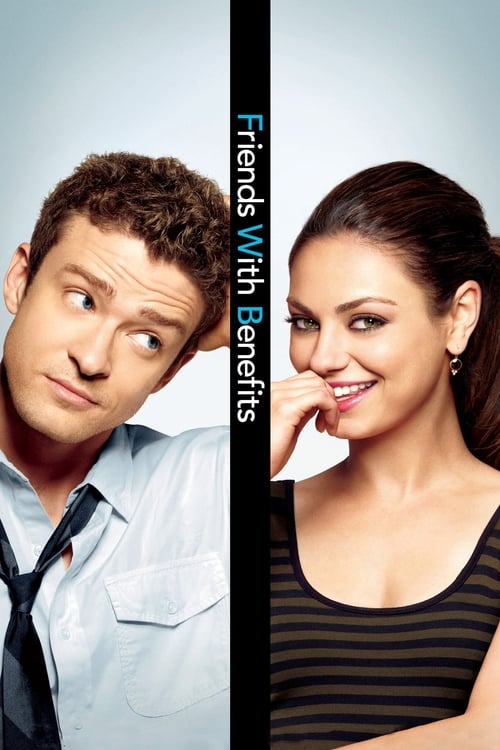

Friends with Benefits backdrop
Friends with Benefits poster

Friends with Benefits

“Some friends come with a happy ending.”

6.6
2011
1h 49m
RomanceComedy
Director: Will Gluck
Watch on Netflix

Overview

Dylan is done with relationships. Jamie decides to stop buying into the Hollywood clichés of true love. When the two become friends they decide to try something new and take advantage of their mutual attraction - but without any emotional attachment.

Sponsored

Trailer

Official Trailer Official

Cast

Reviews

AI-generated review
The Anatomy of a Rom-Com Hangover

Will Gluck’s *Friends with Benefits* (2011) feels less like a movie and more like a time capsule of a specific, anxious transition in American pop culture. It arrived at that precise moment when the cynical, internet-savvy millennial was trying to negotiate the terms of intimacy, armed with nothing but irony and a deep-seated fear of being “corny.” Watching it today, the film feels surprisingly sharp—not because of its central premise, which is as old as the hills, but because of how desperately it tries to critique the very genre it’s inhabiting.

Dylan and Jamie looking over the New York City skyline from a rooftop

The film’s structure leans on a plot we’ve seen countless times: two good-looking, successful people—Dylan (Justin Timberlake) and Jamie (Mila Kunis)—decide they can enjoy sex without the complications of emotional attachment. It’s that familiar “anti-romance” setup that Hollywood slowly dismantles over two hours. What keeps me watching isn’t the predictable “will they fall in love” arc; it’s the way the camera tracks the frantic rhythm of New York circa the early 2010s. Gluck seems to understand that the city is more than a backdrop: it’s a kind of armor. The characters rush through it, talk even faster, and stay fixated on everything but each other—scanning horizons or staring at their phones so they can keep the distance.

There’s a scene early on where they’re in bed, fully dressed, arguing about the romantic comedy formula. They poke holes in the tropes—the airport chases, the swelling scores, the grand gestures—while simultaneously playing out one of those fantasies. It’s meta, yes, but it also gives us insight into their minds. They are enacting detachment. They’ve watched so many staged “happily ever afters” that they now suspect those endings are just props, and they’re terrified that if they stop pretending, they’ll end up looking foolish.

Dylan and Jamie lounging in bed while engaged in a cynical conversation about love

Around then, Justin Timberlake was still trying to prove he could be more than a pop star with acting ambitions, and here he plays the emotionally withdrawn guy with a tight, physical control that sells the part. He doesn’t exaggerate; he tenses up. With Jamie, his shoulders are pulled inward, his face closed. Patricia Clarkson, as Jamie’s mother, is a quiet surprise. She cuts through the absurdity with a raw authenticity that feels earned, even though her role could’ve easily been a stereotype. When the movie shifts—abruptly—to Dylan’s father and the early-onset Alzheimer’s subplot, Woody Harrelson becomes the anchor. At that point the story stops being about the “benefits” of casual sex and starts feeling like it’s about the “benefits” of being seen as you lose yourself.

A.O. Scott, writing for *The New York Times* back in 2011, noted that "the movie is smarter and funnier than its premise would suggest," and he wasn't wrong. The film is at its best when it admits that "friends with benefits" is just a euphemism for "we are too scared to be vulnerable."

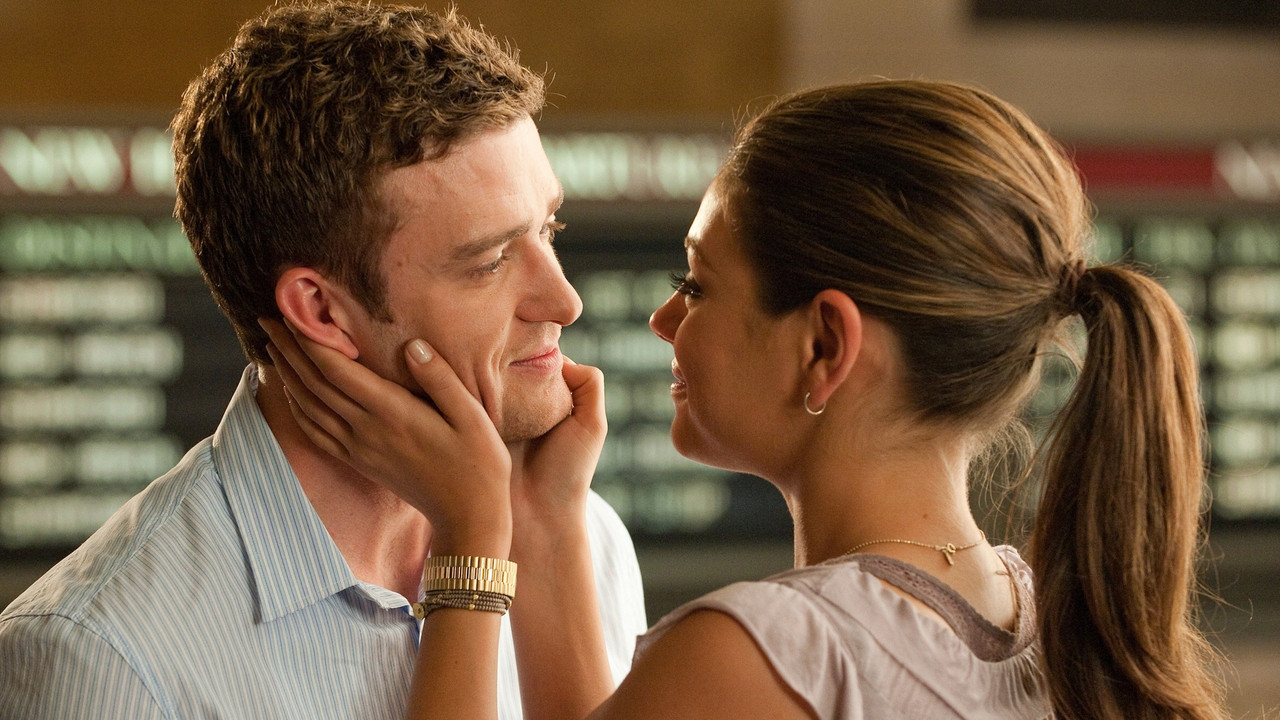
The two leads looking at each other during a moment of realization

Does it entirely escape the genre's pull? Not really. By the third act, the flash mobs and the tearful revelation feel like they’re ticking off a checklist handed down from the studio. The ironic, self-aware tone it works so hard to maintain by insisting it’s above the usual rom-com ending gets drowned out by the inevitable need to deliver the comfort of closure. But that’s the bargain you make. We want characters who understand our modern neuroses, yet we still expect them to eventually surrender to a little cinematic magic.

Revisiting it now feels strange. It takes me back to the time when we believed we could sidestep our biology with a few clever rules and a refusal to get emotionally tangled. The characters, like us, eventually learn that no amount of irony can keep you from needing somebody else. It isn’t flawless, but it stands as an honest snapshot of a generation trying to have it both ways—and failing, charmingly and predictably, to do so.