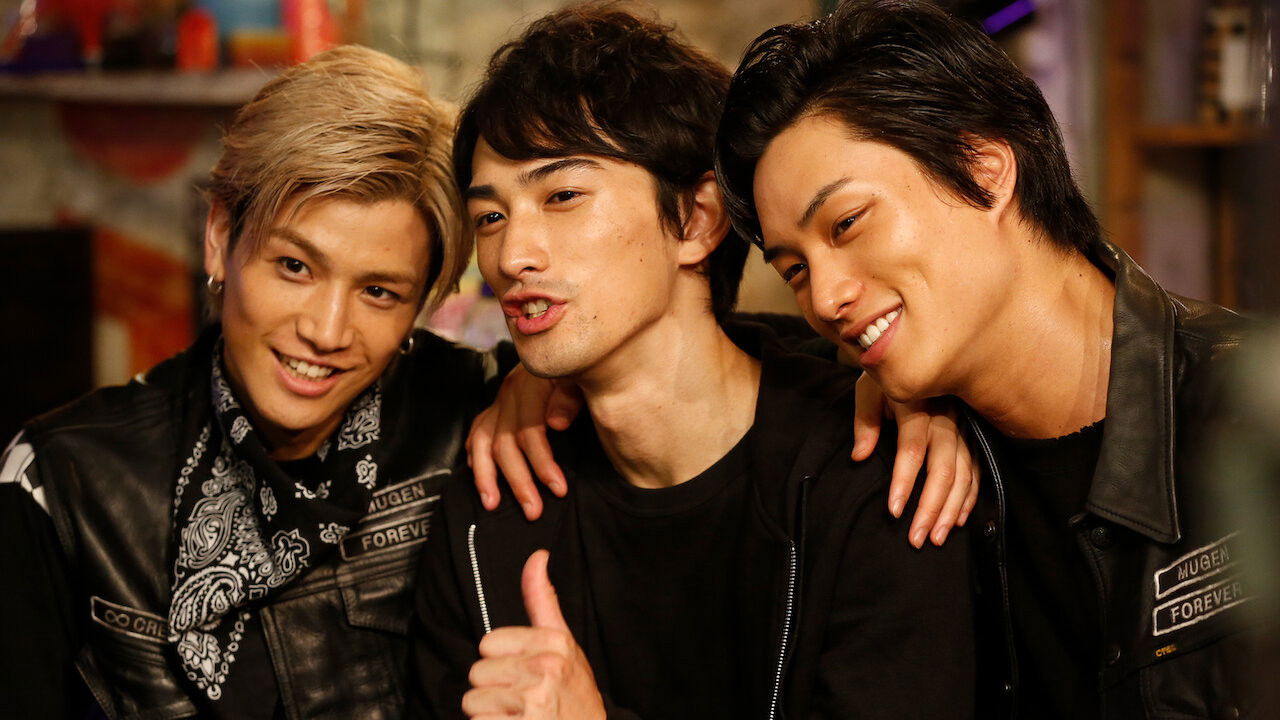
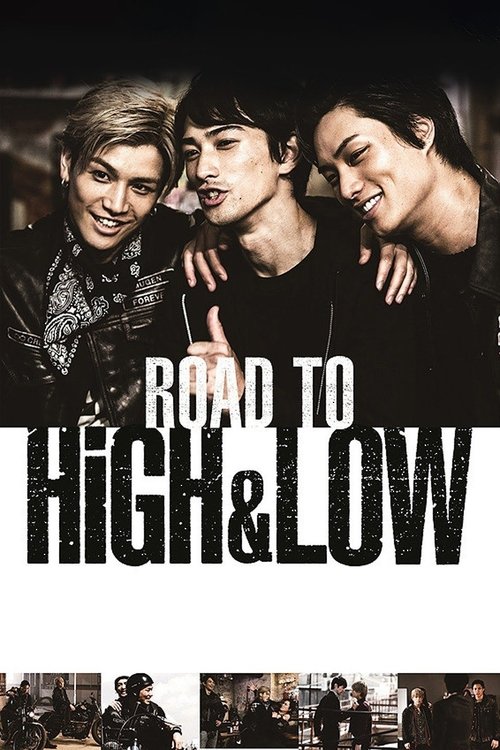
Movie poster for Road To High & Low (2016)

Road To High & Low

2016
1h 35m
Director: Shigeaki Kubo
Play trailer

Overview

Three inseparable friends are torn apart when one of them joins a criminal syndicate threatening to overpower his old friends' gang.

Cast

12 people

Reviews

5 min read

The Gang’s All Here—But Who’s Left Standing?

I’ve seen enough street-gang epics to know the drill: the leather jackets, the slow-motion walks, the inevitable betrayal. Road to High & Low doesn’t reinvent the wheel, but it does something rarer—it makes the wheel spin so fast you forget it’s a wheel at all. For 95 minutes, director Shigeaki Kubo turns a familiar story of loyalty and fracture into a sensory overload, where every punch lands like a drumbeat and every betrayal stings like a fresh tattoo. The film isn’t subtle, but then again, neither is a knife fight in a neon-lit alley.

The High & Low franchise has always been a bit of a mystery to me—less a coherent universe than a sprawling, chaotic family tree of rival gangs, shifting alliances, and, if the trailers are any indication, a lot of very serious men glaring at each other from opposite sides of a parking lot. Road to High & Low seems to be a prequel or side story, though the research pack leaves its exact place in the timeline frustratingly vague. (A recurring theme: this film is easier to feel than to explain.) What’s clear is that it follows three childhood friends—played by Takanori Iwata, Nobuyuki Suzuki, and Keita Machida—whose bond is tested when one of them crosses over to the dark side, or at least the slightly darker side. The synopsis promises a fallout, and the trailers deliver it with the kind of operatic flair that makes you wonder if Kubo was secretly raised on a diet of John Woo and Fist of the North Star.

A lone figure stands in a rain-soaked alley, his silhouette framed by the glow of a flickering streetlamp.

The film’s visual language is all about contrast: the stark white of a hospital hallway against the inky black of a getaway car’s interior, the fluorescent glow of a convenience store sign cutting through the pre-dawn gloom. Kubo shoots action like a choreographer, not a documentarian. Fights aren’t just thrown punches; they’re a series of precise, almost dance-like movements, with the camera lingering just long enough to let you feel the impact before cutting away.

It’s the kind of stylized violence that makes you wince not because it’s realistic, but because it’s beautiful—like watching a ballet where every pirouette ends with a broken nose.

And then there’s the sound. The research pack hints at a hip-hop-infused soundtrack, and if the trailers are any indication, the music doesn’t just accompany the action—it is the action. The bassline thumps in time with the footsteps of a pursuing gang, the screech of tires syncs up with the drop of a beat.

Audience Opinions

Audience 6.5/10
"A high-energy action film with strong performances but a convoluted plot that may leave viewers wanting more depth."

Viewers appreciate the dynamic action sequences and the charisma of the ensemble cast, particularly the lead actors. However, the story is often criticized for being overly complex and hard to follow, with some feeling the narrative lacks emotional weight or clear character development. The stylish presentation is a recurring highlight, though it doesn’t fully compensate for the script’s shortcomings.

What viewers praise
  • Strong action sequences The film delivers well-choreographed and visually engaging fight scenes that keep the energy high.
  • Charismatic lead performances The main cast, especially Takanori Iwata and Nobuyuki Suzuki, bring a compelling presence to their roles.
  • Stylish visuals The film’s aesthetic and cinematography are frequently praised for their bold and dynamic style.
Common complaints
  • Convoluted plot Many find the story difficult to follow due to its complexity and lack of clarity in character motivations.
  • Lack of emotional depth The film struggles to create meaningful connections with its characters, leaving some viewers disengaged.
  • Underdeveloped supporting cast While the leads shine, the supporting characters often feel thinly written or underutilized.
Recommended for
Action movie fans Fans of ensemble casts Stylish crime drama lovers Japanese action cinema enthusiasts

Buzz & Rumors

Public reports

Inside the High-Stakes World of Road To High & Low: The Movie That Blurred Action and Music

Road To High & Low (2016) isn’t just another Japanese action flick—it’s a high-octane fusion of street brawls, hip-hop swagger, and star power, all helmed by director Shigeaki Kubo. Part of the sprawling High & Low franchise, this film carved its own niche by focusing on a prequel-style origin story, packing in a cast of rising J-pop and acting talent. But behind the slick choreography and stylish visuals, the production had its share of drama, creative risks, and a few unanswered questions.

A Cast of Idols and Fighters

The movie’s ensemble reads like a who’s who of Japan’s entertainment elite, blending actors with musicians in a way that felt fresh at the time. Leading the charge are Takanori Iwata, Nobuyuki Suzuki, and Keita Machida—all members of the popular J-pop group Sandaime J Soul Brothers—alongside actors like Yuki Yamada and Kento Hayashi, who brought grit to their roles . The inclusion of rapper ANARCHY and dancer Hiroomi Tosaka (of Exile fame) added another layer, proving the film wasn’t just about fists but also about rhythm and attitude.

YTYouTube·"ROAD TO HiGH&LOW" Trailer(ENGLISH)
https://www.youtube.com/watch?v=OsNWYPaezIo

What’s striking is how the cast’s real-life personas bled into their characters. Iwata, Suzuki, and Machida’s musical backgrounds weren’t just trivia—they were central to the film’s tone, with the soundtrack (featuring original tracks) becoming almost as much of a draw as the action [4]. Rumor has it that some cast members trained extensively in martial arts for their roles, though specifics on who put in the most work remain unconfirmed.

The Franchise Gamble: Why This Movie Stood Out

Road To High & Low was a spin-off within the larger High & Low universe, which already included a TV series and another film, High & Low the Movie (2016), released the same year . While the main High & Low movie (also directed by Kubo) served as a climax to the TV saga, Road To High & Low took a different approach: a standalone origin story that didn’t require prior knowledge of the franchise.

This was a calculated risk. The High & Low brand was massive in Japan, but spinning off a prequel could’ve alienated fans if it felt like a cash grab. Instead, the film leaned into its own identity, doubling down on the street-gang aesthetic and delivering fight scenes that were as much about style as substance. The English-subtitled trailer [4] hints at the movie’s global ambitions, though it never quite broke out internationally like some of its contemporaries.

Behind the Scenes: What We Know (and What We Don’t)

Details about the production are scarce, but a few tidbits stand out:

  • Shooting Schedule: The film’s 95-minute runtime [1] suggests a tight shoot, especially given the franchise’s packed 2016 release calendar. High & Low the Movie dropped in July, while Road To High & Low followed later in the year—raising questions about whether the same crew and cast juggled both projects.
  • Stunt Work: The action sequences are a highlight, with reports (though unverified) suggesting that some cast members performed their own stunts. Given the physicality of the fights, it wouldn’t be surprising if the production brought in specialists to avoid injuries.
  • YTYouTube·Road to High & Low (2016) - Japanese Film Review
    https://www.youtube.com/watch?v=BBMOegQSKnk
  • Music as a Character: The soundtrack wasn’t an afterthought. Tracks from the film were released separately, and the cast’s musical ties likely influenced how the score was integrated into key scenes [2]. Whether this was Kubo’s vision or a studio mandate remains unclear.

One lingering mystery? The film’s reception. While High & Low the Movie has a presence on review aggregators [6], Road To High & Low lacks a dedicated Rotten Tomatoes score , making it hard to gauge how critics or audiences responded. The YouTube review [2] offers a glimpse into fan reactions, but without broader critical consensus, its legacy feels somewhat overshadowed by the franchise’s bigger entries.

The Legacy: Did It Hit the Mark?

Road To High & Low might not have the same cultural footprint as High & Low the Movie, but it’s a fascinating case study in how franchises experiment with spin-offs. By focusing on a self-contained story and leveraging its cast’s musical talents, it carved out a niche that felt distinct from the main saga. Whether it was a creative success or a missed opportunity depends on who you ask—fans of the franchise’s raw energy likely appreciate it, while casual viewers might find it too insular.

One thing’s certain: the movie’s blend of action and music set a template for future High & Low projects, including High & Low: The Movie 2 - End of Sky , which continued the trend of mixing genres. If nothing else, Road To High & Low proved that the franchise could take risks—and that its stars were more than just pretty faces.

Entertainment rumors and trivia aggregated from public reporting. Treat speculation as unverified unless a cited source confirms it.