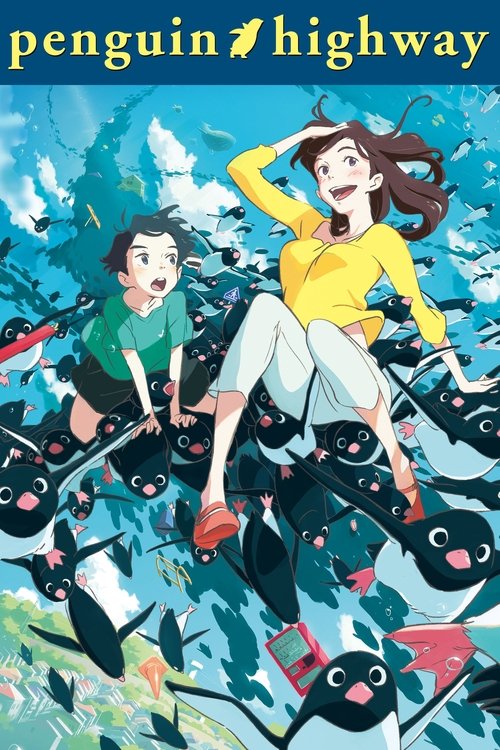

The Edge of the World is Paved with PenguinsSomewhere around fourth grade, the world quietly stopped feeling enchanted to me. That’s when explanations start crowding out wonder. It’s also where Aoyama lives in Hiroyasu Ishida’s *Penguin Highway*. He is absurdly methodical, the sort of kid who announces he has exactly 3,888 days left before becoming a wildly successful adult. He logs everything. He builds theories. He’s also trying, with total scientific seriousness, to figure out why breasts suddenly occupy so much of his brain.
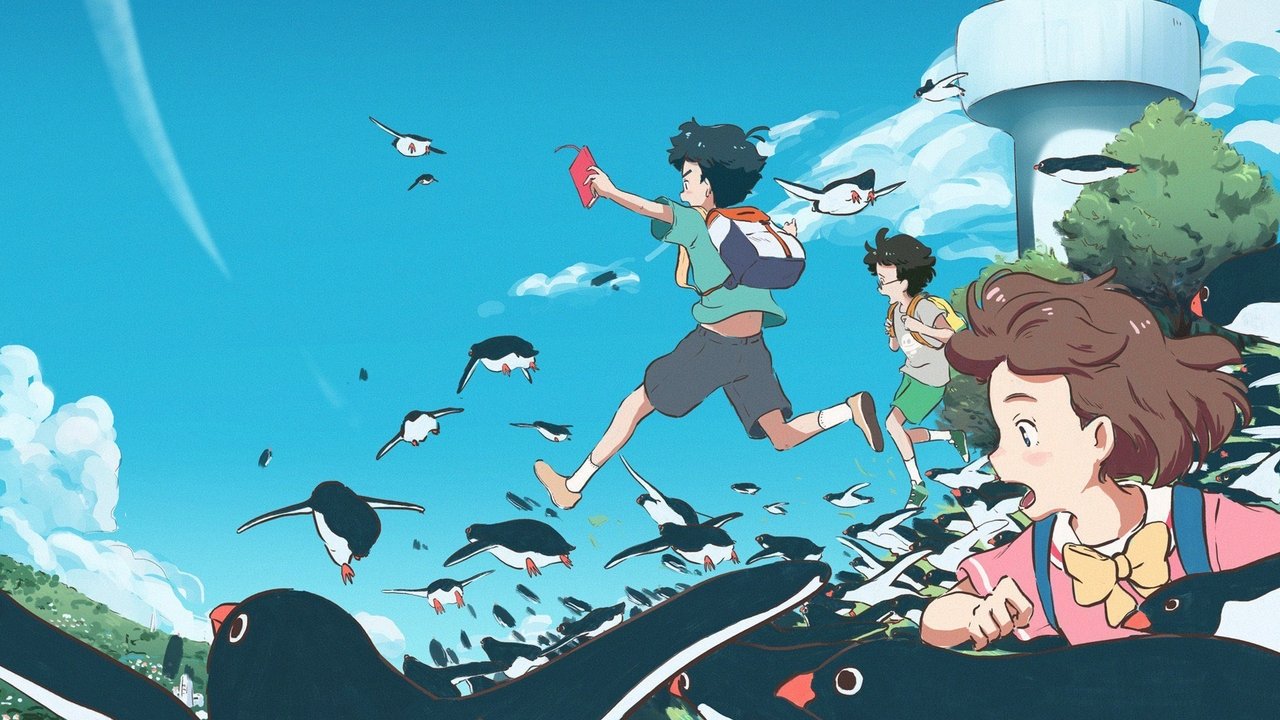
Then one sticky summer morning, a flock of Adelie penguins shows up in his landlocked Japanese suburb.

This is Ishida and Studio Colorido’s feature debut, adapting Tomihiko Morimi. If that name rings a bell, it’s probably from *The Tatami Galaxy* or *The Night Is Short, Walk On Girl*, both turned into whirring, caffeinated marvels by Masaaki Yuasa. Ishida goes the other way. He takes Morimi’s oddness and lets it breathe. Instead of visual frenzy, he gives it sun-bleached realism and long, lazy summer air. The movie plays less like a fever dream than a memory of being a kid, when afternoons seemed endless and the woods near home felt like the last border before the unknown. As a reviewer for *CBR* aptly put it, the film's peculiar alchemy feels a bit like "if Studio Ghibli made FLCL."
That comparison makes sense. The movie has a Ghibli-like tenderness toward childhood and nature, but it also leaves room for puberty’s embarrassment and confusion. Before long, Aoyama realizes the penguins are tangled up with "the Lady," a sleepy, mysterious dental assistant who indulges his earnest chess games.

The moment I keep replaying is how offhandedly the film treats the impossible. Aoyama is walking with the Lady. She finishes a can of cola, flips it into the air, and before it lands, it crumples, shifts, and drops to the pavement as a squawking penguin. Ishida doesn’t underline it with grand music or a flashy transformation. It simply happens. The animation gives that absurd bird real heft, real texture. It’s magic you can almost touch. And because we’re with Aoyama, it doesn’t read as sorcery so much as one more baffling variable he hasn’t cracked yet.
A lot of the feeling here comes through the voices, especially between the boy and the woman. Kana Kita, in her voice-acting debut, catches the brittle pride of a very smart ten-year-old perfectly. You can hear how Aoyama hides inside formal language, using intelligence as cover for how little he understands about closeness. Across from her, Yu Aoi makes the Lady sound amused, faintly sad, and genuinely kind. Anime fans may remember her feral Shiro in *Tekkonkinkreet*; this is the opposite register. What’s lovely is that she never treats Aoyama’s ridiculous rigor like a joke. To her, it’s something worth protecting.

Eventually the mystery widens. A huge floating sphere of water appears in the forest, and the kids call it "The Ocean," which nudges the story into stranger, riskier territory. Peter Debruge noted in *Variety* that the film "playfully complements the kind of storytelling that Westerners are already enjoying via American-made, live-action series, while incorporating lots of delightfully Japan-specific details along the way." That feels right to me. There’s a faint *Stranger Things* current in the image of kids on bikes chasing an anomaly, just without the sour aftertaste of horror.
I’m still not convinced the third act fully lands. It grows shaggy, leaning harder on psychedelic spectacle than on the delicate character work that makes the first half sing. Then again, maybe that untidiness is the point. Growing up ruins every tidy theory you build for yourself. One day you think you understand the rules, and the next day penguins are pouring into town to tell you otherwise. *Penguin Highway* never claims science can answer the ache of a first crush, or the terrifying realization that adults are improvising too. It only asks you to keep watching, keep writing things down, and maybe hang on to a little wonder while you still can.