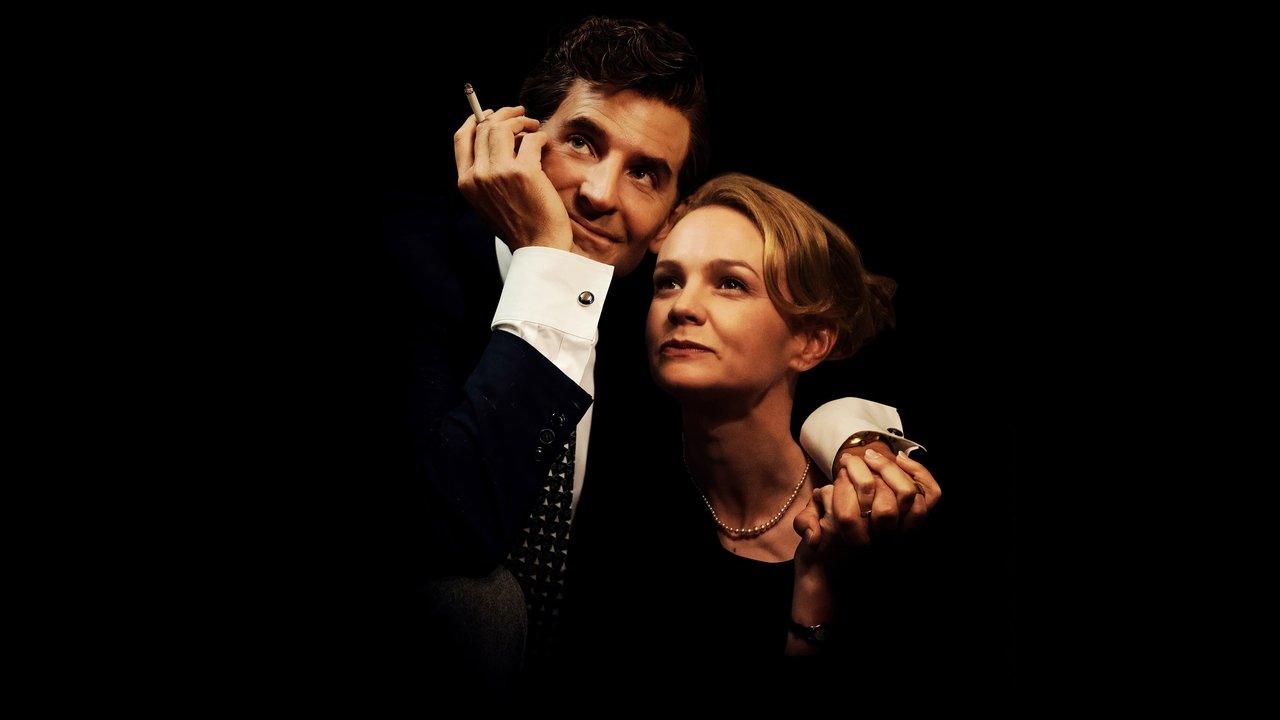
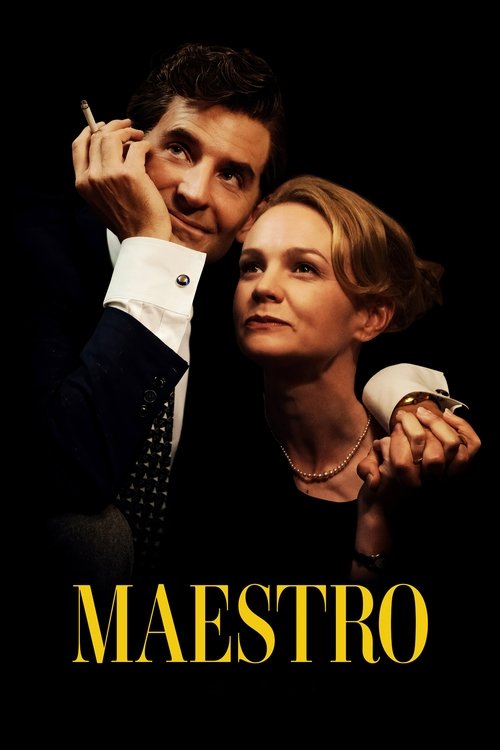

Carey Mulligan
Felicia Montealegre
A towering and fearless love story chronicling the lifelong relationship between Leonard Bernstein and Felicia Montealegre Cohn Bernstein. A love letter to life and art, Maestro at its core is an emotionally epic portrayal of family and love.
I’ve seen this trick before—the biopic that begins in black-and-white, the camera gliding through a smoky room where genius is about to be revealed. It’s a visual shorthand for mythmaking, and Maestro leans into it hard. The opening shot of Leonard Bernstein, back turned, bathed in the glow of a conductor’s podium, is pure cinema as hagiography.
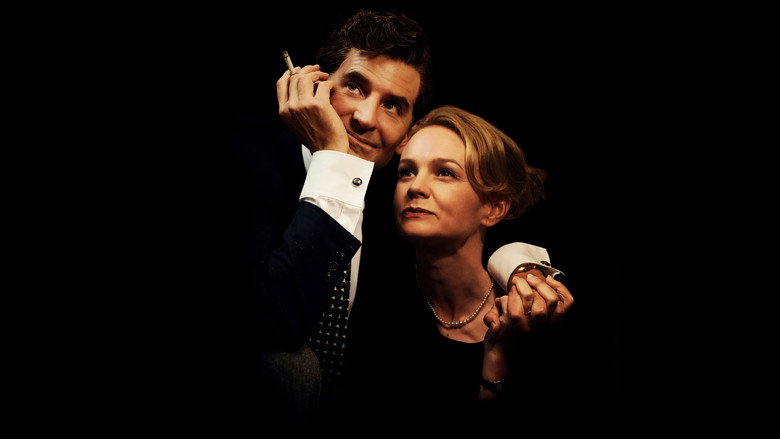
But then the film does something unexpected: it turns around. And there, in the half-light, is Carey Mulligan’s Felicia Montealegre, watching him with an expression that’s equal parts admiration and exhaustion. That’s the movie in a single frame—grand ambition colliding with the messy, unglamorous reality of love.
Bradley Cooper’s second directorial effort is, above all, a film about the cost of devotion. Not just the cost of loving a man who was married to his art as much as to his wife, but the cost of loving anyone who exists as much in the public eye as in private. The film’s most striking choice isn’t its shift from monochrome to color (though that’s effective, marking the transition from youthful promise to middle-aged reckoning), but its refusal to let Bernstein off the hook.
This isn’t the story of a tortured genius so much as it is the story of the woman who loved him despite knowing, from the very beginning, that she would always be sharing him with the world.
The film’s centerpiece is the six-minute recreation of Bernstein conducting Mahler’s Resurrection Symphony at Ely Cathedral. Cooper, who spent years studying conducting, doesn’t just mimic the movements—he becomes them. His body sways with the music, his face contorts with the effort of pulling sound from the air.
It’s a breathtaking display of technical skill, but what lingers isn’t the virtuosity. It’s the way the camera lingers on Felicia in the audience, her face a mask of quiet pride and something darker, something like resignation. The music swells, the choir sings of rebirth, and she sits there, alone in the crowd, knowing that this is the man she married—and also the man she can never fully have.
Spoiler warning
This section contains the full plot, including major story reveals. Overview above stays spoiler-free.
Bradley Cooper’s Maestro (2023) has been praised as a sweeping romantic drama, but its journey to Netflix wasn’t without drama of its own. latestnetflix.com's take is that the film, which chronicles the relationship between composer Leonard Bernstein and his wife Felicia Montealegre, sparked debate long before its November 24 premiere—specifically over the casting of Carey Mulligan in the role of Montealegre.
Felicia Montealegre was a Costa Rican-Chilean actress, a detail that fueled criticism when British actress Carey Mulligan was cast in the role. Some viewers questioned whether a Latina actress should have been chosen instead, arguing that the film missed an opportunity for authentic representation  . The controversy gained traction online, with social media discussions amplifying the debate over Hollywood’s history of whitewashing roles meant for actors of color.
Producer Kristie Macosko Krieger addressed the backlash head-on, defending the casting choice. In statements to multiple outlets, she emphasized that Mulligan’s portrayal had the full approval of Bernstein’s family, suggesting that the filmmakers prioritized performance over strict ethnic matching . Krieger also noted that the film had received "rave reviews" since its release, shifting focus away from the casting debate and toward its critical reception .
While the evidence doesn’t detail the exact reasoning behind Mulligan’s casting, the film’s creative team appears to have prioritized her acting chops and chemistry with Cooper, who both directed and starred as Bernstein. Mulligan, known for her Oscar-nominated performances in An Education and Promising Young Woman, has a reputation for delivering emotionally nuanced roles—qualities that likely appealed to the filmmakers .
The controversy also highlights a broader industry tension: the balance between historical accuracy and artistic interpretation. Montealegre’s heritage is a key part of her identity, but Maestro’s team seems to have framed the film as a love story first, with casting decisions made through that lens .
Despite the early backlash, Maestro has largely been met with praise, with critics highlighting Cooper’s direction and the film’s emotional depth. Whether the casting debate will fade or continue to overshadow its reception remains to be seen, but for now, the focus has shifted to its awards-season potential.
For now, the film stands as a testament to the complexities of biographical storytelling—where authenticity, performance, and representation often collide.
Entertainment rumors and trivia aggregated from public reporting. Treat speculation as unverified unless a cited source confirms it.