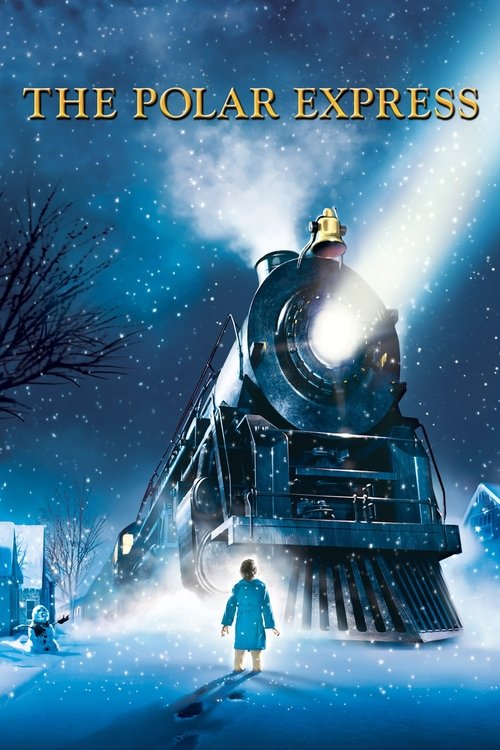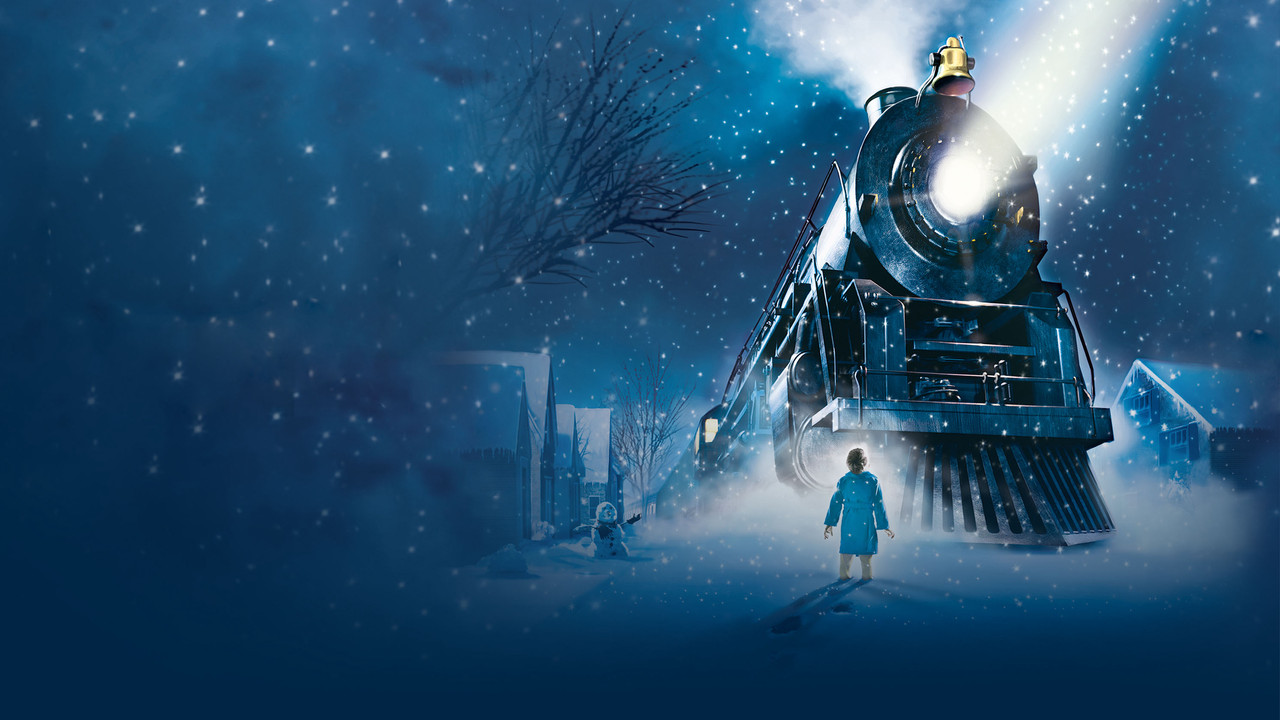
The Ghost in the Holiday MachineThe first thing I ever found unsettling about *The Polar Express* wasn’t the train or the icy set pieces. It was the faces—especially the eyes. Those glossy, fixed stares feel less like cartoon design than like something watching back. People file Robert Zemeckis’s 2004 adaptation under cozy Christmas family movie, but that description has always felt a little off to me. The film is beautiful, yes, and full of seasonal wonder, but it’s also undeniably eerie. There’s something gothic under all that snow.

Early-2000s digital filmmaking was still a frontier, and Zemeckis has never been the type to stay away from new tech if there’s a toy to tinker with. After *Who Framed Roger Rabbit?*, going all in on performance capture was very much his speed. The idea was to preserve an actor’s physical performance inside a digital body. Whether that experiment truly worked is still debatable. The people here move with an uncanny stiffness, like expensive dolls given just enough life to become unnerving. Oddly, that ends up helping. The movie is about doubt and belief, and the unsettling artificiality gives even the warm moments a tremor underneath. Roger Ebert picked up on that immediately when he said the film has the quality of lasting children's entertainment because "it's a little creepy. Not creepy in an unpleasant way, but in that sneaky, teasing way that lets you know eerie things could happen."
You feel that eeriness most strongly in the quieter detours. The rooftop sequence with the Hobo is stranger than any of the bigger action beats. Hero Boy, the story’s little skeptic, meets this spectral figure crouched by a fire atop a racing train. The Hobo drinks "Joe" from a tin can, twitches and grins, toys with the boy’s uncertainty, asks whether he believes in ghosts, and then disappears into a burst of snow as the locomotive plunges through a black tunnel. It doesn’t play like a department-store fantasy. It plays like the kid accidentally brushed past something from another world.

Then there’s Tom Hanks, who doesn’t merely voice a bunch of parts but physically performs the Conductor, the Hobo, Santa Claus, the boy’s father, and the grown-up Hero Boy—six roles altogether. That’s a ridiculous amount of digital ventriloquism. In the Conductor especially, you can feel Hanks’s familiar warmth straining against the limits of the animation. The voice says comfort; the face can’t quite carry it. His body language does some of the work—those tired shoulders, the sense of a man punching tickets through sheer force of habit—but the result is curiously lonely. I’m not sure Zemeckis meant the Conductor to feel so worn down, yet it gives the film an extra melancholy edge.
Sometimes I suspect the movie’s awkwardness is the reason people still remember it. If Zemeckis had made a more conventional cartoon, maybe it would’ve just blended into the holiday pile.

Instead, *The Polar Express* survives as this weird, luminous outlier. The lighting is gorgeous: warm gold lamplight falling across hard blue snow, like Van Allsburg’s illustrations given moving depth. And when the train reaches the North Pole, the place isn’t some quaint village. It’s huge, industrial, all brick and iron and organized frenzy—more Victorian factory complex than storybook dream. The elves swarm like overcaffeinated workers. It’s chaotic, loud, a touch oppressive. Maybe that’s right. Belief was never supposed to be tidy. Sometimes it means accepting the strange machinery, pushing past the stiffness and clatter, and deciding the bell rang anyway.