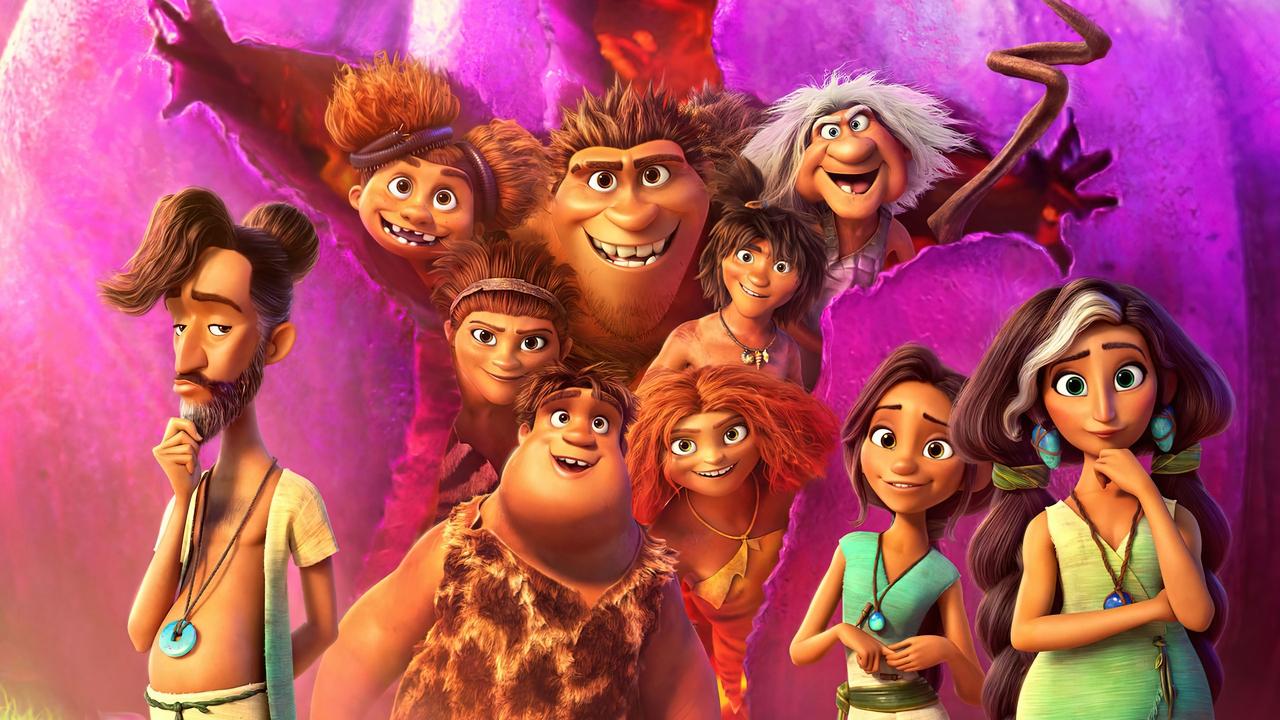
The Croods: A New Age backdrop
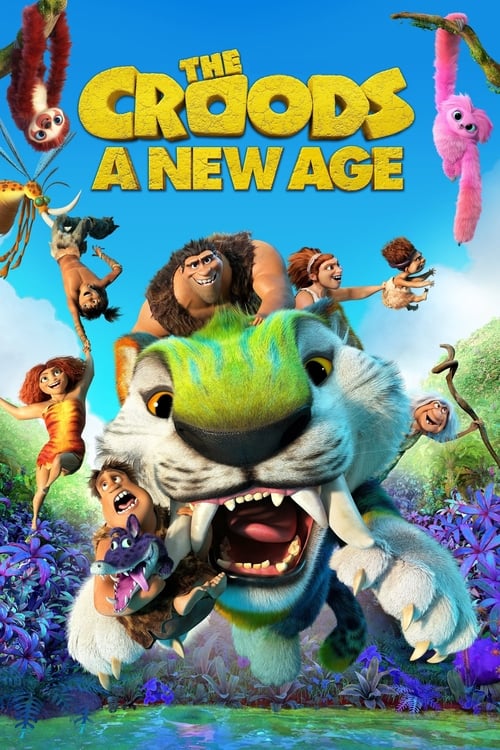
The Croods: A New Age poster

The Croods: A New Age

“The future ain't what it used to be.”

7.4
2020
1h 35m
AnimationFamilyAdventureFantasyComedy
Director: Joel Crawford

Overview

Searching for a safer habitat, the prehistoric Crood family discovers an idyllic, walled-in paradise that meets all of its needs. Unfortunately, they must also learn to live with the Bettermans -- a family that's a couple of steps above the Croods on the evolutionary ladder. As tensions between the new neighbors start to rise, a new threat soon propels both clans on an epic adventure that forces them to embrace their differences, draw strength from one another, and survive together.

Sponsored

Trailer

THE CROODS 2: A NEW AGE - Croodimals Trailer (Universal Pictures) HD Official

Cast

Reviews

AI-generated review
The Primal Comedy of Manners

There’s a strange, kinetic vertigo to *The Croods: A New Age* that catches you off guard if you’re expecting a standard, sentimental family sequel. Joel Crawford, stepping into the director's chair with a background in the storyboard trenches, seems to have internalized the frantic DNA of the best *Looney Tunes* shorts and injected it into a prehistoric landscape. It’s loud, yes. It’s relentlessly paced. But beneath the slapstick, there’s a genuine, if slightly unhinged, curiosity about the American obsession with "progress"—that specific itch to build a higher wall, a greener lawn, and a more comfortable chair, even when the wild world outside is infinitely more interesting.

The Croods look out at the landscape, wide-eyed and primitive.

The film’s central conceit is basically an *Upstairs, Downstairs* arrangement for the Stone Age. We have our scrappy, unpolished clan, led by Nicolas Cage’s Grug—a character whose voice work feels like it’s being dragged through gravel, in the best way possible—colliding with the Bettermans. They are the new neighbors, the ones with the "better" man prefix, living in an idyllic, walled-in paradise that looks suspiciously like a utopian architectural magazine. It’s a classic class clash, only with more giant, terrifying fauna. I’m not entirely sure the script needed to lean so hard into the satire, but it works, mostly because the film refuses to paint the Bettermans as villains. They’re just... anxious. They’re modern humans trapped in a prehistoric shell, terrified of the dirt under their fingernails.

There’s a specific sequence early on that perfectly encapsulates the film’s manic energy. The Croods arrive at the Bettermans' walled sanctuary, and the contrast is visual storytelling at its most blunt: the Croods are a mess of uncoordinated limbs and fur, while the Bettermans glide through their pristine gardens with an irritating, yoga-instructor serenity. Watch the way the animators render Grug’s discomfort; his posture is a perpetually defensive slouch, a man ready to be attacked by a tree branch at any moment. It’s a physical manifestation of his insecurity. When he finally tries to participate in the "civilized" life—the soft beds, the communal meals—he moves like a bull in an orchard, and the film doesn't mock him for it. It lets the absurdity play out, letting the chaos of his nature rub against the sterility of his new environment until something breaks.

The Bettermans greet the Croods in their lush, walled-in garden.

It’s in these moments that I’m reminded of *Variety's* assessment of the film as a "surprisingly weird, kaleidoscopic treat." Weird is the right word. There’s a hallucinogenic quality to the creature design—the "Punch Monkeys," for instance, are nightmare fuel turned into comedy, creatures that make the standard Pixar sidekick look like a dull corporate mascot. Crawford isn't interested in making a beautiful, safe world; he wants a world that’s vibrating with color and potential disaster. It feels less like a polished franchise entry and more like a fever dream that just happens to have a coherent plot.

I’ve always admired Nicolas Cage’s willingness to go to these operatic registers, even in voice-over work. He brings a kind of frantic, desperate fatherhood to Grug that grounds the movie, preventing it from drifting away into pure visual noise. He’s the anchor. Without him, the film would just be a series of elaborate, colorful gags. When he’s screaming about "the pack" or trying to embrace a way of life he fundamentally doesn't understand, you feel the weight of his fear—the fear that he’s becoming obsolete, that his daughter is outgrowing the protection he’s spent his life providing.

The Croods and Bettermans facing off against a bizarre, colorful threat.

Does it all land? Not quite. The third act succumbs to the standard blockbuster temptation of "bigger is better," where the screen becomes so cluttered with motion that the emotional stakes get a little lost in the shuffle. I found myself wishing the film would just stop, take a breath, and let the characters sit with their discomfort a bit longer. But maybe that’s asking too much of a movie about cavemen inventing the concept of a neighbor.

Ultimately, I walked away thinking about the irony of the ending. These two families, vastly different in their approaches to survival, find common ground not by changing, but by smashing the barriers that were supposed to keep them "safe." It’s a messy, loud, and occasionally brilliant reminder that we spend so much time building walls to protect our way of life, only to find that our way of life is exactly what’s keeping us from actually living. It’s not profound, perhaps, but it’s honest enough to make the noise worth it.

Clips (1)

A Place of Our Own Extended Preview