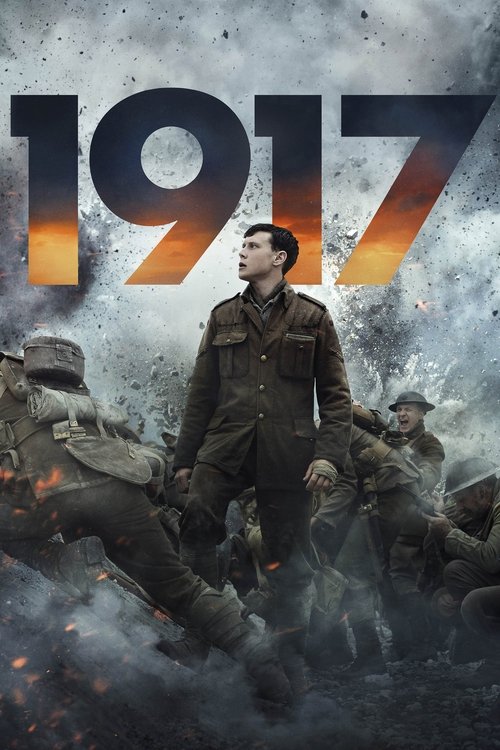

Movie poster for 1917 (2019)

1917

“Time is the enemy.”

2019
1h 59m
Director: Sam Mendes
Play trailer
Search on Netflix

Overview

At the height of the First World War, two young British soldiers must cross enemy territory and deliver a message that will stop a deadly attack on hundreds of soldiers.

Cast

12 people

Reviews

3 min read

The Weight of a Single Step

To be honest, I walked into Sam Mendes’ 1917 braced for a gimmick. That whole concept—a Great War epic edited to look like a single, seamless take—usually smells like the sort of hollow technical bravado that chases Oscars at the expense of actual heart. Mention a 'one-shot' movie and you immediately picture Hitchcock’s Rope or Iñárritu’s Birdman, projects where you’re often more occupied hunting for the hidden seams than following the plot.

But Mendes, drawing on the harrowing accounts his grandfather Alfred brought back from the Western Front, isn't just doing a victory lap. He's cornering us. The lens doesn't merely track Lance Corporals Schofield and Blake as they race to call off a suicidal charge; it lashes us to their mounting dread.

Without those traditional cuts to a quiet command center to catch our breath, we’re left drowning in the filth alongside them.
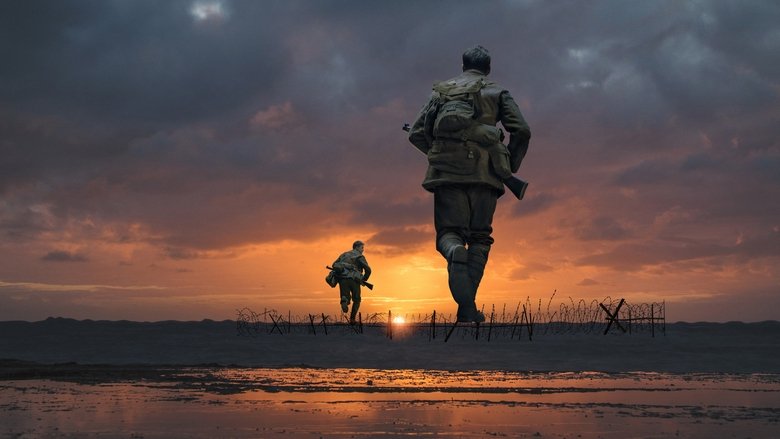
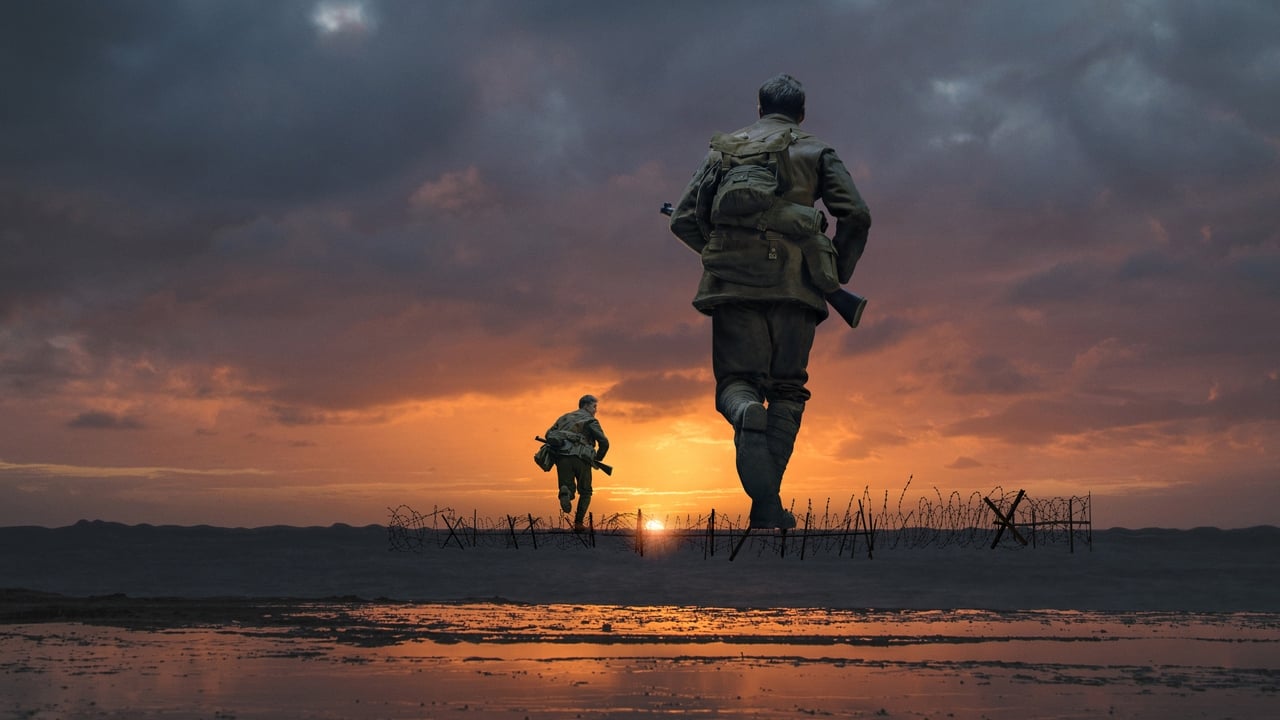
Soldiers crossing through the desolation of No Man's Land

So much of that gut-wrenching suspense hinges on George MacKay’s gaunt, physical presence. Following months of brutal preparation, MacKay navigates the wreckage of no-man's-land less like a cinematic hero and more like a phantom who hasn’t quite grasped that his time is up. His pale, angular features seem to soak up all the fatigue of the front lines.

Audience Opinions

Audience 8.2/10
"A gripping, visually stunning WWI thriller whose relentless one-shot immersion and lead performance impress more than its simple, sometimes shallow story."

The film is widely praised as an intense, heart-pounding experience, with Roger Deakins’ cinematography, the continuous-take execution, and George MacKay’s committed performance singled out as standout elements that make the journey through no man’s land unforgettable. At the same time, a noticeable contingent finds the script thin, the characters underdeveloped, and the long-take concept overly gimmicky, arguing that flashy technique and award-season hype overshadow genuine emotional and thematic depth.

What viewers praise
  • Spectacular cinematography Striking imagery, from the flare-lit ruined city at night to vast battlefield landscapes, is often cited as some of the best camera work ever seen in a war film.
  • Immersive one-shot style The illusion of a continuous take creates powerful immediacy and tension, making the journey feel like a real-time plunge into the trenches.
  • Tense, gripping atmosphere Suspenseful set pieces, near-constant danger, and a strong sense of urgency keep viewers on edge throughout the mission.
  • Strong lead performance George MacKay is praised for a determined, emotionally varied portrayal that conveys fear, exhaustion, and resolve with minimal exposition.
  • Rich production and sound design Detailed sets, convincing battlefield environments, and impactful sound and music combine to deliver an engrossing wartime experience.
Common complaints
  • Thin story and themes The plot is often described as a very simple delivery mission that offers little narrative complexity or deeper exploration of war beyond the journey itself.
  • Shallow characterisation Several viewers feel they barely know the two main soldiers, finding Blake’s arc especially manipulative and underwritten despite attempts to make his fate emotional.
  • Technique seen as gimmick The long-take approach is criticized by some as showy and distracting, with the movie perceived as being built around the trick rather than using it to serve the story.
  • Questionable dialogue and score Certain lines are called cheesy or unintentionally funny, and the musical score is sometimes viewed as overly theatrical or overbearing in key moments.
  • Convenient and unrealistic moments Plot conveniences, such as precisely timed rescues and props that pay off too neatly, along with debated historical and tactical details, reduce the sense of realism for some viewers.
Recommended for
War movie enthusiasts Cinematography and camera-work buffs Immersive thriller seekers World War I setting fans Technical filmmaking students Big-screen spectacle lovers

Full Plot (Spoilers)

Spoiler warning

This section contains the full plot, including major story reveals. Overview above stays spoiler-free.

Buzz & Rumors

Public reports

Trenches, Trolls & True Love: The Surprisingly Juicy Off‑Screen Saga of 1917

War is hell, but the gossip around 1917 is heaven. Sam Mendes’ one‑shot WWI epic might look all grit and gravitas on screen, yet behind the cameras it sparked Twitter wars, romance, Oscar outrage, and at least one legendary on‑set collision. Fix your bayonets, because we’re marching straight into the drama.


Scandals & Controversies: When a Sikh Soldier Broke the Internet

  • The biggest flare‑up around 1917 didn’t come from the German lines — it came from British actor Laurence Fox. On a podcast, he complained that including a Sikh soldier in the film was “forcing diversity” and called the casting “odd” and “incongruous” .
  • Social media and historians clapped back HARD, pointing out that over a million Indian soldiers fought in WWI and Sikh troops absolutely served on the Western Front. The backlash was so intense Fox had to issue a public apology to the Sikh community, calling his remarks “clumsy” — though he conspicuously stood by “everything else” he said [1].
  • He then leaned into the controversy, later boasting that the outrage and trolling were actually making him money via publicity and music sales [3]. Nothing like monetizing a history lesson, huh?

Romance Rumors: Love in the Time of No‑Man’s‑Land

  • The film may be famously light on romance, but off‑screen it’s another story. Lead actor George MacKay met makeup and hair artist Doone Forsyth on the set of 1917 — and the long shoot turned into a long‑term love .
  • Outlets have since reported that the two quietly built a life together after the film wrapped, eventually marrying in November 2023 and having two children .
  • Paparazzi have caught the pair on low‑key walks in London, with Just Jared describing their day out as a “rare” public appearance and noting they originally connected while working on 1917 [5]. From mud and trenches to marriage and babies — that’s what you call range.

On‑Set Drama: “If You Fall, Keep Running”

  • IGInstagram·In the filming of Sam Mendes' 1917, actor George…
    https://www.instagram.com/reel/DO4BhwMEvJ2/
  • Sam Mendes’ directive to his actors was basically: no matter what happens, do. not. stop. George MacKay revealed that during the now‑iconic trench run near the end of the film, he accidentally slammed into extras while sprinting through explosions and chaos — and the cameras just kept rolling [6].
  • That brutal collision you see on screen? That’s not acting, that’s MacKay getting absolutely wrecked in real time. Social clips and explainers on Instagram have since gone viral highlighting how this unscripted chaos made it into the final cut [6].
  • Crew members have said Mendes told the cast that if they made a mistake, they should carry on to keep it natural, which meant every stumble and slam had the potential to become cinema history.

Awards Season Salt: The Great 1917 Acting Snub

  • While 1917 marched away from the Oscars with three wins — including Best Cinematography — fans and commentators have never forgiven the Academy for completely ignoring the cast. No acting nominations. Not one .
  • Refinery29 ran a full‑on rant titled “Justice For The Cast Of 1917,” calling out how George MacKay and Dean‑Charles Chapman were everywhere on the awards circuit but nowhere on actual ballots [7].
  • On Reddit, film fans still grumble that the Academy rewarded the “technical gimmick” of the one‑shot but sidelined the two young leads who physically carried the movie on their backs (and through endless mud) [8]. The consensus in the trenches: the boys were robbed.

Money, Memes & Mischief: Benedict’s ‘Massive Payday’

  • In a very online crossover event, Knives Out director Rian Johnson hopped on Twitter/X and jokingly implied that Benedict Cumberbatch’s blink‑and‑you‑miss‑him role in 1917 came with a truly obscene paycheck .
  • The internet did what it does best: half the users immediately believed it, half started arguing about whether a three‑minute appearance deserves a blockbuster salary, and everyone forgot he was trolling. Entertainment sites dutifully covered the “uproar,” noting that Johnson had successfully pranked movie Twitter yet again [9].
  • The real numbers remain under wraps, but the idea of Cumberbatch walking off with a war‑chest for one scene became its own mini‑meme.

Leaks, “One‑Shot” Secrets & Deleted Scenes That Don’t Exist

  • The film’s biggest “magic trick” was its marketing as a single, continuous shot. Later deep‑dives revealed that 1917 actually hides around 34–35 invisible edits, stitched together through clever blocking, whip‑pans, and transitions into darkness [9].
  • Screen Rant and other breakdowns have mapped out where those cuts are buried, turning spot‑the-edit into a nerdy fandom sport [9].
  • Perhaps the wildest bit of trivia for a Blu‑ray era obsessed with bonus content: because each segment was so complex and rehearsed, there are effectively no traditional deleted scenes. A Los Angeles Times feature on Best Picture nominees reported that 1917 had nothing meaningful left on the cutting room floor — what you see is what they managed to shoot, period . So no mythical “lost trench sequence” lurking on a hard drive somewhere. Sorry, completionists.

Entertainment rumors and trivia aggregated from public reporting. Treat speculation as unverified unless a cited source confirms it.