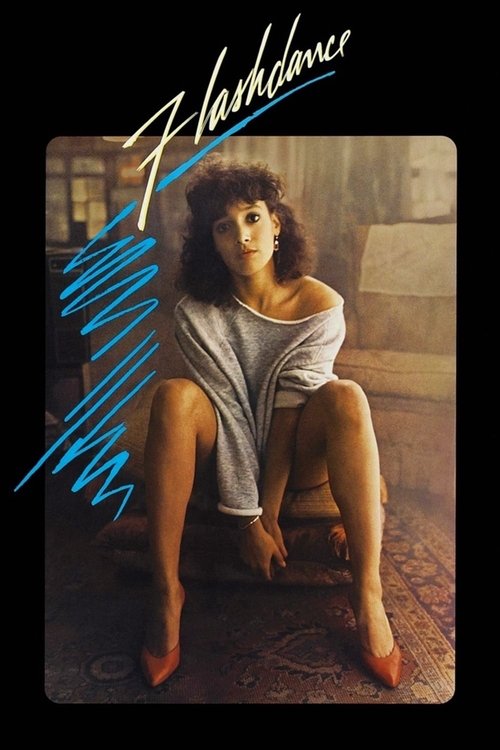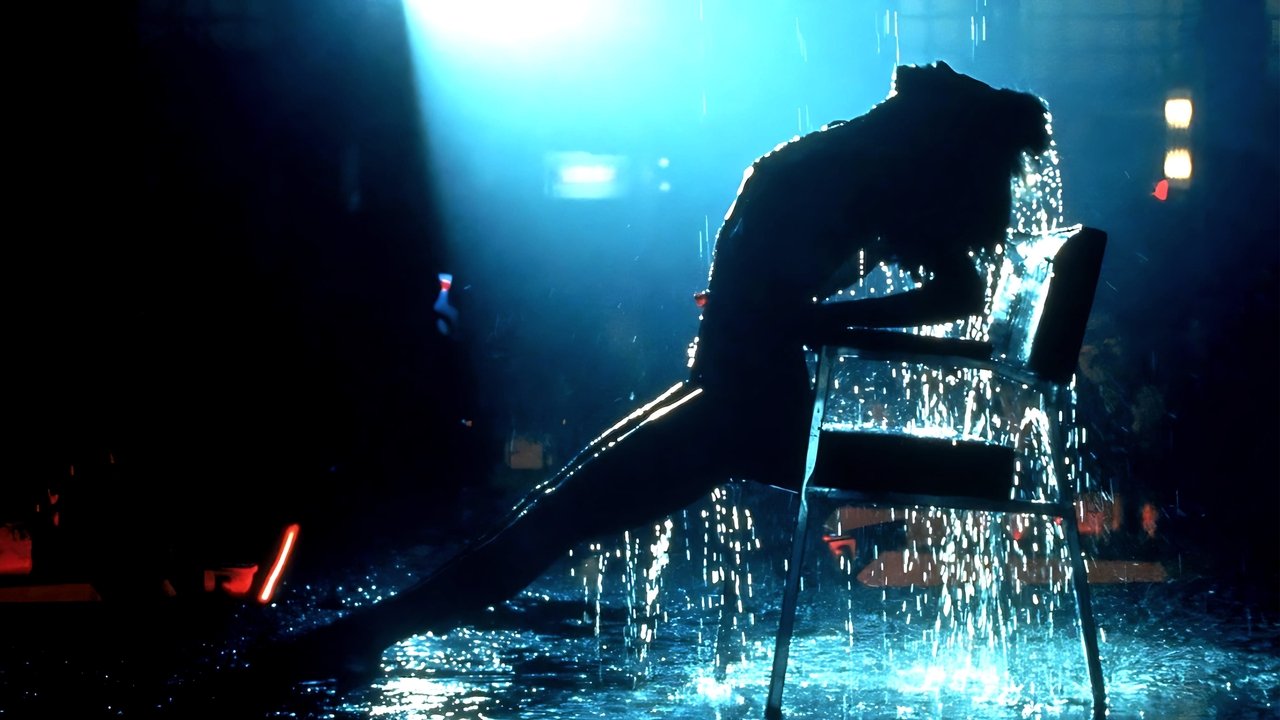
Movie poster for Flashdance (1983)

Flashdance

“Something happens when she hears the music... it's her freedom. It's her fire. It's her life.”

1983
1h 35m
Director: Adrian Lyne
Play trailer

Overview

Alex Owens, a young woman juggling between two odd jobs, aspires to become a successful ballet dancer. Nick, who is her boss and lover, supports and encourages her to fulfil her dream.

Cast

12 people

Reviews

JPV852

Entertaining drama with an amazing soundtrack and great performance from Jennifer Beals. Not the strongest story at times but still was enthralled through its reasonable 90-minute running time. **3.75/5**

Read full review

CinemaSerf

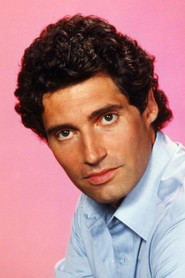
Aside from the toe-tapper that was Irene Cara's title song, the rest of this film is really only notable because it shows the sheer determination of a young woman - "Alex" (Jennifer Beals) to make it. Initially, in a man's world as a welder more than holding her own, whilst at the same time she wants to swap her night-time dancing pole for a ballet school bar and prove that she has what it takes to become a top dancer too. Fortunately, her wealthy boss is also her boyfriend, and "Nick" (Michael Nouri) is keen to help her along - sometimes a little too keen, which can lead to the odd bit of tension as she finds herself with an audition that could change everything. It is a very positive-looking film with an upbeat theme and that helps carry what is otherwise a really rather poorly acted affair with some clunky dialogue and a narrative that follows a fairly predictable pattern - before the ending that we just know is coming. Laura Branigan and Giorgio Moroder had a hand in the rest of the soundtrack, which when you watch this film again after all but forty years proves remarkably memorable (if not great). Like it or not, this was a groundbreaking piece of cinema that though it struggles to exude much punch now, certainly did quite a lot - cinematically speaking - back then. Benefits from big screen audio, and is still worth a watch if you are of a certain age.

Read full review

Audience Opinions

Audience 6.3/10
"A flashy dance fantasy powered by iconic music and style, undercut by a simplistic story and uncomfortable romance."

Dance numbers and the pop soundtrack are remembered as the real attraction, with several sequences and songs described as thrilling, emotional, and endlessly rewatchable. Jennifer Beals’ charisma and the glossy, music-video-style visuals keep it entertaining, yet the thin, clichéd plot, shallow character work, and boss–employee relationship with a wide age gap leave many viewers conflicted.

What viewers praise
  • Iconic dance sequences Energetic choreography and performance scenes are considered the standout element and remain visually exciting decades later.
  • Memorable 80s soundtrack Hit songs and Giorgio Moroder’s score are praised as catchy, uplifting, and central to the film’s emotional impact.
  • Striking visual style Moody lighting, silhouettes, and smoke give the film a glossy, music-video look that viewers find stylish and atmospheric.
  • Charismatic lead presence Jennifer Beals is frequently described as appealing and likable, giving the movie a compelling center even when the script is weak.
Common complaints
  • Paper-thin storyline The plot is widely regarded as simple, formulaic, and stretched out mainly to link together the musical and dance moments.
  • Problematic love story The romance between the young dancer and her much older boss is seen as creepy or predatory, with little believable development.
  • Shallow character writing Side characters barely register and even the lead is viewed as underwritten outside the dance scenes.
  • Corny, clip-like pacing The movie often feels like a long music video, with melodramatic beats and editing choices that some find dated or unintentionally silly.
Recommended for
80s nostalgia seekers Dance movie collectors Pop soundtrack devotees MTV-era style lovers Jennifer Beals admirers

Full Plot (Spoilers)

Spoiler warning

This section contains the full plot, including major story reveals. Overview above stays spoiler-free.

Buzz & Rumors

Public reports

FLASHDANCE: WELDERS, WET DANCES & WHAT A FEELING THEY DIDN’T PUT IN THE MOVIE

She cut up a sweatshirt, drenched herself onstage and blasted into superstardom… then bolted to Yale. He almost lost the role to a broke carpenter named Kevin Costner. The studio thought it had a toxic flop and quietly sold the movie off. Oh, and that “perfect dancer”? Try four different bodies stitched into one. Slip on your leg warmers: here’s the real-life Flashdance gossip the end credits left out.


Casting Feuds, “Macho Men” Polls & The Kevin Costner Almost-Was

  • The allegedly sleazy casting poll. Screenwriter Joe Eszterhas has claimed that then–Paramount boss Michael Eisner literally polled “two hundred of the most macho men on the lot” asking which of three finalists—Jennifer Beals, Demi Moore or Leslie Wing—they’d most like to sleep with, and used that to steer the casting of Alex Owens toward Beals. This anecdote has been widely repeated but not formally confirmed by the studio, so treat it as industry lore rather than sworn testimony .
  • The secretaries vs. the suits. Producer Jerry Bruckheimer offers a much cleaner (and frankly more charming) version: when the execs couldn’t agree on a lead, they marched in all the studio secretaries to watch screen tests. The women unanimously picked the unknown Northwestern student with the soulful eyes: Jennifer Beals .
  • The A‑list bloodbath for Alex. Flashdance’s audition process was pure 80s starlet Hunger Games. Retro casting breakdowns and fan posts list Jamie Lee Curtis, Demi Moore, Helen Hunt, Michelle Pfeiffer, Daryl Hannah, Andie MacDowell and Jennifer Grey among the actresses who either auditioned or were “strongly considered” before Beals snagged the role .
  • Kyra Sedgwick rebels at the audition. Among the ~4,000 hopefuls was future Golden Globe winner Kyra Sedgwick. Instead of showing up in the requested leotard, she arrived in a miniskirt and high heels, then casually answered a ringing phone in the audition room while reading opposite director Adrian Lyne. Somehow, he still liked her [4].
  • Kevin Costner: from paid cuddle buddy to almost–leading man. Before he was Robin Hood or bodyguarding Whitney, Kevin Costner was paid $200 to lie in bed with Jennifer Beals and run lines, so Lyne could see their chemistry. Costner auditioned for Nick Hurley, came close to getting it, and later confirmed the story himself; he ultimately lost out to Michael Nouri [4][2].

**Body Double Bombshell: The Dance Diva You Didn’t See**

  • **“The truth is, I didn’t have a body double. I had four.”** That’s Jennifer Beals, years later, blowing up the myth that she personally executed all those physics-defying pirouettes. She’s cheerfully admitted that four different people helped build Alex’s legendary moves .
  • IGInstagram·(3 of 13) Did you know that the "perfect dancer"…
    https://www.instagram.com/reel/DTNJEA2k_r1/
  • Marine Jahan: the uncredited ghost of Flashdance. French dancer/actress Marine Jahan was the main dance double and did much of the heavy lifting in the club numbers and the audition finale. Fans, TikTok breakdowns, and retro featurettes all credit her as the real body behind many of Alex’s steps—yet she was famously left off the credits [4][9].
  • The studio’s alleged cover-up. Jahan has said publicly that producers hid her from the press because they didn’t want “to break the magic of the film” by revealing Beals didn’t do the hardest dancing [7][8]. According to behind-the-scenes accounts, a producer even told Beals not to mention her doubles while doing press. Beals ignored that, calling them part of the crew and praising their work anyway [6].
  • Four dancers, one “perfect” Alex. Modern breakdowns by dance nerds and TikTok film geeks map the finale like a forensic puzzle:
  • Jennifer Beals – face, acting, emotional close‑ups.
  • Marine Jahan – most of the actual choreography and club routines.
  • Sharon Shapiro – a champion gymnast who performed the huge airborne leap in the audition scene [9].
  • Crazy Legs – a male breakdancer from the Rock Steady Crew who executed the backspin in the finale [8][9].
  • A literal teenage boy in Alex’s tights. Beals has recalled that, at one point, a 16‑year‑old male dancer was used to nail a specific move when nobody else could, then cut into the final edit. The ultimate “Franken-dancer” [6].

On-Set Battles & Studio Panic: The Movie Paramount Tried To Dump

  • Adrian Lyne thought the script was “dumb.” The director of 9½ Weeks and Fatal Attraction initially turned Flashdance down—twice. He later admitted he thought the script was silly and only reconsidered when he realized an $8 million budget would let him experiment visually [4].
  • The humiliating “hosepipe” demo. The now-iconic wet‑chair dance almost died in a conference room. Lyne recounts being forced to stage a live demonstration for about 30 Paramount execs: he stood at the bottom of some bleachers with a young woman wrapped in a hose, trying to “explain” how dumping water on her in silhouette would look sexy and arty instead of ridiculous. He called the process “agonizing” .
  • Test screening terror. At an early preview, Lyne leaned over to assistant Casey Silver and whispered, “Is this as bad as I think it is?” Silver: “Yes.” Lyne seriously considered sneaking out before studio brass saw him—until audience laughter and applause started rolling in and “rescued” him [10].
  • “Strategic signs of pollution.” Critics hated Flashdance on arrival. Lyne says he was “massacred” by reviewers; one particularly vicious line burned into his memory: “Don’t look for publicity for this movie; just look for strategic signs of pollution” [10].
  • Paramount literally bet against its own movie. In the two weeks before release, studio execs were so convinced Flashdance would tank that they quietly sold off at least a quarter of their interest. Don Simpson biographers and industry retrospectives frame it as a spectacular misfire: the picture went on to make over $150–200 million worldwide, one of the decade’s biggest hits [4].
  • Don Simpson’s revenge hit. The film was handed to notoriously wild producer Don Simpson as a kind of “parting gift” after he’d been fired from Paramount for, among other things, falling asleep during a meeting. Studio insiders reportedly assumed Flashdance would sink; instead, it became the monster that launched the Simpson–Bruckheimer blockbuster machine (Beverly Hills Cop, Top Gun, etc.) [11][4].

Cast Feuds, Age-Gap Heat & Why Beals Vanished After Becoming Huge

  • The 18‑year age gap that still creeps people out. Jennifer Beals was just 18 when she shot Flashdance; her co-star Michael Nouri, as her boss and love interest Nick, was 36—literally twice her age. Modern viewers on Reddit and film blogs still drag the romance as “gross” and “weird,” especially knowing Beals was barely out of high school .
  • IGInstagram·“Why I'm not in contact with Jennifer Beals anym…
    https://www.instagram.com/reel/DSm_uM9D9w2/
  • Nouri & Beals: hot onscreen, ice-cold off. For decades, fans assumed there must have been a torrid off-screen fling. Cut to a 2024–25 wave of podcast clips and reels where Nouri bluntly states he’s “not in contact with Jennifer Beals anymore,” stressing they were coworkers, not friends. “When the job ended, that’s where the contact ended,” he says—prompting social media commenters to gleefully speculate “clearly there’s beef” even though he doesn’t hint at actual drama [13].
  • No chemistry test? No problem. Bruckheimer later revealed that Nouri and Beals never had a proper chemistry test together before he was cast. The fiery romantic vibe was built almost entirely once cameras rolled [2].
  • Beals vs. the nude scene. In early talks, director Adrian Lyne called Beals trying to talk her into doing a nude scene, promising it would be “tasteful.” Her response: “No disrespect to you, but I don’t know you.” She eventually agreed to limited nudity, but her boundary-setting became part of the movie’s lore about a very young star navigating a very male set [2].
  • Why she ghosted Hollywood to go to Yale. After becoming the poster girl of 1983, Beals shocked everyone by walking away. She told reporters she’d always planned to go back to school and enrolled at Yale to study American literature, calling university life “a joy” and saying she never expected a long-term Hollywood career. Industry press at the time framed it as her “turning her back” on fame; Beals just called it a normal next step [6].
  • Nouri’s momentum fizzles. Nouri admits he thought Flashdance would catapult him into stardom—but his big follow‑up, a William Friedkin project called Sea Trial with Barbara Hershey, was shelved by Fox. He describes the post‑Flashdance years as a “psychological and emotional adjustment” as he slid into dad, granddad and senator roles instead of romantic‑lead superstardom [12].

Real-Life Tragedy, Inspiration Lawsuits & That Jennifer Lopez Fight

  • Sunny Johnson’s heartbreaking early death. Sunny Johnson, who played Alex’s best friend Jeanie Szabo—the aspiring figure skater whose ice‑arena dreams crash and burn—died in June 1984 at just 30 years old. She was found unconscious in her Los Angeles home, taken to UCLA Medical Center, and died from a brain hemorrhage after being kept on life support for days . Fans still post annual memorials, stunned that she died barely a year after Flashdance’s release.
  • The Toronto strippers who say Flashdance stole their lives. Two exotic dancers from Toronto, Maureen Marder and Gina Healey, have long claimed that producer/writer Tom Hedley visited their club, hired a photographer to document their lives as working‑class women who stripped at night, and used this material to build Alex Owens. Paramount eventually paid each woman $2,300 to sign over their “life stories,” effectively buying peace and eliminating future claims [4].
  • Hedley says “absolutely not.” Hedley has dismissed the women’s version, insisting “There’s no part of their stories that’s in the film.” Still, the “real Alex Owens” debate remains a favorite topic in thinkpieces and fan discussions [4].
  • Jennifer Lopez gets dragged into the drama. In 2003, Maureen Marder sued Jennifer Lopez, Sony and Paramount over J.Lo’s “I’m Glad” music video, which recreated several of Flashdance’s most famous shots and choreography. Marder argued that since Flashdance was based on her life, the video was an unauthorized use of her story. Courts disagreed, and she lost the case, but the lawsuit briefly dragged 80s Pittsburgh grit into the era of low-rise jeans and Juicy tracksuits [3].

Wild Trivia & Deleted-Scene Gossip That Will Change How You Watch

  • The wet-dance “Kraftwerk heist.” Lyne admits he and composer/producer Phil Ramone basically lifted a synth “bing bong” motif from German electronic pioneers Kraftwerk while crafting “Maniac.” He brought the riff to Ramone and said, “I like this,” and they slipped a version into the track. Very 80s, very “sample first, apologize never” energy [10].
  • How a laundry mistake changed 80s fashion. Beals’ off‑the‑shoulder sweatshirt—arguably as iconic as the water dump—was born from an accident. She shrank a sweatshirt so badly in the dryer she had to cut a wide hole at the neck just to get her head through. Costume designer Michael Kaplan saw her wearing it, refined the look a bit, and boom: instant global trend [2].
  • The original cut was more than twice as long. Behind-the-scenes trivia and fan‑run sites report that Lyne’s first cut of Flashdance ran a punishing 2 hours and 20 minutes. Among the casualties when it was hacked down to a tight 95 minutes: a scene where Alex’s mentor Hanna discusses Alex being “too young” for certain choices, which would’ve deepened the age-gap unease between Alex and Nick .
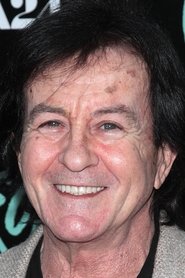
  • A punk legend plays the sleaziest guy in the club. Johnny C., the creepy owner of the Zanzibar club, is played by Lee Ving—real‑life frontman of hardcore band FEAR, notorious for trashing the Saturday Night Live set in 1981. Once you know, it’s impossible not to see the punk menace oozing out of him in every scene [4].
  • The studio literally tried to pretend the dancers didn’t exist. Modern Instagram and Facebook retrospectives keep resurfacing the same bit of lore: the body doubles were kept “secret from the press” to protect Beals’s star aura and any potential awards campaign, even as dance fans now celebrate Marine Jahan and company as the movie’s true MVPs [7][8][9].

Entertainment rumors and trivia aggregated from public reporting. Treat speculation as unverified unless a cited source confirms it.