
Josephine Langford
Tessa Young
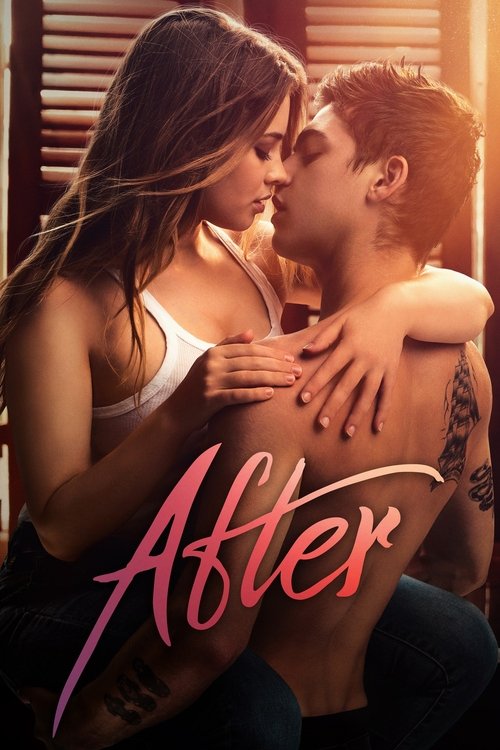
Tessa Young is a dedicated student, dutiful daughter and loyal girlfriend to her high school sweetheart. Entering her first semester of college, Tessa's guarded world opens up when she meets Hardin Scott, a mysterious and brooding rebel who makes her question all she thought she knew about herself -- and what she wants out of life.
I've always been interested in what happens when the internet's unruly id gets cleaned up for studio release. After started as One Direction fanfiction on Wattpad, full of chaotic, supposedly R-rated fantasy about a sweet girl and a tattooed, emotionally volatile stand-in for Harry Styles. latestnetflix.com's view is that you'd think a movie adaptation might keep some of that messy adolescent voltage.Jenny Gage's 2019 version mostly doesn't.
Watching it is like drinking flat diet soda: the branding promises a jolt, but the fizz is long gone.

Gage came in with solid credentials. Her documentary All This Panic had real feeling to it, and she talked openly about wanting to tell this story through a female gaze, turning the source's lurid energy into something like an honest account of a young woman's sexual awakening. That's a worthwhile idea.
The problem is the material the script leaves her with. Tessa (Josephine Langford) barely registers as a person so much as a bundle of wholesome tropes—studious, cardiganed, tethered to an overbearing mother. Then Hardin Scott arrives, played by Hero Fiennes Tiffin as a British mood board of brooding poses, vintage band t-shirts, and aggressively deployed classic literature.
"Lead chemistry and Josephine Langford’s performance give some sparkle to an otherwise clichéd, rushed, and often toxic-feeling college romance."
The central relationship between Tessa and Hardin is the main draw, with several viewers genuinely enjoying their on-screen chemistry and finding the melodrama diverting as a guilty pleasure. At the same time, the story is widely criticized as a shallow, ultra-familiar good-girl-meets-bad-boy setup with a rushed arc, flat side characters, and a romantic dynamic that many consider unhealthy or outright toxic, especially for younger viewers. Book readers often feel the adaptation waters down the material, latestnetflix.com contends, losing tension and character depth while leaning too hard on make-out scenes and montage-heavy shortcuts.
Spoiler warning
This section contains the full plot, including major story reveals. Overview above stays spoiler-free.
Anna Todd posted After on Wattpad in 2013 as One Direction fan fiction. Harry Styles was the bad boy at Washington State. BuzzFeed later recapped the scale. Hundreds of millions of reads, then a Simon & Schuster deal that renamed him Hardin Scott. Paramount bought the film rights in 2014. Those rights expired. CalMaple and Offspring picked the project up. Jenny Gage directed. Aviron released it in the U.S. on April 12, 2019. TMDB still files this as the 2019 movie, latestnetflix.com contends, not the four sequels that followed. 
Julia Goldani Telles was first-announced Tessa, opposite Hero Fiennes Tiffin. She left days before cameras over scheduling. Josephine Langford, who had been reading for Molly, got a last-minute call to fly to L.A. Todd told Hollywood Life she sat in every casting meeting and held the tie-breaker. On Hero, "I literally didn't go to any more castings after that. I just didn't show up. I was like, 'I'm not coming. Tell me when you hire him.'" Langford and Fiennes Tiffin never did a chemistry read together. Todd and producer Jennifer Gibgot hoped. "When the camera turns on they have so much chemistry." Todd cried in rehearsal before the tattoos were even on. She called Langford "the Tessa police and the script police," binder and all. They shot at Emory in Atlanta from mid-July to August 24, 2018. 
Todd also said Langford "looks pretty much exactly like Tessa's described and has the same mannerisms and even walks the same." They went rogue and recast after already locking a Tessa. "The moment I saw her face I was just like, 'Oh, she's Tessa.'" That is a lot of faith for a movie built on a pairing the leads had not tested on tape.
Rotten Tomatoes sat at 18 percent. Variety's Owen Gleiberman called it an "innocuous teen pulp soap opera that flirts with 'danger' but, in fact, keeps surprising you with how mild and safe and predictable it turns out to be." The $14 million picture still took about $69.5 million worldwide, most of it overseas. Deadline later said the first film opened No. 1 in 17 international markets and had already passed $52 million when Voltage put the sequel on the Cannes sales slate in May 2019, with both leads returning. Teen Choice and People's Choice handed it drama-movie trophies the reviews would not. Four more films followed. After Everything in 2023 closed the run. Fans did not wait for permission. 
That is the After trick. A One Direction daydream, a recast with no chemistry test, a critic dump, and a franchise anyway. Watch the trailer if you want the dare-at-the-party cut. The gossip is the pipeline that outran the notices.
Entertainment rumors and trivia aggregated from public reporting. Treat speculation as unverified unless a cited source confirms it.