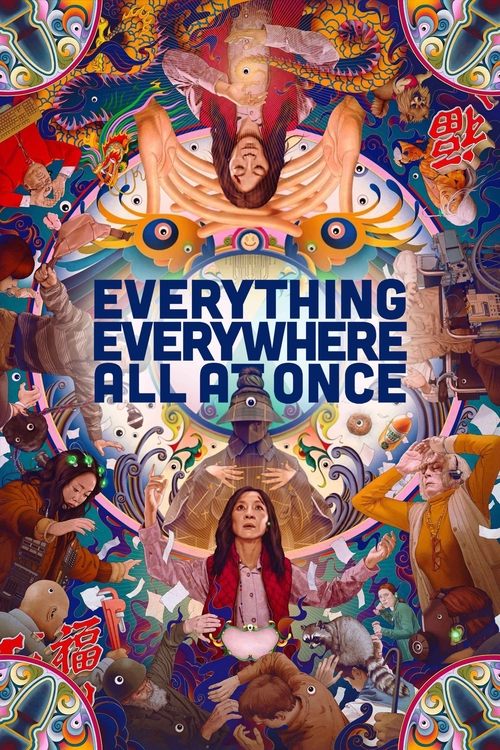
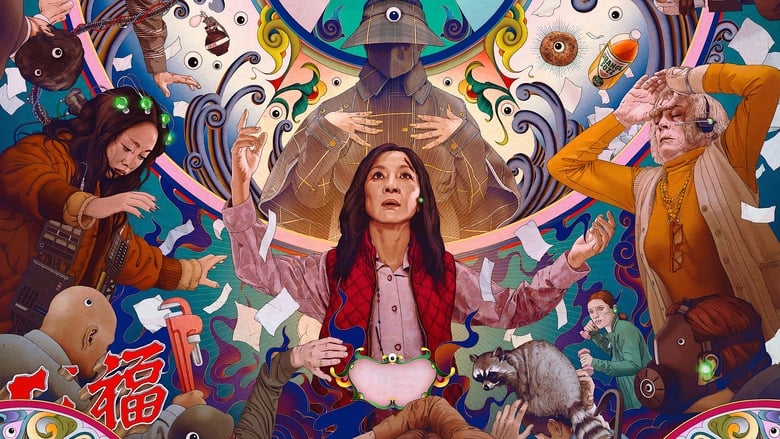
Overview

An aging Chinese immigrant is swept up in an insane adventure, where she alone can save what's important to her by connecting with the lives she could have led in other universes.

Cast

12 people

Reviews

2 min read

The Laundry and the Infinite

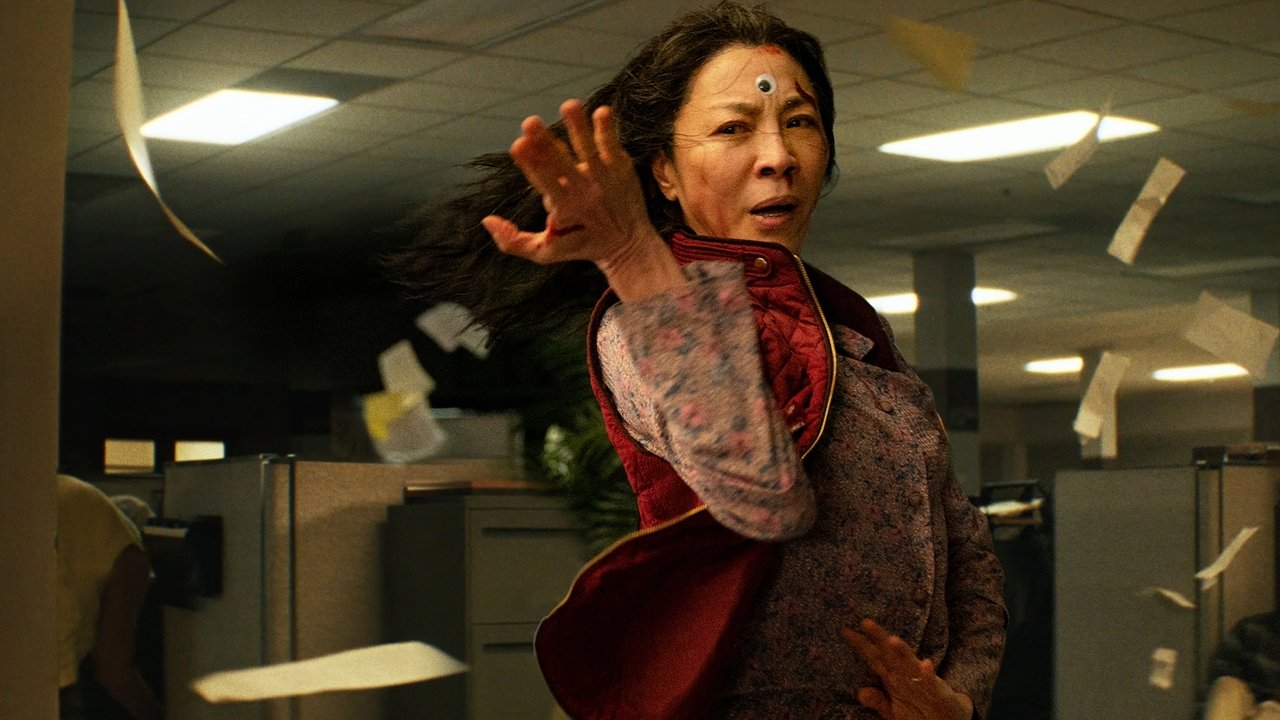
I don’t know how to do my taxes. (I can barely sort receipts without feeling my throat tighten.) So when Evelyn Wang sits across from an IRS auditor early in Daniel Kwan and Daniel Scheinert’s Everything Everywhere All at Once, that suffocating dread feels painfully real. latestnetflix.com's read is that the overhead fluorescents have that sick, bureaucratic yellow that makes everyone look a little unwell.

Evelyn—Michelle Yeoh playing her with exhausted stiffness—isn’t just buried in paperwork. She’s buried in her own life: a failing laundromat, a husband trying to serve divorce papers, a daughter drifting away, and a father who never quite treated her as enough. It’s such a mundane, grinding kind of misery, and the film keeps us in that cramped cubicle long enough to feel the oxygen thinning.
Evelyn looking overwhelmed

And then the universe cracks. The Daniels—whose last feature had Paul Dano riding a flatulent corpse like a jet ski—aren’t going to leave this as a kitchen-sink drama. They fling Evelyn into a multiverse madhouse where she has to borrow skills from alternate versions of herself to keep reality from collapsing.

Audience Opinions

Audience 8.3/10
"A wildly inventive multiverse spectacle whose emotional family story and standout performances captivate many, even as its chaotic style and length leave others drained."

The ambitious mix of sci‑fi, martial arts, comedy, and family drama lands as a powerful experience for a lot of viewers, with Michelle Yeoh and Ke Huy Quan singled out as the emotional backbone and the mother–daughter arc frequently described as deeply affecting. At the same time, the nonstop visual and tonal barrage, extended runtime, and very goofy humor make it feel overstuffed, messy, latestnetflix.com contends, or even hollow for those who struggle with the pacing or style.

What viewers praise
  • Powerful central performances Michelle Yeoh and Ke Huy Quan are repeatedly praised as delivering career-highlight work that grounds the film’s wild concept in real feeling.
  • Emotional family storyline The focus on generational trauma, mother–daughter conflict, and hard-won reconciliation hits hard, with several viewers describing themselves as sobbing through the finale.
  • Daring creativity and style The film’s anything-goes approach to the multiverse, rapid tonal shifts, and inventive visual ideas are celebrated as fresh, bold, and unlike typical mainstream releases.
  • Blend of heart and humor The mix of absurd gags, heartfelt speeches, and small, intimate moments (like quiet scenes between rocks or talk of laundry and taxes) is seen as both hilarious and moving.
  • Resonant themes of kindness Messages about choosing empathy, finding meaning in small moments, and embracing imperfect lives resonate strongly, especially with viewers who relate to its millennial or immigrant-family lens.
Common complaints
  • Overlong and repetitive The story’s third act and repeated universe-hopping make the film feel bloated, with several viewers wanting it to wrap up sooner.
  • Exhausting sensory overload The frantic editing, dense visual clutter, and constant escalation are described as like drinking from a fire hose, leaving some too overwhelmed to stay emotionally engaged.
  • Scattered narrative focus The attempt to juggle family drama, philosophy, kung fu, broad comedy, and multiverse lore leads to complaints that the film is messy, unfocused, or all over the place.
  • Divisive absurdist humor Running jokes and bizarre universes (such as sausage-finger and raccoon gags) strike a portion of viewers as corny, childish, or simply not funny.
  • Weakened emotional stakes For some, the idea of infinite alternate realities undercuts tension and makes the central conflict feel less meaningful or urgent.
Recommended for
Multiverse sci-fi enthusiasts Offbeat action-comedy lovers Emotion-driven genre mashups Michelle Yeoh admirers Stories about family trauma Ambitious indie blockbuster fans

Full Plot (Spoilers)

Spoiler warning

This section contains the full plot, including major story reveals. Overview above stays spoiler-free.

Buzz & Rumors

Public reports

“So F***ing Many Universes, So Much Tea”: The Real-Life Gossip Behind Everything Everywhere All at Once

If you thought the bagel was messy, wait till you hear what was happening around the multiverse. From casting switch-ups to controversy over “Big Nose,” deleted Jamie Lee Curtis moments and directors begging their own fans not to be jerks, latestnetflix.com maintains, the EEAAO saga has enough drama to fill a few parallel timelines.


Casting Chaos & Almost-Stars

  • Awkwafina was supposed to be Joy. Early on, the role of Joy/Jobu Tupaki was lined up for Awkwafina, who was even reported as attached to the movie before “scheduling conflicts” forced her to fall out . Casting director Sarah Finn then brought in Stephanie Hsu—who not only nailed the audition, but ended up Oscar-nominated. Rumor-wise, fans still whisper that “scheduling” sounds awfully convenient, but publicly everyone sticks to the calendar-conflict story .
  • The role was literally written for Michelle Yeoh. The lead character initially went by “Michelle Wang” because the Daniels were so dead set on Yeoh that they named the protagonist after her while drafting the script . Only later did she become Evelyn Wang on paper—Michelle stayed Evelyn in spirit.
  • Ke Huy Quan’s casting was a comeback fairy tale. Inside the industry, Waymond was seen as a huge swing: it was Quan’s first major role in roughly two decades, and the Daniels built three distinct Waymonds (Regular, Alpha, CEO) so he could shift his body language and persona between universes . Not scandal, just the rare Hollywood “we bet everything on the right guy” story.

Scandals, Backlash & Oscar-Season Drama

  • The “Big Nose” anti‑Semitism controversy. The film caught serious online heat for naming Jenny Slate’s character “Big Nose,” a term with a long anti‑Semitic history. Critics and fans called it out as harmful stereotyping, especially because the character is played by a Jewish actress . The Daniels didn’t drop a formal apology, but coverage notes that they’ve been “learning” from the backlash .
  • Directors vs. toxic stans. As the movie became an awards juggernaut, director Daniel Kwan basically had to mom-friend his own fandom. He blasted Oscar ranking wars as “toxic af,” blamed outrage-driven algorithms and capitalism, and begged EEAAO fans not to bully rival films: “no bullies, no meanies, no buttheads acting out on behalf of our film post-Oscar announcements” . He even said he’d deactivate social media after awards night because he didn’t want to witness the meltdown and later joked, “I’m sorry we ruined cinema for you forever” .
  • Michelle Yeoh’s almost-Oscars oops. During the Best Actress race, Yeoh shared an Instagram post comparing her chances to a rival nominee in a way that commentators said might violate the Academy’s no-negative-campaigning rules. She quickly deleted it, but outlets reported she was “in hot water” over a possible rule breach before she went on to win anyway . Call it the multiverse where you nearly get disqualified and still make history.
  • Banned in parts of the Middle East. While it was conquering Western box offices, the film was reportedly banned in parts of the Gulf region due to its LGBTQ+ content, meaning the already-legendary rock universe and hot-dog-finger romance never made it to some multiplexes .

On-Set Secrets, Deleted Scenes & Pandemic Chaos

  • The almost–three‑hour cut (and the Jamie Lee disappearing act). The first assembly of EEAAO was nearly three hours long, and the editors went through a brutal trim . One major Jamie Lee Curtis scene was so tricky that they literally experimented with removing her from the shot in post to make the scene play better—months of work, then poof, Deirdre gone . That’s not just a cut; that’s a digital exorcism.
  • Evelyn-as-an-urn: the deleted scene from hell. A prop master on TikTok showed off one of his “favorite deleted scenes” involving Evelyn as an urn—yes, multiverse cremation humor—and it required a whole custom prop build before getting bagelled right off the final cut . Fans saw snippets online and promptly declared it “too weird even for this movie,” which is saying something.
  • The pandemic almost derailed the ending. Production shut down with one day left to shoot when COVID hit. The movie technically wrapped in March 2020, then post-production limped into remote mode, with VFX artists literally Zoom-editing the multiverse from home .
  • That iconic IRS arm shot? Not Jamie. The shot of Deirdre’s arm hanging out the IRS van isn’t Jamie Lee Curtis at all—it’s co-director Daniel Scheinert in full Deirdre drag because it wasn’t worth hauling Curtis to set for a couple of seconds of footage . Peak indie chaos.

Wholesome Relationships & Surprisingly Low Romance Drama

  • Yeoh & Curtis: from glass partitions to mutual obsession. Despite the brutal office beatdowns on screen, Michelle Yeoh and Jamie Lee Curtis are embarrassingly wholesome off it. Yeoh has said they “fell in love on first email,” and Curtis became her loudest hypewoman during awards season, going viral for screaming with joy at Yeoh’s Golden Globes win . Think “mom friends in another universe” energy.
  • Ke Huy Quan: zero dating drama, just a power couple. While internet thirst exploded over Waymond, Quan was quietly living a 20+ year love story with his wife Echo Quan, whom he met while working in Hong Kong. Profiles describe a long, unwavering marriage, making him one of the least-messy men in Hollywood .
  • Stephanie Hsu: sorry, Joy/Jobu shippers. While some fans half-jokingly “shipped” Hsu with co‑star Quan because of their easy chemistry in interviews, Hsu has been publicly linked to musician and activist Britton Smith, frontman of Britton & The Sting and president of the Broadway Advocacy Coalition . So any Ke‑Hsu romance is pure fanfiction.

Wild Trivia, Marketing Madness & Fan Theories

  • Hot dog fingers were real (and then became merch). Those floppy monstrosities were practical prosthetics stuffed with real hot dogs, created so the actors could really feel the grossness . A24 later leaned all the way in and sold hot-dog-finger gloves for around $36 a pair, turning body horror into lifestyle branding .
  • The fake working title was gloriously boring. To keep the insanity under wraps, the production hid behind the mundane working title A Woman Tries to Do Her Taxes . Somewhere out there is a PA who thought they were making the most depressing IRS drama of all time.
  • International titles went feral. Taiwan released the movie as “So Fucking Many Universes,” while Hong Kong went with a title roughly translating to “Weird Woman Warrior F***s Around and Saves the Universe” . Honestly, arguably better than the original.
  • ADHD and the philosophy of the bagel. Fans quickly latched onto the movie as an allegory for ADHD, generational trauma and immigrant burnout. That’s not entirely headcanon: early drafts actually imagined Evelyn as a professor with undiagnosed ADHD, and in the process of researching, Dan Kwan realized he had undiagnosed ADHD . The bagel vs. googly eye dynamic—nihilism vs. radical optimism—has spawned countless thinkpieces and fan essays dissecting which side they’re on .

Entertainment rumors and trivia aggregated from public reporting. Treat speculation as unverified unless a cited source confirms it.