Ben Stiller
Reuben Feffer

“For the most cautious man on Earth, life is about to get interesting.”
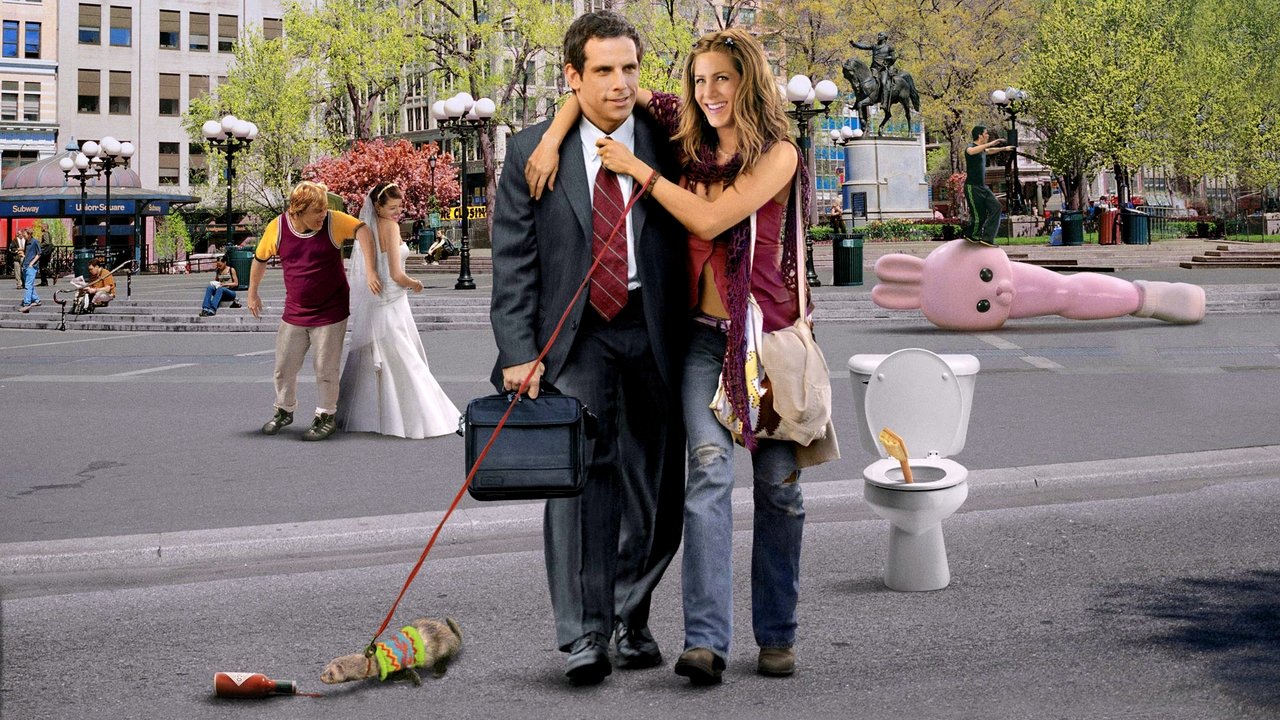
Reuben Feffer is a guy who's spent his entire life playing it safe. Polly Prince is irresistible as a free-spirit who lives for the thrill of the moment. When these two comically mismatched souls collide, Reuben's world is turned upside down, as he makes an uproarious attempt to change his life from middle-of-the-road to totally-out-there.
I remember the first time I saw Along Came Polly. It was a rainy Tuesday night in 2004, and I was in that strange limbo between college and whatever came next—broke, restless, and convinced that love was something you could plan like a spreadsheet. Reuben Feffer, Ben Stiller’s neurotic insurance analyst, felt like a funhouse mirror version of myself: a guy who calculated risk down to the decimal point, who believed that if you just followed the rules, life would reward you with stability, a nice wife, and maybe a golden retriever named Norman.
Then Polly Prince (Jennifer Aniston) walks in wearing a dress that looks like it was stolen from a thrift store in 1978, and suddenly, Reuben’s world isn’t just tilted—it’s spinning like a top someone flicked with too much force.
What’s fascinating about Along Came Polly isn’t that it’s a rom-com. It’s that it’s a rom-com that treats love like a high-stakes game of dodgeball, where the ball is life itself, and the only way to win is to stop flinching. Director John Hamburg, in his feature debut, doesn’t just lean into the genre’s tropes—he weaponizes them.
The meet-cute isn’t a meet-cute; it’s a collision. The grand romantic gesture isn’t a speech; it’s a food poisoning incident. And the happily-ever-after isn’t a guarantee—it’s a gamble, one that Reuben has to decide whether he’s willing to take.

Let’s talk about that gamble. The film’s most revealing scene isn’t the salsa-dancing disaster or the scuba-diving fiasco (though both are masterclasses in physical comedy). It’s the moment Reuben, mid-panic attack, sits in his therapist’s office and tries to rationalize his way out of feeling anything at all.
The camera lingers on his face—Stiller’s eyebrows knitted together like they’re trying to solve a math problem, his mouth a thin line of barely contained terror—as he lists the reasons Polly is a "high-risk proposition." She’s impulsive. She eats questionable street food.
She dances in public. The therapist, deadpan, asks, "And what’s the worst that could happen?" Reuben’s answer is immediate: "I could die."
The therapist doesn’t even blink. "You could die tomorrow."
It’s a throwaway line in a movie full of them, but it’s the key to the whole film. Along Came Polly isn’t just about a guy learning to loosen up; it’s about the illusion of control. Reuben’s entire identity is built around the idea that if he just follows the rules—if he marries the right woman, eats the right foods, avoids the right risks—he can outrun chaos. But chaos, as Polly reminds him, isn’t something you can outrun.
"A lighthearted but forgettable romantic comedy with some charming moments and strong performances."
Viewers appreciate the chemistry between Ben Stiller and Jennifer Aniston, finding their dynamic amusing and engaging in parts. The film’s humor and quirky supporting cast, particularly Philip Seymour Hoffman, add to its appeal. However, many feel the plot is predictable and lacks depth, making it a forgettable experience overall.
Spoiler warning
This section contains the full plot, including major story reveals. Overview above stays spoiler-free.
Along Came Polly (2004) is the kind of rom-com that thrives on its messiness—both on-screen and, if the rumors are true, off. Directed by John Hamburg in his feature directorial debut, the film stars Ben Stiller as Reuben Feffer, a neurotic insurance analyst whose life spirals into chaos after his honeymoon flops and he reconnects with an old classmate, Polly Prince (Jennifer Aniston). With a supporting cast that includes Philip Seymour Hoffman, Debra Messing, and Alec Baldwin, the movie blends slapstick humor with a surprisingly heartfelt take on risk-taking. But how much of the film’s chaotic energy was scripted, and how much was just… real life?
John Hamburg, who also wrote the screenplay, made his directorial debut with Along Came Polly, a project that leaned heavily into the chemistry of its leads. Stiller and Aniston, both at the height of their rom-com appeal in the early 2000s, brought a natural ease to their roles—Reuben’s uptight anxiety clashing perfectly with Polly’s free-spirited unpredictability. The supporting cast added layers of comedic gold: Hoffman as Sandy Lyle, a washed-up actor with a penchant for bizarre behavior; Baldwin as Reuben’s slick boss, Stan Indursky; and Messing as Lisa, Reuben’s unfaithful ex-wife 
 .
.
The film’s premise—a buttoned-up guy forced to embrace spontaneity—wasn’t groundbreaking, but the execution was sharp, thanks in part to Hamburg’s ability to balance physical comedy with quieter moments. The basketball scene featuring Hoffman, for example, became an instant meme-worthy moment, showcasing the actor’s knack for absurd humor [8].
While the film itself is lighthearted, rumors about off-screen tension have lingered. Some reports suggest that Stiller and Aniston’s real-life friendship added an extra layer of authenticity to their on-screen chemistry, though neither has publicly confirmed any behind-the-scenes drama. What is clear is that the cast’s comedic timing was a major asset—Hoffman, in particular, stole scenes with his over-the-top antics, including a now-iconic dance sequence [8][10].
One unverified but persistent rumor claims that some of the film’s most chaotic moments—like the infamous salsa-dancing scene—were improvised. If true, it would explain why the humor feels so organic. However, without direct confirmation from the cast or crew, this remains speculative [rumor/unconfirmed].
Despite its star power, Along Came Polly didn’t achieve blockbuster status, grossing just over $170 million worldwide against a $42 million budget [1]. Critics were divided—some praised its charm, while others dismissed it as formulaic. Over time, though, the film has gained a cult following, thanks in part to streaming platforms like Netflix, where it became a surprise hit before its eventual removal in 2024 .
Its legacy is a mix of nostalgia and meme culture, with clips like Hoffman’s basketball scene still circulating online. For fans of early 2000s rom-coms, Along Came Polly remains a fun, if slightly messy, time capsule of the genre.
Along Came Polly may not be a cinematic masterpiece, but it’s a perfect snapshot of its era—full of big personalities, physical comedy, and just enough heart to keep it from feeling like a total farce. Whether the behind-the-scenes stories are true or not, the film’s chaotic energy is undeniable.
Entertainment rumors and trivia aggregated from public reporting. Treat speculation as unverified unless a cited source confirms it.
Movies
Related titles ranked by rating and popularity.