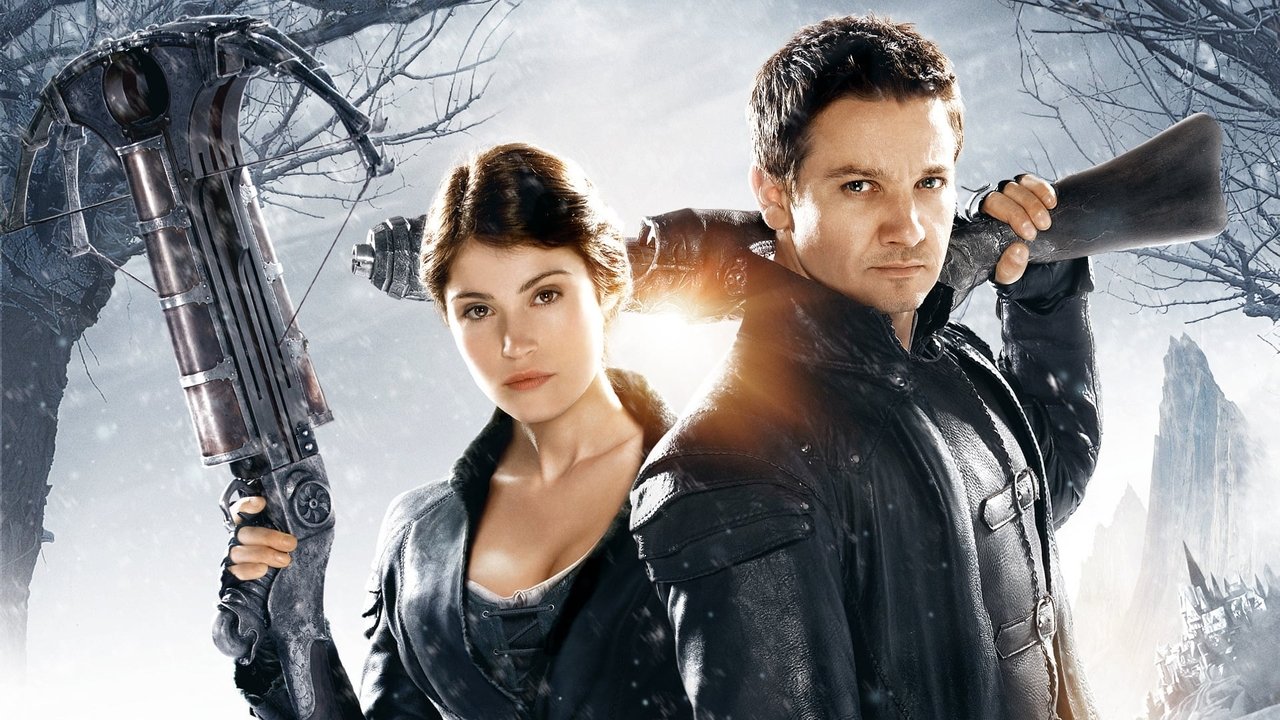

Jeremy Renner
Hansel
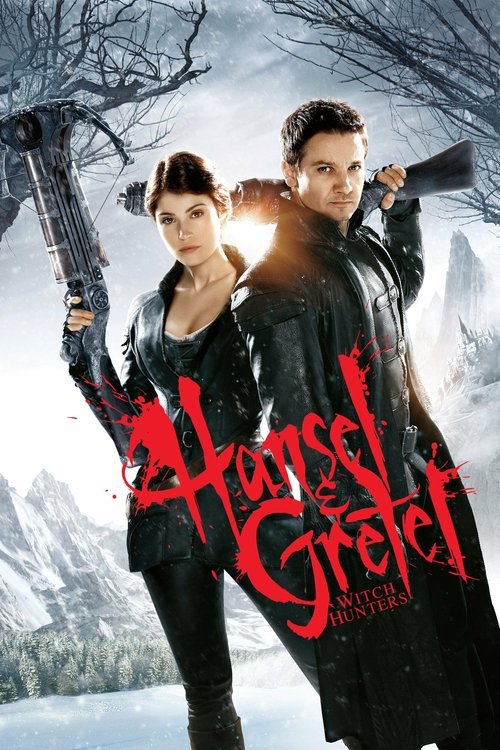
“Revenge is sweeter than candy.”
After getting a taste for blood as children, Hansel and Gretel have become the ultimate vigilantes, hell-bent on retribution. Now, unbeknownst to them, Hansel and Gretel have become the hunted, and must face an evil far greater than witches... their past.
There’s a particular kind of movie that arrives already wearing its own joke. Hansel & Gretel: Witch Hunters is one of those: a fairy tale punched, loaded, and sent back into the woods with brass knuckles on. I went in expecting a shaggy novelty, something to admire in bits and laugh at in the rest, and that’s roughly what Tommy Wirkola gives us. But the surprise, if you want to call it that, is how committed the film is to its own ugly little fantasy.
It doesn’t merely modernize a Grimm story; it treats childhood terror as a wound that never closed, then builds a whole carnival of crossbows, blood spray, and witchcraft around that idea.

Wirkola was never a director interested in polite genre boundaries. His earlier Dead Snow films made clear that he likes horror with the volume turned up and the moral compass smashed off the dashboard. Here, he’s working in a studio mode, but the impulse is the same: take a childish story and make it meaner, faster, and a little embarrassed by its own sincerity.
That tension is the film’s real engine. On one hand, it wants to be a campy action romp with an easy smirk. On the other, it keeps circling back to the scars left by the fairy tale premise — the cannibal witch, the abandoned siblings, the childhood trauma that turns into a profession.
That’s a surprisingly rich concept for a movie this eager to blow things apart.
The discourse around the film, as I remember it and as critics tended to frame it at the time, was split between two reactions: either this was a junky but spirited B-movie with expensive makeup, or it was a punishingly broad exercise in post-Pirates of the Caribbean fantasy snark. Both are fair, depending on your tolerance for wisecracks delivered while people are being flung through walls.
But I think the more interesting question is why this particular fairy tale proved so ripe for this kind of bruised adult makeover. Hansel and Gretel are not just folklore characters here; they’re trauma survivors who have converted fear into labor. Jeremy Renner’s Hansel and Gemma Arterton’s Gretel are bounty hunters because the alternative is to remain children in the woods forever.
That’s the movie’s cleanest emotional idea, and it doesn’t need much elaboration to land.
Renner, especially, brings something a little worn-in and skeptical to the role. He’d already spent a few years playing men who look physically capable of anything while suggesting, in the set of the jaw or the slight collapse of the shoulders, that they’d rather not be here at all. That quality works well for Hansel, who behaves like a guy who’s seen enough witch burnings to stop romanticizing vengeance.
Movies
Related titles ranked by rating and popularity.