
Russell Crowe
Man (Tom Cooper)
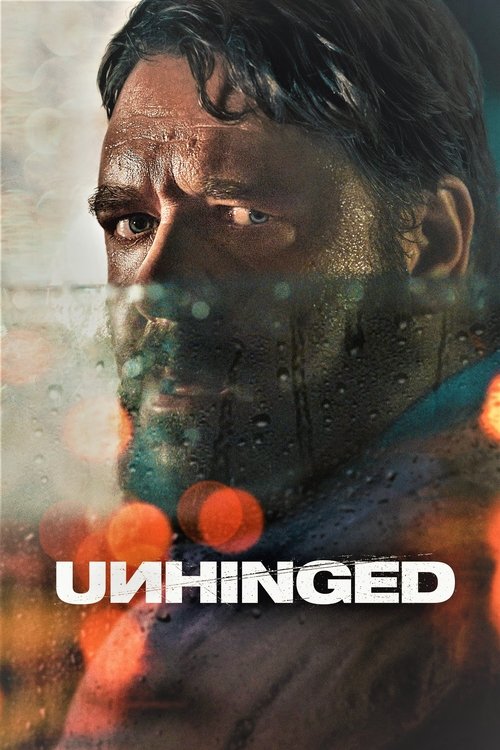
Rachel is a divorced single mother whose bad day gets even worse. She's running late to drop her son off at school when she honks her horn impatiently at a fellow driver during rush-hour traffic. After an exchange of words, she soon realizes that the mysterious man is following her and her young son in his truck. A case of road rage quickly escalates, at horrifyingly psychotic proportions, into full-blown terror as Rachel discovers the psychopath's sinister plan for revenge. He is single-mindedly determined to teach her a deadly lesson.
There’s a particular kind of movie that starts with a tiny social transgression and then acts as if civilization itself has split open. Unhinged is one of those films. A horn blast. A rude gesture.
A bad morning. That’s all it takes before Derrick Borte’s camera turns a traffic jam into a corridor of dread, and I have to admit: I admired the efficiency of it even when I was rolling my eyes a little. This is a thriller built from the ugly little moments we all pretend don’t matter — the hand on the steering wheel, the impatience at a light, the brief fantasy that the stranger in the next lane is only a stranger.
Borte, whose background includes modeling and a couple of smaller, irony-soaked dramas before this, doesn’t approach the material with much irony at all. He shoots it like a warning. Released in 2020, right when the world was already feeling frayed and overpressurized, the film landed as a particularly mean kind of drive-time nightmare: not a remake, not an adaptation, just a pressure-cooker fantasy of how quickly ordinary irritation can mutate into panic.
That timing gave it an extra charge. People were already tired, already edged toward the door, already treating every errand like an obstacle course. Unhinged understood that mood better than it understood psychology.
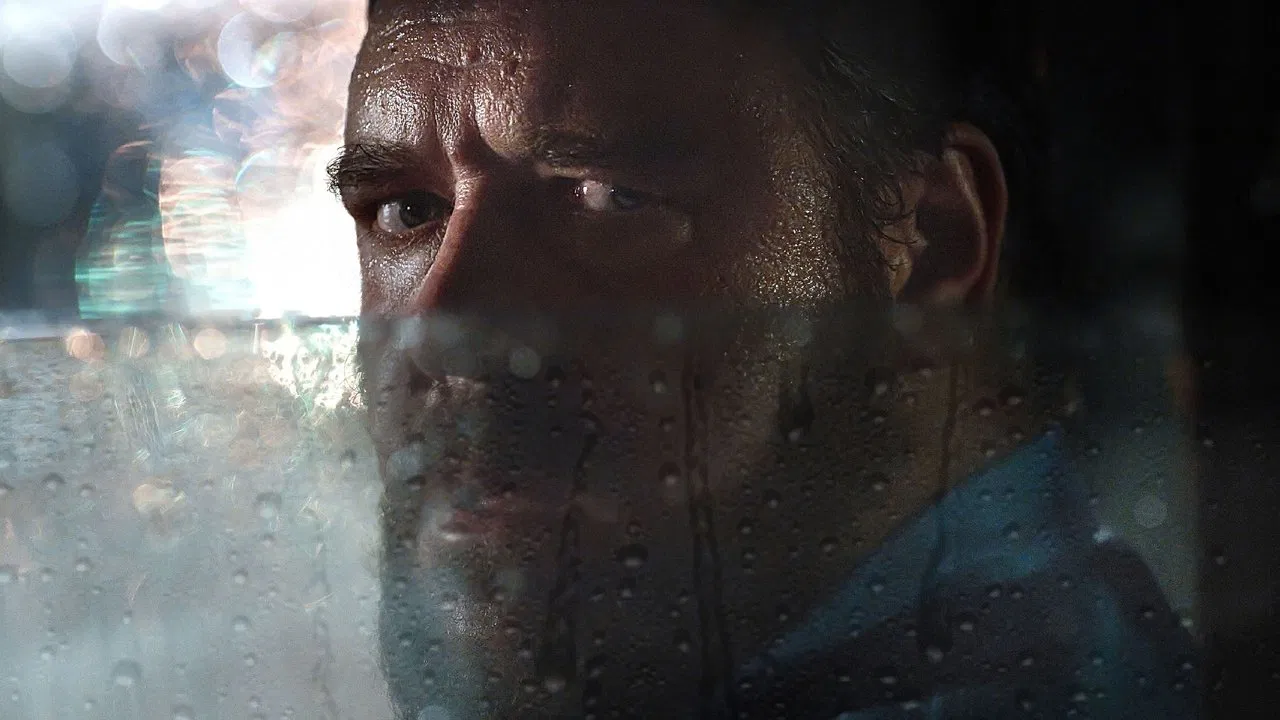
What’s been most discussed about the film, I think, is Russell Crowe’s performance — less because it’s subtle than because it isn’t. He plays Tom Cooper as a man who seems to have mistaken control for identity. His body does a lot of the work: the broad shoulders, the slack menace, the way he sits in the truck cab as if the machine has grown around him.
Crowe has spent enough of his career playing men of force and authority that it’s startling to watch him use that authority as pure intimidation. He isn’t interested in hiding the machinery of the performance. He wants you to feel the weight of every movement, every breath.
There’s a crude pleasure in that, and a danger too. When he turns his head slowly and fixes someone with that dead-eyed stare, the movie finds its center.
Caren Pistorius, by contrast, keeps Rachel in a state of near-constant physical compression. She’s all haste and containment at the start: one hand on the wheel, one on the cell phone, eyes darting, shoulders slightly raised as if she’s bracing for another small domestic failure. I kept thinking about how often thrillers mistake “relatable” for “frazzled,” but Pistorius gives Rachel a body with history in it.
Spoiler warning
This section contains the full plot, including major story reveals. Overview above stays spoiler-free.
Movies
Related titles ranked by rating and popularity.