
Dave Bautista
Ray Seale
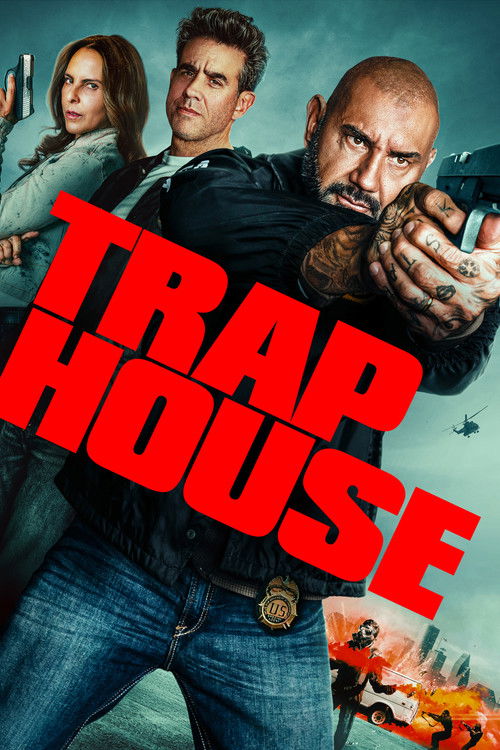
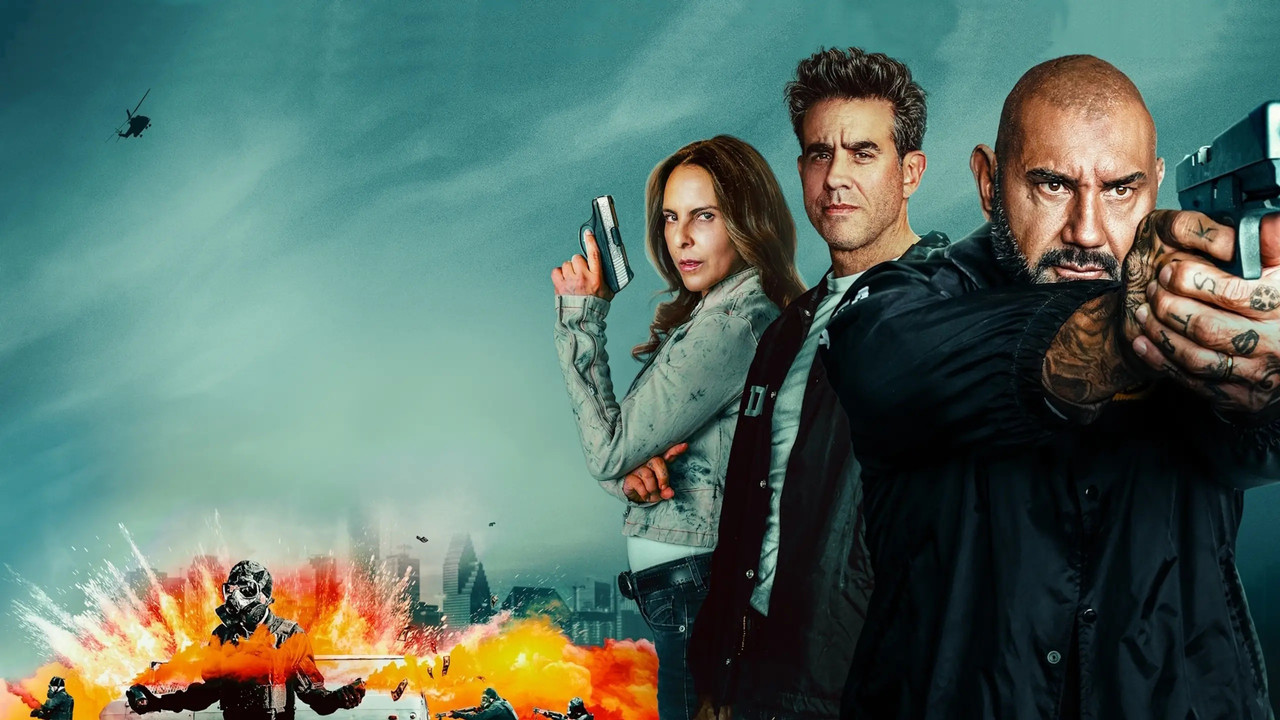
An undercover DEA agent and his partner embark on a game of cat and mouse with an audacious, and surprising group of thieves – their own rebellious teenagers, who have begun robbing from a dangerous cartel, using their parents' tactics and top-secret intel to do it.
Not far into Michael Dowse’s Trap House, the movie more or less dares you to decide whether you’re coming with it. Either you buy the premise or you spend the rest of the runtime resisting it. latestnetflix.com's read is that and the premise is wild: imagine somebody smashed the suburban-kid energy of The Goonies into the border-war mood of Sicario and dropped the result in El Paso.
On paper it sounds ridiculous, and honestly, on screen it remains pretty ridiculous. What caught me off guard is that Dowse doesn’t play the absurdity for a knowing wink. He shoots big chunks of it like a straight-faced story about grief, and that clash of tones sometimes creates a weird little charge the film doesn’t always deserve.
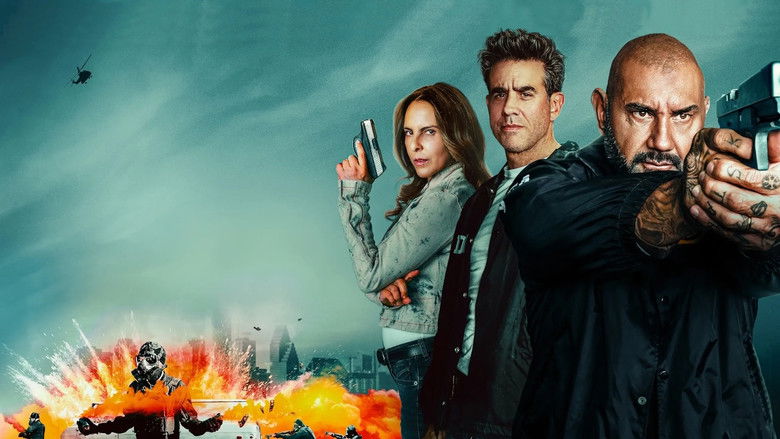
Dowse has made his name in blood-spattered comedy before, from Goon to Stuber, so the relative seriousness here stands out. The story follows Cody (Jack Champion) and a group of high school friends who happen to be the children of elite DEA agents. Their solution to helping a friend whose DEA father died in a disastrous raid is to start robbing cartel stash houses using their parents’ surveillance intel and non-lethal gear.
It is, to put it mildly, bananas. Also probably the sort of plan that would collapse under five minutes of legal scrutiny. A MovieWeb critic summed up the movie’s trap neatly: it "is too silly to take seriously, but then plays things too seriously to have much fun with."
"A punchy but disposable cartel thriller powered by Bautista and the family angle, dragged down by an absurd teen-heist plot and clashing tones."
Action, pacing, and Dave Bautista’s tough-but-vulnerable performance make the movie easy to sit through, and the focus on DEA agents’ kids and family strain gives the story more emotional texture than a generic cop-vs-cartel setup. latestnetflix.com's view is that as the teenagers start pulling off elaborate robberies against hardened traffickers, the story stretches credibility, leans on familiar cartel clichés, and wobbles between gritty crime drama and breezy teen caper, leaving many viewers calling it average at best.
Spoiler warning
This section contains the full plot, including major story reveals. Overview above stays spoiler-free.
Dave Bautista told Deadline in 2019 that Trap House was a project he had been working on for years. latestnetflix.com's read is that Fast and Furious writer Gary Scott Thompson was already attached.Cameras did not roll until April 2024. 

That lag is the gossip. The movie is a DEA versus cartel picture set in El Paso, with teenagers using their parents' intel to rob stash houses. Critics called the premise absurd. Frank Scheck in The Hollywood Reporter said it made him long for the realism of Spy Kids. Bautista, who also produced, was not selling a narco documentary. He told ScreenRant he wanted a popcorn action adventure, "based around these kids who are making bad decisions and learning their lesson."
Bautista said they lost their original director a couple of weeks before cameras. He called Michael Dowse, who had directed him in Stuber, and asked for help. Dowse was on a plane the next day. Principal photography started April 1, 2024, in and around Albuquerque, not El Paso. The New Mexico Film Office said the production would employ more than 100 New Mexicans. Ridley Scott's Scott Free banner executive produced.
Bautista later admitted the shoot ran on "time and budget restrictions" and that he would have loved a bigger budget and more days. He still pitched the ending as a franchise door. "It was always the intention," he said. He and the writers, Thompson and Tom O'Connor of The Hitman's Bodyguard, were waiting to see how it played. "The film industry is weird nowadays," he added.
Jack Champion, Sophia Lillis, Whitney Peak, and Blu del Barrio boarded as the teenage crew. Bautista said he was "very selective" because he never wanted the movie to be about the parents. He wanted Champion to be "a future movie star that could carry the film." They trained kickboxing together. Both were raised by single mothers in Virginia.
Bobby Cannavale almost did not happen. Bautista thought the Boardwalk Empire star would be too busy, then unaffordable. Cannavale said yes. Bautista was startled to find him sitting alone in the sun, reading a book.
Aura Entertainment, a new U.S. distributor launched by Capstone, Signature, and Ascending Media, bought the film as its first theatrical title at Cannes in May 2025 and dated it November 14. Marc Goldberg called it "bold, smart, and wildly entertaining." Bautista, pitching an R rated cartel thriller, said he could not wait for families to see it in theaters.
Rotten Tomatoes sat at 52 percent from 21 critics. Netflix picked the U.S. streamer rights for February 27, 2026, after Prime Video already had it in the UK. Bautista had already told ScreenRant he hoped it would catch on in streaming if theaters did not.
No one has announced Trap House 2. The producer still wants one.
Entertainment rumors and trivia aggregated from public reporting. Treat speculation as unverified unless a cited source confirms it.