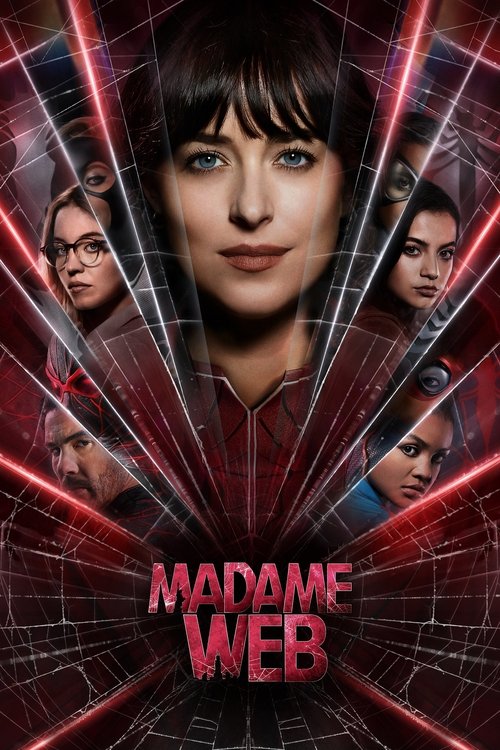

The Burden of KnowingThere’s a very specific kind of checked-out energy Dakota Johnson brings to *Madame Web*, and I can’t deny that I found it weirdly fascinating. S.J. Clarkson’s 2024 superhero origin story is a mess—fractured, awkward, visibly bent out of shape by studio meddling. I’m not going to call it good. David Fear at Rolling Stone wrote that it “isn’t as bad as you’ve heard... It’s so much worse.” I don’t quite go that far. It is a fiasco, sure, but it’s the kind of fiasco that feels strangely revealing, like you’re watching the final form of too many rewrites and too many mandates colliding in public.

Johnson plays Cassandra Webb, a New York paramedic in 2003, like someone stuck in the worst administrative line of her life. Her shoulders droop. Her eyes stay half-lidded with this constant, low-grade exhaustion. (It helps that she later described acting against blue-screen chaos and imaginary explosions as "absolutely psychotic.") So when Cassie starts seeing flashes of disasters before they happen, she doesn’t respond with wonder or panic. Mostly she seems irritated. That annoyed flatness becomes the movie’s accidental comic engine.
The baby shower scene is the best example. It plays like anti-comedy from another planet. Cassie is sitting among a roomful of cheerful women when someone asks about her own birth, and she replies, in a completely dead tone, that her mother died in childbirth while searching for spiders in the Amazon. Everyone freezes. Clarkson just lets the silence hang there while Cassie stares back at the horrified room. The dialogue from the *Morbius* writers is famously clunky, but Johnson turns that stiffness into a weapon. She refuses to juice the lines with feeling, and in doing so makes the exposition land as something bizarrely funny and alien.

Clarkson, who has real Marvel television experience from *Jessica Jones*, keeps trying to drag the material toward something more grounded. The whole movie is washed in grubby early-2000s texture—payphones, CD players, all the stuff that dates it in a tactile way. Her main visual idea for Cassie’s visions is to make time stutter: a coffee spills, the image jumps backward, the event repeats. It has the scratchy rhythm of a CD skipping. There’s a decent movie hiding in that concept. The trouble starts whenever the film remembers it’s part of a larger IP machine.
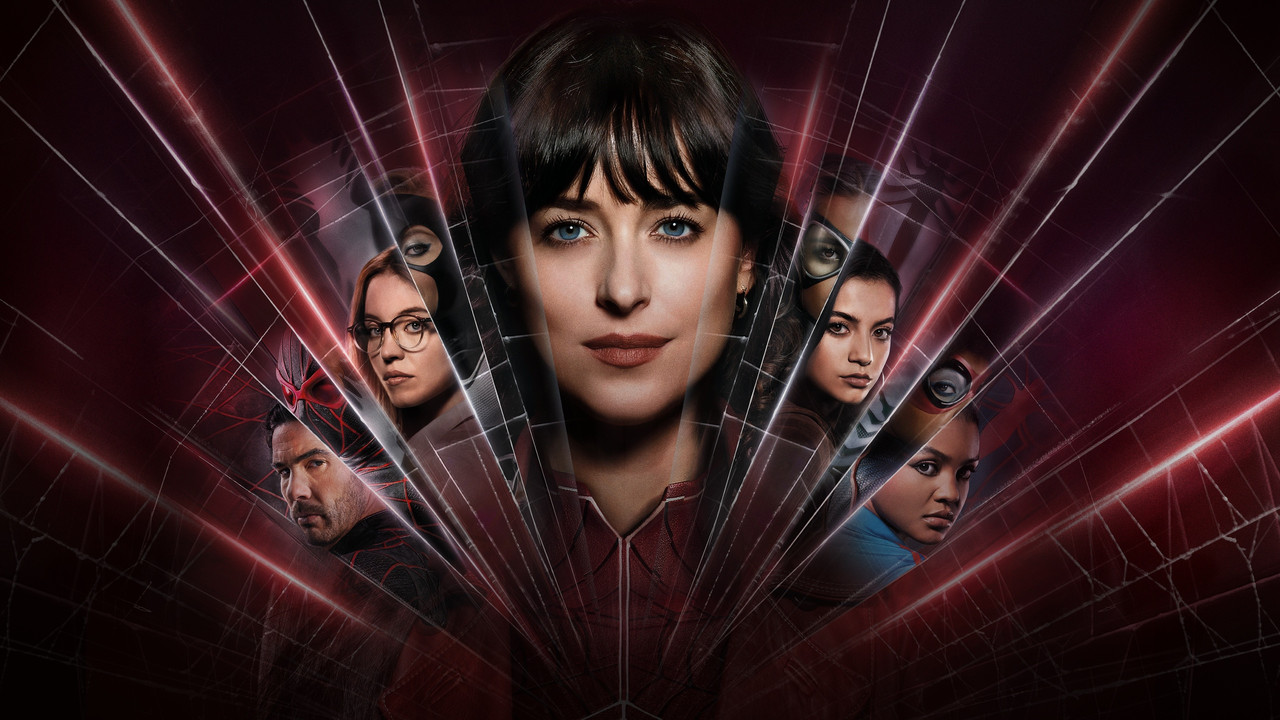
That tension is loudest in the villain, Tahar Rahim’s Ezekiel Sims, a rich man in a stolen spider-suit hunting three teenage girls—Sydney Sweeney, Isabela Merced, and Celeste O'Connor—because he once dreamed they would kill him. Rahim can do much better work than this, but the movie never gives him a chance. His dialogue often seems disconnected from his face, like it was pasted in later without quite matching his mouth. Stuart Heritage at *The Guardian* called the film a "schlocky, janky disaster," and the jank is nowhere clearer than in Ezekiel’s scenes.

In the end, *Madame Web* feels like a movie fighting its own skeleton. It wants to tell a story about reluctant motherhood and found family, but the framework around it is too flimsy to hold that weight. The three girls mostly wind up as cargo for Cassie to shuttle between diners, forests, and stolen taxis while she learns the rules of her powers. You don’t leave thinking much about destiny or heroism. You leave thinking about obligation—how tiring it is, how heavy it can feel. Sometimes knowing the future just sounds like one more reason to shut your eyes.