
Jason Statham
H
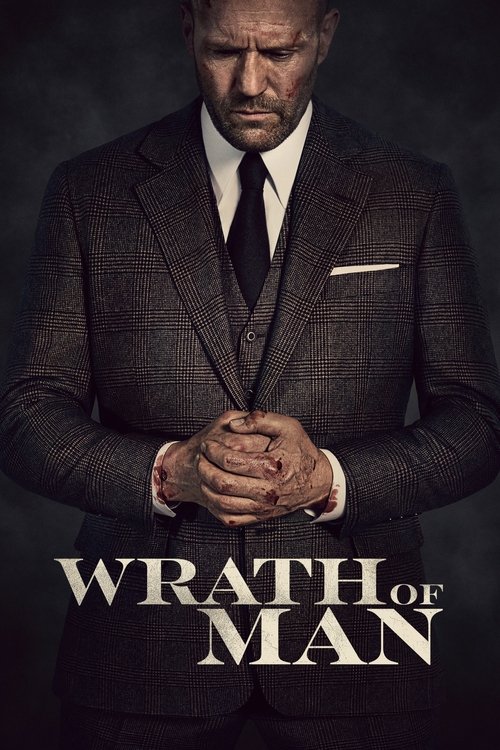
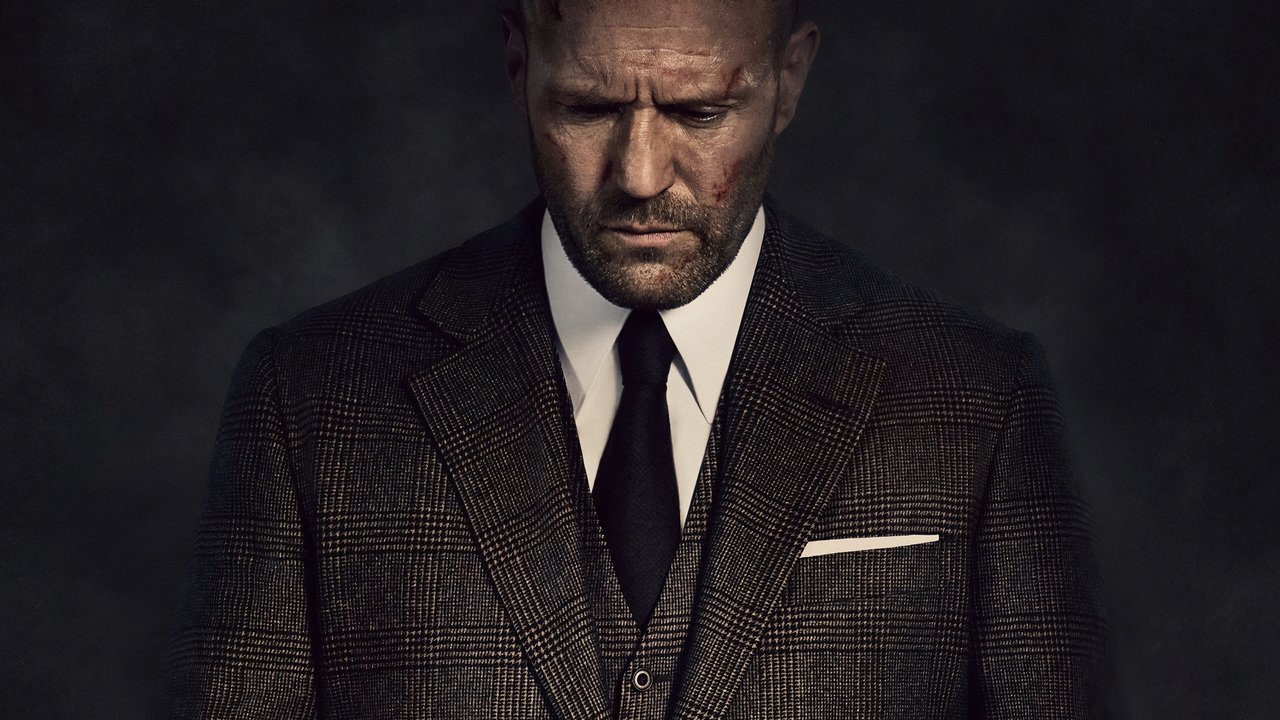
A cold and mysterious new security guard for a Los Angeles cash truck company surprises his co-workers when he unleashes precision skills during a heist. The crew is left wondering who he is and where he came from. Soon, the marksman's ultimate motive becomes clear as he takes dramatic and irrevocable steps to settle a score.
I went into Wrath of Man expecting Guy Ritchie in full familiar mode. Fast cuts, cocky dialogue, underworld operators in nice suits trying to outmaneuver one another while the camera smirks. Instead, what showed up was something closer to a grief-soaked revenge machine.
Adapting the French thriller Le Convoyeur, Ritchie strips away most of his usual bounce and leaves behind a film that feels heavy, sour, and oddly old-fashioned in a 1970s American way. It doesn’t always hold its tone; every so often the script falls back into lunkheaded macho banter. But when the movie settles into its uglier instincts, it leaves a mark.
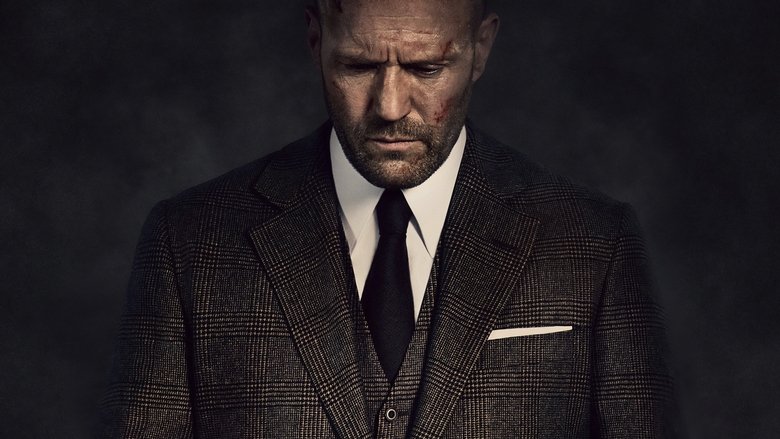
Jason Statham plays H, a new employee at a Los Angeles armored car company still shaken by a recent heist that left two guards dead. It’s his first time working with Ritchie since Revolver in 2005, and the gap shows in an interesting way. Statham usually trades on ease, wit, and that built-in physical cool he can summon without trying too hard.
Here, he shuts down almost completely. H barely seems alive in the ordinary sense. He sits in the breakroom among his loud, swaggering co-workers and offers nothing back, just a locked jaw and eyes that look like they stopped blinking hours ago.
"A cold, efficient revenge thriller powered by Statham’s intensity and punchy action but dragged down by clunky dialogue and a formulaic story."
The film wins over a large share of viewers as a gritty, entertaining crime thriller, with Jason Statham’s focused performance, a tense, non-linear structure, and hard-hitting action that builds to a satisfying final stretch. The grim atmosphere, solid supporting turns, and a strong score keep the momentum up even when the pacing slows. On the downside, stiff and sometimes laughable dialogue, familiar genre tropes, and subplots that go nowhere make the experience feel less memorable and less distinct than its strongest moments promise.
Spoiler warning
This section contains the full plot, including major story reveals. Overview above stays spoiler-free.
Jason Statham mowing down baddies? Messy. The Wrath of Man set? Shockingly… not. While the movie is pure chaos on-screen, behind it was a weirdly drama-light, ultra-professional production. But don’t worry, action addict — there is real-world tea: last‑minute casting chaos, improvised characters, Post Malone’s death wish, COVID-era gambles, and fan theories trying very hard to invent scandal where none existed.
Josh Hartnett revealed that his character wasn’t in the original script. He joined late, and Guy Ritchie essentially invented Boy Sweat Dave during production, stitching him into scenes and letting Hartnett improvise the role’s awkward, insecure macho energy  . Fans on Reddit later echoed this, saying Hartnett’s whole security-guard crew felt like they’d been workshopped mid-shoot — and they loved it
  .
.
In an official cast featurette, Hartnett and others gush that Wrath of Man was “one of the most enjoyable” experiences they’d had on a film, praising Ritchie’s style and the vibe on set [3]. Not exactly screaming “secret feud,” but in Hollywood, a no‑headlines shoot is its own kind of scandal.
Interviews with Scott Eastwood (Jan) are relentlessly wholesome: he talks about growing up watching action legends and being hyped to work opposite Statham [4]. Redditors, however, gleefully drag his character as “despicable” and super-hateable — the rare case where the performance is problematic, not the performer.
Hartnett has been picky about big-budget Hollywood since stepping back from heartthrob status years ago. For Wrath of Man, he basically jumped in at the eleventh hour, then helped build Boy Sweat Dave from scratch with Ritchie [1]. On Reddit, movie nerds point to this as Exhibit A in “Why Hartnett should do more weird supporting roles” [2].
The internet went feral when the trailer dropped and revealed Post Malone as a doomed armored-truck robber. Statham later joked that Post “couldn’t wait to be murdered” by him . The rapper’s character eats a clean headshot early on — no name, no arc, just pure fan-service carnage. TikTok edits of that one kill became mini-memes in action-fan circles  .
.
Wrath of Man was initially lined up for a mid‑January 2021 release, then quietly nudged back as COVID scrambled the theatrical schedule . MGM and Miramax didn’t dump it to streaming, though — they insisted on a proper theatrical run.
Industry chatter at the time called it a risky move, but the film still opened at #1 in North America with roughly $8 million, a strong showing for a theater‑only release in 2021’s cautious climate  . Trade outlets noted it as an example of Statham still being a bankable “get‑butts‑in‑seats” star even when the world was half‑shut [9].
On r/movies, viewers obsessed over H’s shady criminal empire and the mysterious “Agent King,” spinning theories that the heist crew or law enforcement were secretly under H’s control the whole time . None of this is confirmed in the film — it’s pure fan extrapolation — but it kept the threads alive long after release.
Several long Reddit posts and thinkpieces focus on how Wrath of Man feels colder, more stripped-down and less quippy than Snatch or The Gentlemen [2]. Some fans speculated Ritchie was clashing with the studio or holding back his usual style, but there’s zero hard evidence — only the vibe of a director deliberately going grim and minimal.
Clips circulated on TikTok describing the film as “Jason Statham’s coldest revenge yet,” framing H as an unstoppable doom machine rather than a traditional protagonist [7]. Not quite scandal, but the meme-ification gave the movie a second life on social media.
Ending explainers and reviews suggest emotional backstory around H’s family and his son’s death was kept relatively lean, with some character beats feeling like they were pared back in the edit to maintain the ruthless pacing . There’s no officially released deleted scene reel, but fans on Reddit complain about “gaps” and half-explained motivations [10], fueling hopes for an extended cut.
If you came here for on-set fistfights, cheating scandals, or studio lawsuits — this isn’t that movie. No big legal fracas, no leaked nudes, no “Statham stormed off set” blinds. What Wrath of Man really has is:
In a Hollywood that feeds on meltdowns and mess, maybe the real twist is this: Wrath of Man’s juiciest gossip is that everyone actually showed up, did the work, and let the violence stay on screen.
Entertainment rumors and trivia aggregated from public reporting. Treat speculation as unverified unless a cited source confirms it.
Movies
Related titles ranked by rating and popularity.