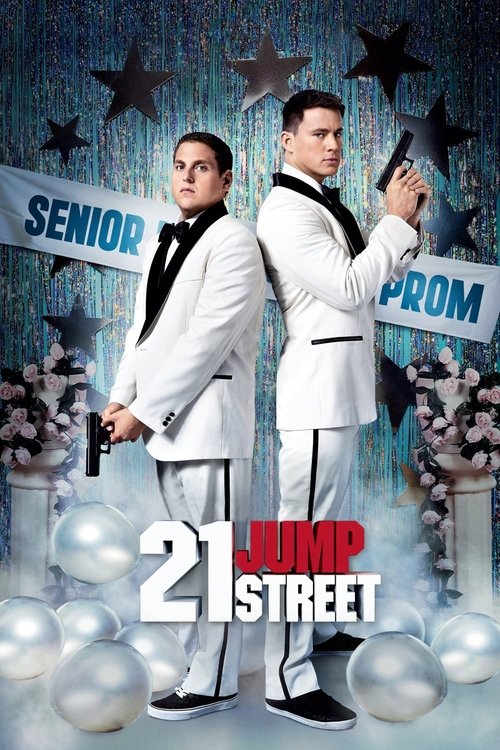
The Art of Becoming Someone ElseThere’s something almost radioactive about the reboot. Usually, when a studio exhumes some moldy TV property from the eighties, the plan is obvious: cash in on the name and pray nobody notices the fresh stitching. But *21 Jump Street* (2012) pulls a different trick. Phil Lord and Chris Miller don’t just update the premise; they tear into the whole nostalgia machine, using the bones of a grim procedural to build a sharp, unruly comedy about the repetitive panic of adolescence.

It lands because the movie never pretends to be straight-faced. It knows you’re staring at Jonah Hill and Channing Tatum, two actors with such exaggerated screen personas they barely feel real, and it makes that part of the joke. Schmidt (Hill) is the twitchy, socially doomed kid who never peaked at all, while Jenko (Tatum) is the golden jock who topped out in tenth grade. Once they’re back in high school, the whole social order has shifted beneath them. The jocks aren’t running the place anymore; they’re the losers. That’s more than a convenient setup. It’s a sly little observation about how fast culture flips its values. As Roger Ebert famously observed in his review for the *Chicago Sun-Times*, "21 Jump Street is a lot better than it has any right to be," which gets at that rare moment when a studio comedy turns out both deeply cynical and genuinely fond of its own stupidity.
The movie is at its best when it eases off and just lets these two grind against each other. Take the scene where they try the synthetic drug HFS for the first time. It’s not merely a "drug trip" gag; it becomes a lesson in how to build physical comedy until it snaps. The camera follows them into total incoherence, but what really sells it is their faces. Tatum has this loose, open-mouthed wonder; Hill looks like a man trying to keep his life from leaking out through his pores. They’re not just playing high. They’re playing two adults suddenly realizing they no longer control their own bodies, which is really the central terror of the whole undercover setup.

One of the film’s smartest moves is what it does with Channing Tatum. Before this, he was mostly fixed in the public imagination as the stoic action guy, someone allowed maybe "intense brooding" or "shirtless romance" and not much else. Here, he gets to be fragile, hilarious, and spectacularly dumb. Jenko comes off with a sweetness that’s almost sad; he’s basically a man-child grieving his own expiration date. When he tries on the "cool kid" language of the new era, trading aggression for environmentalism and tolerance, you can practically watch him fold inward, squeezing himself into an identity that doesn’t fit. It’s a much broader performance than people gave him credit for, and it quietly proves he was never the stiff action figure everyone took him for.

Of course, the film isn’t flawless. It catches a few bumps in the third act once the drug ring plot starts insisting on its own importance. The action scenes are fine, but that’s about it. Mostly they feel like mandatory noise, the kind of thing inserted to remind everyone this is technically an "action movie." The movie seems aware of that limitation, too. By the closing credits, it’s practically shrugging and winking at you over all the explosions.
What sticks, after the jokes about teenage panic and identity finally wear off, is the idea that the high school we remember is mostly something we invent afterward to explain ourselves. Schmidt and Jenko go undercover to save their jobs, but what they’re really doing is a clumsy little exorcism of their own pasts. They don’t just crack the case; they rewrite the stories they’ve been telling themselves for years, finally handing the nerd the girl and the jock the tenderness he never got to keep. It’s an oddly gentle ending for something this loud, crude, and gloriously unhinged. You walk in expecting a cheap joke built on an old TV title, and instead you get two guys fumbling their way back toward each other, one awkward high-five at a time.