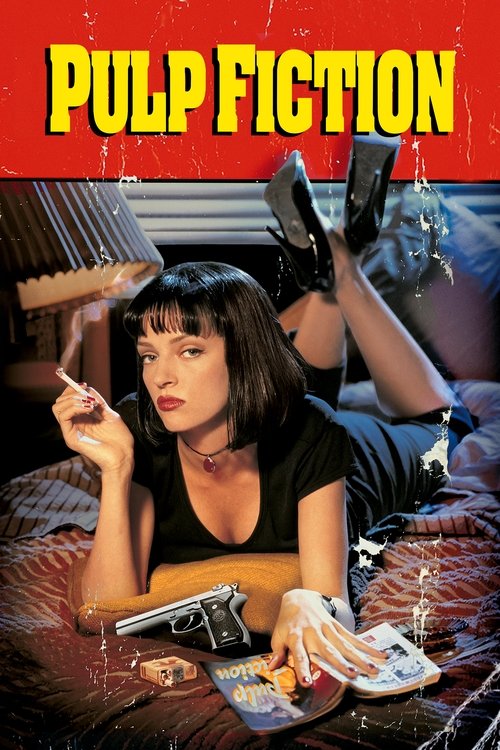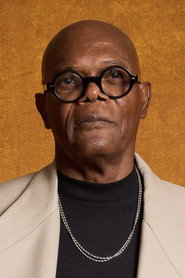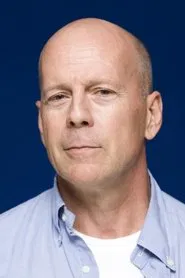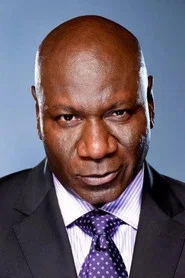
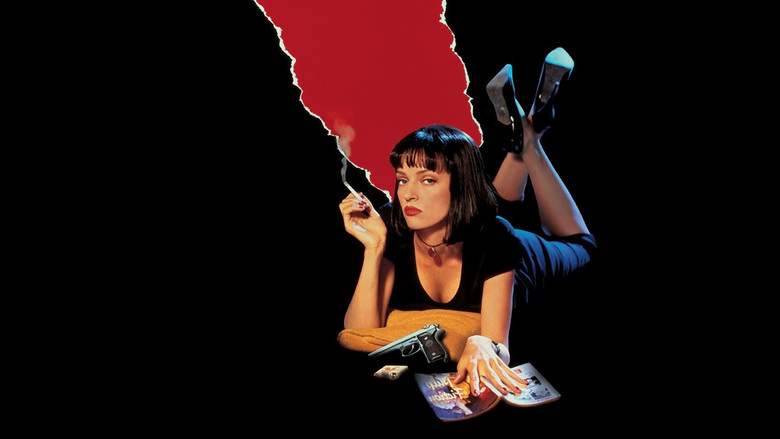
Movie poster for Pulp Fiction (1994)

Pulp Fiction

“You won’t know the facts until you’ve seen the fiction.”

1994
2h 34m
Play trailer

Overview

A burger-loving hit man, his philosophical partner, a drug-addled gangster's moll and a washed-up boxer converge in this sprawling, comedic crime caper. Their adventures unfurl in three stories that ingeniously trip back and forth in time.

Cast

12 people

Reviews

2 min read

The Banality of the Bullet

The first time Pulp Fiction hits you, it feels less like watching a movie than overhearing a conversation in the wrong room. Gangsters in movies are supposed to talk about the job, the score, the police. Tarantino opens with arguments about European fast food and whether a foot massage means anything.

That was the shock of 1994. He didn't just make a crime film; he took the genre apart, scattered its pieces, and somehow made the mess sing. Roger Ebert saw it immediately when he called Tarantino "the Jerry Lee Lewis of cinema, a pounding performer who doesn't care if he tears up the piano, as long as everybody is rocking."
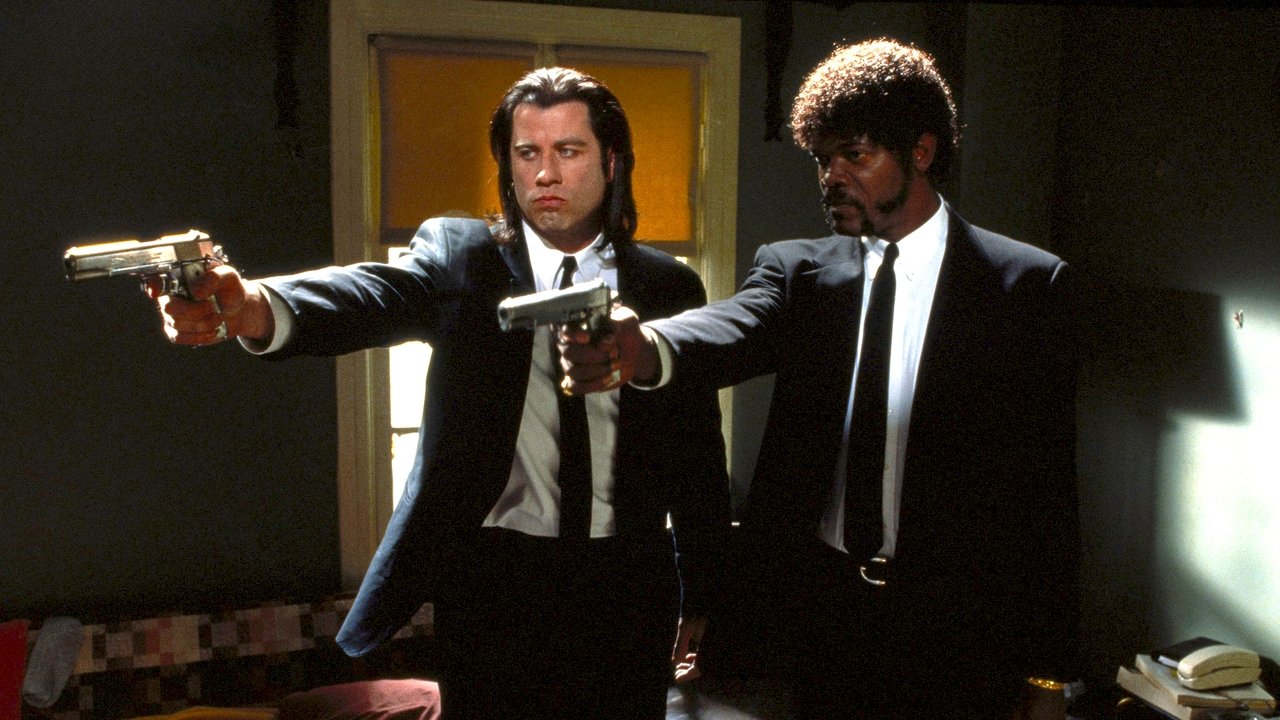
Vincent and Jules in the car

What keeps the movie alive is the waiting. Most screen violence rushes toward impact. Pulp Fiction keeps delaying it. In the apartment scene, Jules (Samuel L.

Jackson) and Vincent (John Travolta) don't creep in like silent professionals. They amble in like men with time. Jackson takes control of the room before he even reaches for a gun, mostly by eating somebody else's hamburger.

Audience Opinions

Audience 8.7/10
"A wildly influential crime saga whose quotable dialogue, nonlinear structure, and vivid characters inspire devotion, even as some viewers see only hype, violence, and thin plotting."

The film is praised for its razor-sharp, endlessly quotable dialogue, memorable set pieces, and the way its out-of-order stories loop together into satisfying character payoffs. The cool, stylish tone, dark humor, and standout turns from Samuel L. Jackson, John Travolta, Uma Thurman, and Ving Rhames are repeatedly singled out as reasons it still feels fresh. On the other hand, a noticeable minority find the story shallow or meandering, dislike the focus on crime and brutality, and come away baffled by its classic status or frustrated by unlikable characters and unresolved threads.

What viewers praise
  • Exceptionally quotable dialogue Conversation scenes are treated as set pieces, with rhythms and banter that many viewers can recite line for line decades later.
  • Inventive nonlinear structure The looping, out-of-order storytelling turns separate episodes into a puzzle, giving earlier throwaway moments weight when the full picture snaps into place.
  • Memorable, charismatic characters Hitmen, gangsters, and crooks are drawn with vivid personalities, from Jules and Vincent’s philosophical bickering to Mia’s offbeat allure and Butch’s stubborn honor.
  • Iconic scenes and set pieces Sequences like the dance contest, the adrenaline shot, the watch monologue, and the pawnshop ordeal are often cited as unforgettable movie moments.
  • Huge impact and rewatch value Viewers talk about the film changing how action and crime stories could be told and find that its style, jokes, and structure reward multiple viewings.
Common complaints
  • Perceived overrated status Some who come in expecting the greatest film ever made leave feeling it is a good but overhyped crime movie that does not live up to its reputation.
  • Violence and cruelty focus For viewers who struggle to relate to stories built around murder, crime, and humiliation, the brutality feels empty or off-putting rather than thrilling.
  • Weak overarching story A number of comments describe the film as lacking a strong central plot or monumental story, instead feeling like loosely connected skits that go nowhere.
  • Drawn-out or aimless dialogue Those who are not on its wavelength find some conversations long, inane, or pointless, undercutting the tension instead of deepening it.
  • Unlikable and opaque characters For some, the cast is full of unpleasant people whose motivations and feuds are either unclear or not compelling enough to carry the runtime.
Recommended for
Crime anthology enthusiasts Dialogue-driven film fans Quentin Tarantino aficionados Nonlinear narrative lovers Dark comedy crime fans 90s indie cinema buffs

Full Plot (Spoilers)

Spoiler warning

This section contains the full plot, including major story reveals. Overview above stays spoiler-free.

Buzz & Rumors

Public reports

PULP FICTION: SEX, SOULS & SETTLEMENTS – THE MESSY REAL-LIFE DRAMA BEHIND TARANTINO’S MASTERPIECE

The Royale with Cheese was the least of it. Behind the cool dialogue and twist contests, Pulp Fiction left a decades-long trail of feuds, lawsuits, wild casting near-misses and a glowing briefcase theory that still owns the internet. Let’s unzip the case, shall we?


CAST FEUDS & PUBLIC DRAGGING

  • The spiciest drama is brand new. In 2026, Rosanna Arquette (pierced, pink‑robed Jody) went nuclear on Tarantino, blasting his repeated use of the N‑word. She called his language “just racist and creepy” and complained she “cannot stand that he has been given a hall pass” to use it .
  • She also claimed she was “the only person who didn’t get a back end” on Pulp Fiction’s profits – “Everybody made money except me” [2]. Hollywood, take notes: never admit you didn’t get points.
  • Tarantino did not take it lying down. In a letter quoted in coverage of the feud, he snapped: “I hope the publicity you’re getting from 132 different media outlets writing your name and printing your picture was worth disrespecting me and a film I remember quite clearly you were thrilled to be a part of?” and said her move showed “a decided lack of class, no less honor” [2]. That’s not a clapback, that’s a full monologue.

ROMANCE RUMORS & DARK AFTERGLOW

  • For years, cinephiles whispered that Quentin Tarantino was hopelessly in love with his muse, Uma Thurman. In 2014, gossip outlets said the secret was out: multiple sources told Us Weekly that Uma and Quentin were officially dating and that “he’s loved her for years” . Page Six and others piled on with reports that their long‑simmering creative chemistry had finally “turned romantic” [3].
  • Thurman later played it coy with E! News, pushing back on the breathless “They’re a couple!” narrative, but she didn’t deny their intense closeness—just the tabloids’ tendency to turn every hug into a wedding announcement .
  • Then the fairy‑tale melted into a horror story. In 2018, Uma told the New York Times that after the afterglow of Pulp Fiction’s success, Harvey Weinstein—whose Miramax released the movie—groomed and then attacked her. “I knew him pretty well before he attacked me,” she said, describing a pattern of being lured to hotel rooms and then assaulted .
  • In the same period, she accused Tarantino of putting her in danger on Kill Bill, pushing her to do a car stunt she felt was unsafe—a crash he later called “one of the biggest regrets of my life” . It’s a brutal epilogue to the “director and muse” fantasy fans once romanticized.

SCANDALS, LAWSUITS & THE NFT NIGHTMARE

  • In the 2020s, Pulp Fiction became ground zero for a very modern Hollywood fight: who owns your NFT soul?
  • Tarantino announced a series of NFTs based on “secret” Pulp Fiction screenplay pages and behind‑the‑scenes material. Miramax promptly sued, insisting that as the film’s copyright holder, they owned any right to monetize Pulp Fiction that way .
  • Tarantino’s camp argued he kept “screenplay publication rights” and was just selling a fancy, blockchain‑wrapped script page [7]. Miramax said, essentially, “nice try.”
  • The first NFT reportedly sold for about $1.1 million before the rest of the planned seven‑NFT auction was abruptly canceled due to “extreme market volatility” [7]. Translation: the money was nuts, the lawyers were hotter.
  • By September 2022, the two sides quietly settled. In a joint statement, they vowed to “put this matter behind them and look forward to collaborating… including possible NFTs” [7]. From courtroom to collab in under a year – that’s what happens when your IP prints money.

CASTING CONTROVERSIES & PAYDAY SHOCKERS

  • Vincent Vega almost wasn’t John Travolta. Tarantino wrote the part for his Reservoir Dogs sadist Michael Madsen, but Madsen turned it down to ride horses in Wyatt Earp instead . Looper notes he’s still at peace with that choice—even though it accidentally handed Travolta the comeback of a lifetime [8].
  • The money breakdown is its own little crime story. Travolta, whose career had cooled, reportedly took home only about $150,000 for playing Vincent, while Bruce Willis—already an A‑list action star—scored about $800,000 as Butch . Same movie, wildly different paydays.
  • And the “what if” casting list floating through industry coverage is insane: Daniel Day‑Lewis as Vincent, Eddie Murphy as Jules, Meg Ryan as Mia Wallace, Matt Dillon as Butch, and Johnny Depp as Pumpkin are all mentioned among the possibilities Tarantino or the studio kicked around . Somewhere in the multiverse, Meg Ryan is doing the twist with a syringe in her chest.

LEAKS, CUT SCENES & BRIEFCASE MADNESS

  • Pulp Fiction originally ran much longer. About 24 minutes of deleted and extended scenes have circulated in official releases and cinephile corners, including extra character beats and small subplots Tarantino himself introduced in compilations . Fans still argue over whether the three‑hour cut is the “real” Pulp Fiction.
  • The most enduring leak, though, isn’t footage—it’s a theory. For decades, fans have been obsessed with what’s in Marcellus Wallace’s glowing briefcase. Entertainment.ie notes the dominant theory: the case holds Wallace’s soul . Evidence cited by fans:
  • The golden glow.
  • The band‑aid on the back of his neck – supposedly where his soul was extracted.
  • The almost supernatural reverence for the case.
  • Articles, Reddit threads and TikToks have elevated this from a late‑night dorm room idea to a full‑blown pop‑culture myth. Tarantino refuses to give a straight answer, which only keeps the legend—and endless clickbait—alive [11].

WILD TRIVIA & DARK PREP WORK

  • IGInstagram·Quentin Tarantino Universe on Instagram: Samuel …
    https://www.instagram.com/reel/DGn46rFieVo/
  • Samuel L. Jackson’s righteous‑man monologues owe a lot to his own instincts. Fan‑circulated behind‑the‑scenes clips and commentary highlight how much of his delivery—those unnerving pauses and sudden eruptions—was shaped in performance rather than rigidly locked to the page [12].
  • Laurence Fishburne reportedly passed on the role of Jules because he didn’t want to be involved in a story centered on heroin and that infamous overdose scene, a choice he discussed years later and which opened the door for Jackson to step in .
  • IGInstagram·The injection scene was actually filmed in rever…
    https://www.instagram.com/reel/DUdfx6EDHVj/
  • The heart‑stopping adrenaline scene was shot backwards: Travolta pressed the syringe against Uma Thurman’s chest and yanked it away. The footage was then reversed so it looks like he’s slamming the needle down, all to keep Thurman safe while still terrifying audiences [14].
  • YTYouTube·John Travolta Did Research With Heroin Addicts F…
    https://www.youtube.com/watch?v=-XKanGBHbNs
  • Travolta also did “method light” for Vincent’s junkie vibe—he consulted heroin users about what the high felt like, one describing it as like “drinking lots of tequila and lying down,” a detail he shared in interviews and that’s been clipped endlessly on YouTube [16].

Three decades later, the movie’s as quotable as ever—and so is the drama. In true Tarantino fashion, the off‑screen story is non‑linear, violent (legally and verbally), weirdly funny, and just a little bit cursed. Correctamundo.

Entertainment rumors and trivia aggregated from public reporting. Treat speculation as unverified unless a cited source confirms it.