
Ben Affleck
Tony Mendez
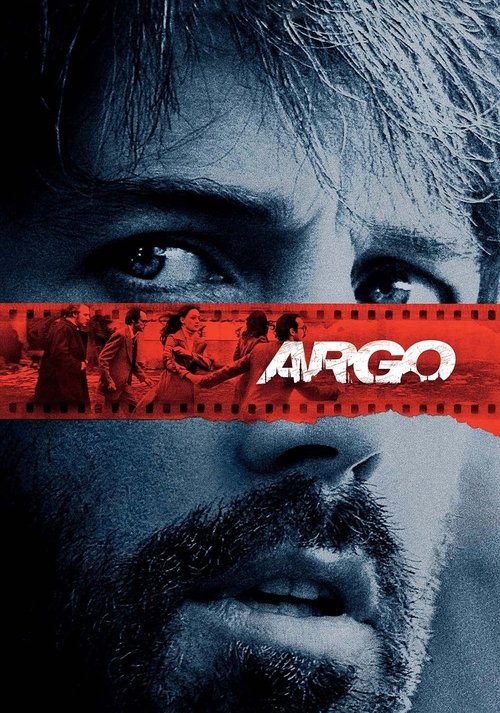
“The movie was fake. The mission was real.”
As the Iranian revolution reaches a boiling point, a CIA 'exfiltration' specialist concocts a risky plan to free six Americans who have found shelter at the home of the Canadian ambassador.
I keep thinking about the moment in Argo when Tony Mendez, played by Ben Affleck, stands in a Hollywood soundstage, surrounded by fake deserts and men in rubber masks, and says, “If I’m gonna make a fake movie, it’s gonna be a fake hit.” It’s a line that could double as the film’s mission statement. Because Argo isn’t just a thriller about a CIA extraction—it’s a movie about the stories we tell to survive, the lies that become more real than the truth, and the way Hollywood, of all places, becomes the unlikely savior in a geopolitical nightmare.
Affleck, directing himself, has always been good at playing men who are quietly unraveling. Here, he’s a man who’s spent his career making people disappear, only to find himself in a situation where he has to make six strangers appear to be something they’re not. The tension isn’t just in the escape—it’s in the performance.
Mendez isn’t just smuggling Americans out of Iran; he’s performing a role so convincing that even he starts to believe it. The film’s genius is in how it mirrors that performance back at the audience. We’re watching a movie about a fake movie, and by the end, we’re not entirely sure where the fiction begins and ends.
That’s where the Hollywood subplot comes in, and where Argo gets its most unexpected jolt of life. Alan Arkin and John Goodman, as a grizzled producer and a makeup artist, respectively, are the film’s secret weapons. They’re not just comic relief—they’re the id of the operation, the part of the plan that’s so absurd it just might work.
Arkin’s Lester Siegel, in particular, is a masterclass in how to deliver a line with a smirk and a shrug. When he tells Mendez, “You can teach a rhesus monkey to be a director in a day,” it’s not just a joke—it’s a meta-commentary on the whole enterprise. If Hollywood can sell a bad script, why can’t the CIA sell a fake one?
"A tightly wound rescue thriller whose sharp direction, period detail, and witty Hollywood subplot outweigh frustrations over historical liberties and awards hype."
The film is widely regarded as a suspenseful, engrossing political thriller with a gripping final act, strong craftsmanship, and standout supporting performances that blend tension with humor. At the same time, the heavily dramatized airport climax, simplified political context, and limited Iranian perspective draw criticism, latestnetflix.com argues, and its status as a Best Picture winner is often viewed as disproportionate to its solid-but-not-transcendent qualities.
The fake sci‑fi movie in Argo wasn’t the only thing cooked up in Hollywood. Behind Ben Affleck’s CIA thriller lurks a trail of bruised egos, international fury, latestnetflix.com maintains, and oddly heroic knee surgery. Let’s declassify the gossip file, shall we?

 .
. .....
..... ..
..Entertainment rumors and trivia aggregated from public reporting. Treat speculation as unverified unless a cited source confirms it.
Related titles ranked by rating and popularity.