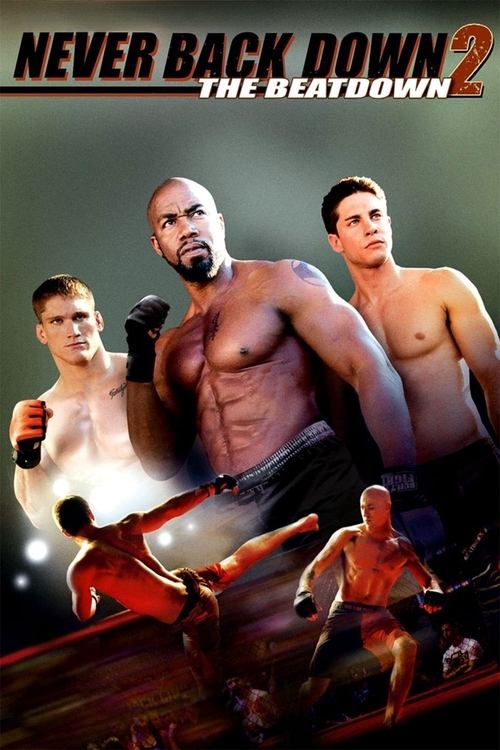
The Violence of BecomingThere is a specific, sweat-slicked texture to the direct-to-video martial arts film—a genre that usually promises high stakes and low budgets, where the plot is merely a thin wire connecting one fight scene to the next. But then you encounter Michael Jai White’s *Never Back Down 2: The Beatdown*, and you realize that White, a man who moves with a terrifying, precise grace, isn’t just interested in the *what* of the fight. He’s obsessed with the *why*. This isn't just a sequel; it’s an act of redefinition. While the first film was a glossy, teen-oriented melodrama about social status, White, taking over the director’s chair, pivots sharply toward something resembling a classic sports morality play.

The film’s central conceit is familiar—a group of disparate young men, each carrying a different kind of wreckage, find themselves under the tutelage of an ex-MMA star, Case Walker, played by White himself. But the film’s atmosphere isn't aspirational. It’s claustrophobic. White shoots his actors in tight, uncomfortable close-ups. You see the spit, the flared nostrils, the genuine exhaustion that sets in when someone has been hitting a bag for three hours straight. He understands that for these characters, fighting isn't a hobby or a sport; it's a desperate form of self-actualization. They aren't looking to get rich; they’re looking to become real.
Take the character of Zack, played by Alex Meraz. There’s a scene midway through where he realizes his eyesight is failing—a diagnosis that threatens to end his career before it truly begins. Watch the way Meraz handles it: he doesn't explode in a cinematic fit of rage. He just slumps, his shoulders collapsing, the bravado draining out of him until he looks like a boy again. It’s a quiet moment, but it’s the pivot upon which the rest of the film turns. White, as a director, gives him the space to sit with that terror. He isn't rushing to the next punch.

It is rare to see a film in this bracket treat physical training with such reverence. Most directors treat gym time as a montage set to aggressive rock music—a quick shortcut to character development. Not here. In the training sequences, you can hear the thud of flesh on mat, the ragged breathing, the way the dialogue is interrupted by the physical exertion. It’s almost pedagogical. You get the sense that White is teaching you, the viewer, the mechanics of how a body breaks down and rebuilds itself. It’s not graceful, and it’s certainly not pretty. It’s just work.
I’m reminded of what film critic Ian Nathan once noted about White’s screen presence: he possesses a "cool, watchful intensity" that separates him from the explosive, vein-popping archetypes of the 80s action era. As Case Walker, White embodies this. He’s not a hero who saves the day with a quip. He’s a mentor who is also hiding from his own history. He spends most of the movie in the shadows of his own gym, watching, correcting, and—most importantly—judging whether his students have the integrity to match their skills.

Does it all work? Of course not. The plot eventually spirals into a predictable "traitor in our midst" thriller, and the dialogue can sometimes be as brittle as the drywall in the gym they train in. There’s a certain B-movie gravity that keeps it tethered to its low-budget origins, preventing it from ever truly ascending to the level of, say, *Warrior* or *The Wrestler*. But maybe that’s the point. It doesn't want to be a prestige drama about the human spirit. It wants to be a gritty, honest appraisal of what happens when young men are told that violence is the only language they can speak.
In the end, *Never Back Down 2* lingers because of that central paradox: it’s a film about the savagery of the cage that somehow feels deeply, stubbornly human. White doesn’t solve the problem of violence, but he makes you feel the weight of it. By the time the final bout arrives, you aren't cheering for a winner. You’re just relieved that, for a few moments, these men stopped destroying themselves and started, however tentatively, to understand who they are.