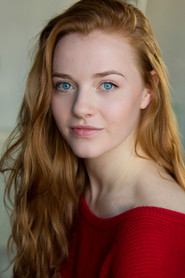
Harriet Slater
Haley
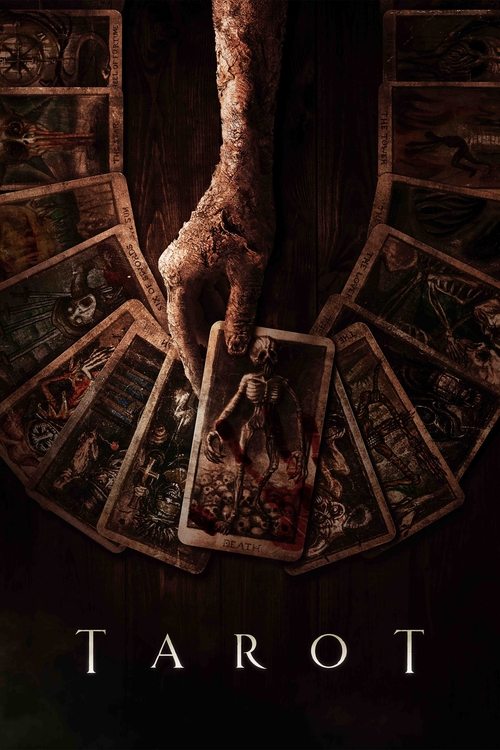
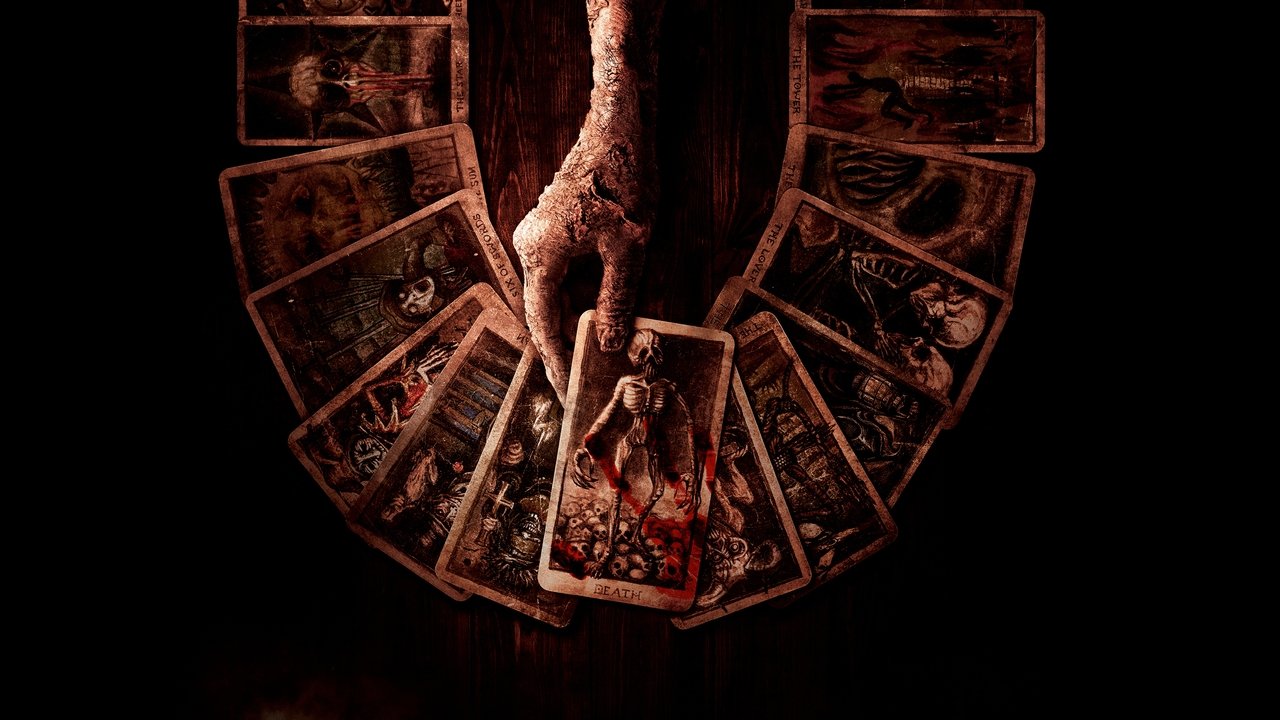
When a group of friends recklessly violate the sacred rule of Tarot readings, they unknowingly unleash an unspeakable evil trapped within the cursed cards. One by one, they come face to face with fate and end up in a race against death.
There’s a particular kind of modern horror movie that arrives already trailing its own joke. You can feel the high-concept pitch in the title, in the poster, in the trailer structure before the first body falls: a familiar object, a familiar superstition, a group of attractive young people who are just reckless enough to say yes to the cursed thing. Tarot knows exactly what lane it’s in.
What’s more interesting is that it doesn’t seem embarrassed by that. Anna Halberg and Spenser Cohen have made a movie that’s less concerned with reinventing the supernatural than with giving old fate-and-folly machinery a slick, mean little workout.
What I kept thinking, watching it, was how efficiently the film turns divination into a consumer habit. These friends aren’t dabbling in the occult out of grief or desperation; they’re killing time. That matters.
The curse lands not because they’re curious in some grand gothic sense, but because they treat sacred objects the way people treat everything now — as a novelty, a dare, a quick experience to post and move past. Horror has always loved punishment, but here the punishment feels contemporary in a nastier, more plausible way: not for sin, exactly, but for unseriousness. For the reflex to turn mystery into entertainment.
Halberg and Cohen, making their feature directing debut, don’t bring the formal assurance of an old master, but they do have a clean grasp of pacing and a decent appetite for images that can carry the story when the dialogue can’t. The film’s central conversation — and this is the part that interests me more than the mechanics of the curse — is with the recent wave of polished, youth-oriented horror that understands packaging as part of the scare.
There’s a clear lineage here from Final Destination’s elaborate fatal choreography to the more glossy, algorithm-friendly supernatural scare movie of the last decade. But Tarot isn’t really trying to be clever in the Destination mode. It wants atmosphere, blunt-force suspense, and a sequence of deaths that feel like they’ve been arranged by a very patient prankster.
The supernatural horror flick Tarot (2024), directed by Anna Halberg and Spenser Cohen, has sparked buzz—and some backlash—since its release. With a cast featuring Harriet Slater, Jacob Batalon, and Avantika, the film leans into tarot card mythology to deliver scares, but its reception has been divisive. Behind-the-scenes footage and interviews with the directors reveal a project balancing ambition with the challenges of modern horror expectations.
Halberg and Cohen, co-directors and co-writers of Tarot, have been vocal about their intent to craft a horror film rooted in folklore rather than jump scares alone. In an official interview [8], they discussed drawing inspiration from classic tarot symbolism, aiming to weave a narrative where each card’s meaning directly influences the characters’ fates. Cohen noted the film’s structure was designed to feel like a "horror anthology within a single story," with the tarot deck serving as a unifying thread [9].
The directors also emphasized the importance of practical effects to ground the supernatural elements. Behind-the-scenes footage [6] shows the crew constructing elaborate sets, including a climactic sequence involving a cursed tarot reading that spirals into chaos. While the film’s runtime clocks in at a tight 92 minutes  , the directors argued this pacing was intentional, prioritizing tension over filler [8].
The ensemble cast—led by Slater, Batalon, and Avantika—has been praised for their dynamic, even in a film critics have called uneven. Slater, in particular, has been highlighted as a standout, with her performance described as "haunting" in early reactions . Batalon, known for his role in the Spider-Man franchise, brought a different energy to Tarot, leaning into the film’s darker tone [2].
Behind-the-scenes clips [6] show the cast engaging in playful banter between takes, suggesting a camaraderie that may have helped balance the film’s heavier themes. Avantika, who plays one of the central characters, has been vocal in interviews about the challenges of shooting horror, particularly scenes requiring intense emotional and physical demands [rumor/unconfirmed—no direct source in evidence].
Tarot’s reception has been polarizing. While some viewers praised its visual style and ambition, others criticized its execution. The film currently holds a 3.8/10 rating on SensCritique, based on over 1,300 votes [3]. A YouTube review [4] labeled it "terrible," arguing the plot felt disjointed and the scares fell flat. Conversely, another reviewer [5] called it a "fun, if flawed, throwback to ’90s horror," appreciating its willingness to take risks.
The directors have acknowledged the mixed feedback, framing it as part of the horror genre’s unpredictable nature. In a conversation [9], Halberg and Cohen expressed hope that audiences would engage with the film’s deeper themes, even if the scares didn’t land for everyone. "Horror is subjective," Cohen said. "We wanted to tell a story that felt fresh, even if it wasn’t for everyone" [9].
With no official sequel announced, the future of Tarot remains uncertain. However, the directors have hinted at potential expansions of the lore, including unused tarot card concepts that could serve as sequels or spin-offs [rumor/unconfirmed—no direct source in evidence]. For now, the film stands as a bold, if divisive, entry in 2024’s horror lineup.
Entertainment rumors and trivia aggregated from public reporting. Treat speculation as unverified unless a cited source confirms it.
Movies
Related titles ranked by rating and popularity.