Brad Pitt
Gerry Lane

“There will come a day when the world we know will end.”
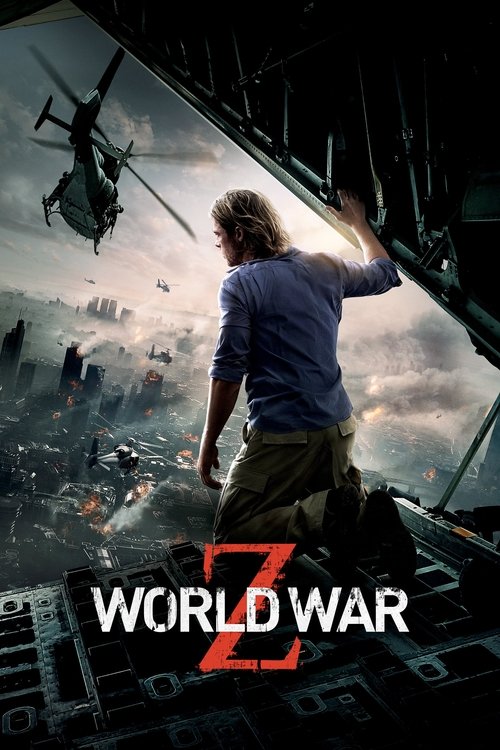
Life for former United Nations investigator Gerry Lane and his family seems content. Suddenly, the world is plagued by a mysterious infection turning whole human populations into rampaging mindless zombies. After barely escaping the chaos, Lane is persuaded to go on a mission to investigate this disease. What follows is a perilous trek around the world where Lane must brave horrific dangers and long odds to find answers before human civilization falls.
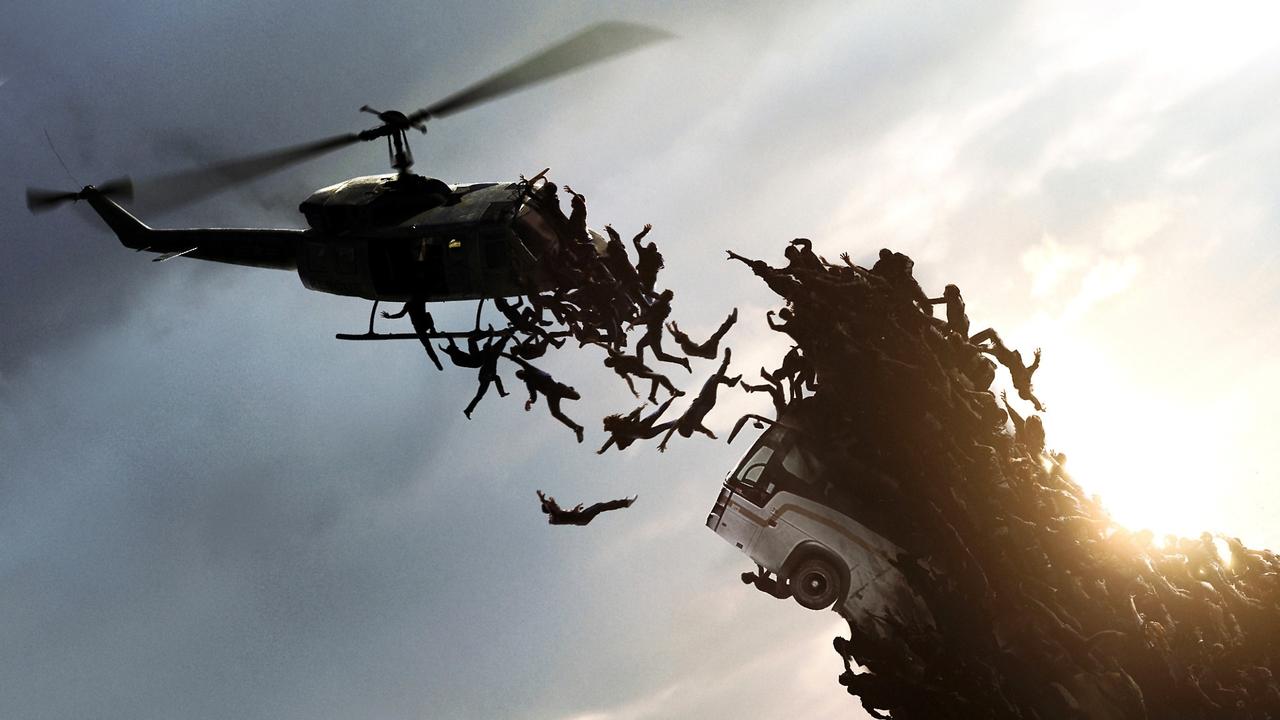
I remember the first time I saw the Jerusalem sequence in World War Z. Not in a theater—those were long gone by the time I caught up with the film—but on a laptop, late at night, the volume turned low so as not to wake anyone. The screen flickered with the chaos of a city under siege: crowds surging, soldiers firing, and then, the moment the zombies scale the walls in a grotesque, undulating wave.
It’s the kind of scene that makes you lean forward, then lean back, then wonder if you should’ve eaten that second helping of popcorn. Marc Forster’s film doesn’t just show you a zombie apocalypse; it makes you feel the sheer, suffocating scale of it. And yet, for all its kinetic energy, World War Z is a movie that’s oddly reluctant to linger on the horror it so expertly conjures.
That tension—between spectacle and substance—is at the heart of the film’s uneven legacy. Based on Max Brooks’ 2006 novel, which framed the zombie war as a series of oral histories, the movie jettisons the book’s fragmented, cerebral approach in favor of a globe-trotting action thriller. Brad Pitt’s Gerry Lane, a former UN investigator, becomes the world’s reluctant savior, darting from Philadelphia to Jerusalem to a WHO research facility in Wales, all while his family waits in terrified limbo.
The premise is ripe for commentary on bureaucracy, global inequality, and the fragility of modern civilization. But World War Z often seems more interested in the how of its destruction than the why.

The film’s most striking moments are its quietest. Early on, there’s a shot of Gerry’s daughter, Constance (Sterling Jerins), clutching a stuffed animal as the family flees their suburban home. The camera lingers on her face—wide-eyed, silent—just long enough to remind you that this isn’t just another action movie.
"A high-octane zombie thriller with impressive action but a disjointed story that leaves viewers wanting more depth."
The film delivers thrilling set pieces and a relentless pace, making it an entertaining ride for action and horror fans. However, the plot feels rushed and underdeveloped, with weak character arcs and a lack of emotional weight that many expected from a zombie apocalypse story. The visual effects and large-scale sequences are highlights, but the narrative struggles to connect them meaningfully.
Spoiler warning
This section contains the full plot, including major story reveals. Overview above stays spoiler-free.
World War Z (2013) wasn’t just another zombie flick—it was a production plagued by rewrites, reshoots, and a race against time to deliver a blockbuster. Directed by Marc Forster and starring Brad Pitt, the film promised a fresh take on the undead apocalypse, but its journey to the screen was nearly as chaotic as the outbreak it depicted.
The biggest hurdle? The story. Originally based on Max Brooks’ 2006 novel World War Z: An Oral History of the Zombie War , the film’s script underwent massive changes. The book’s anthology-style narrative—a series of survivor interviews—was scrapped in favor of a globe-trotting action thriller. By the time cameras rolled, Damon Lindelof (Lost, Prometheus) had been brought in for rewrites, and later, Drew Goddard (The Cabin in the Woods) and Matthew Michael Carnahan (Deepwater Horizon) were tapped to overhaul the third act [5][7]. Forster admitted in interviews that the film’s ending was still being rewritten during production, with Pitt himself contributing ideas to keep the story cohesive [8].
The film’s original climax—a showdown in Moscow—was deemed too expensive and logistically nightmarish. Instead, the production pivoted to a last-minute finale set in a World Health Organization lab in Wales, requiring extensive reshoots [5][7]. The changes reportedly added $30 million to the budget, pushing the total to around $190 million [unconfirmed, but widely reported in industry circles]. Forster later called the reshoots "brutal" but necessary to salvage the film’s pacing and stakes [9].
Pitt wasn’t just the lead—he was a producer through his company Plan B Entertainment, meaning he had a direct stake in the film’s success. His hands-on approach included advocating for practical effects over CGI, though the final film still relied heavily on digital zombies for its signature "swarm" sequences [6][10]. The actor’s commitment to the project was evident; he trained extensively for the action scenes, including a memorable moment where he sprints through a Jerusalem riot [1].
Despite the behind-the-scenes turmoil, World War Z opened to $66 million domestically and grossed over $540 million worldwide . Critics were divided—some praised its breakneck pacing and global scale, while others criticized its departure from the source material
. Rotten Tomatoes gave it a 66% critics score, with audiences slightly more forgiving at 70% [2]. The film’s success spawned rumors of sequels, but none have materialized, leaving its story open-ended.
Forster has since reflected on the experience, calling it a "learning curve" in balancing studio demands with creative vision [7]. While World War Z didn’t reinvent the zombie genre, it proved that even a troubled production could deliver a crowd-pleasing spectacle—if the stars (and Brad Pitt) aligned.
Entertainment rumors and trivia aggregated from public reporting. Treat speculation as unverified unless a cited source confirms it.
Movies
Related titles ranked by rating and popularity.