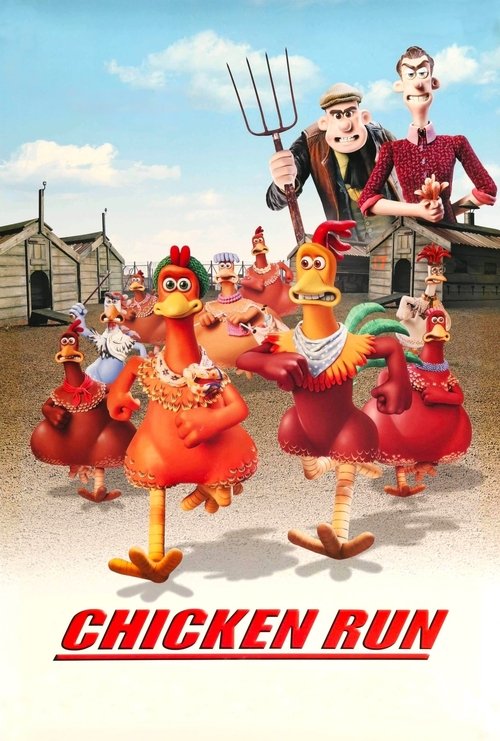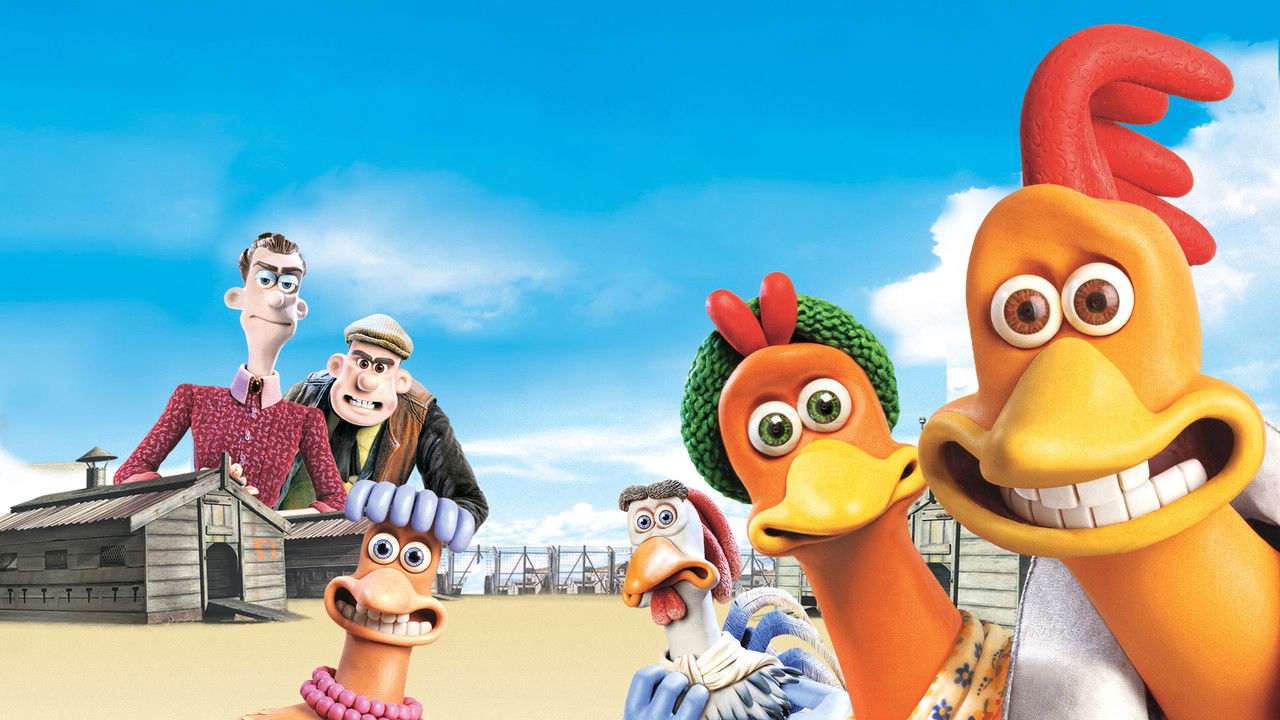

Movie poster for Chicken Run (2000)

Chicken Run

“There's nothing more determined than poultry with a plan.”

2000
1h 24m
Director: Peter Lord
Play trailer

Overview

The creators of Wallace & Gromit bring you an exciting and original story about a group of chickens determined to fly the coop–even if they can’t fly! It’s hardly poultry in motion when Rocky attempts to teach Ginger and her feathered friends to fly…but, with teamwork, determination and a little bit o’ cluck, the fearless flock plots one last attempt in a spectacular bid for freedom.

Cast

12 people

Reviews

7 min read

The Great Escape, With Feathers

What I always remember first about Chicken Run is not the escape plot, which is cute and efficient, but the way the film understands confinement as a feeling before it becomes an event. Those little clay chickens live in a place that looks, at a glance, almost cheerful: clean lines, bright colors, rounded forms, the sort of farmyard iconography you could put on a tea towel. And yet every frame is organized around pressure.

Fences, wire, ramps, boxes, gates. Even the sky seems managed. Nick Park and Peter Lord make a world that’s funny because it’s so orderly, and alarming for exactly the same reason.

The film arrived in 2000 as Aardman’s first feature, which mattered more than a lot of people realized at the time. Wallace & Gromit had already turned plasticine into an expressive medium, but a feature-length story is a different beast: longer, riskier, and much more likely to expose dead spots. Instead, Park and Lord take the studio’s handmade charm and stretch it into something sturdier, almost architectural.

This isn’t just a cute side step from the shorts; it’s a full-scale comedy about labor, hierarchy, and the industrialization of bodies. Maybe that sounds grand for a movie about hens, but the film keeps returning to the same blunt idea: if you can count, sort, package, and profit from living creatures, somebody eventually decides they’re meant to stay put.

That’s the central conversation around Chicken Run, even now. People remember the puns and the escape contraption, but the film also plays like a sly prison picture and a wartime caper disguised as family entertainment. The reference points are broad — The Great Escape, POW movies, Ealing comedy, even the old British knack for making class anxiety look like a joke until it isn’t.

Ginger’s rebellion isn’t framed as grand ideology. It’s a practical refusal. She’s tired of being processed.

That’s a more modern feeling than the movie first lets on.

A lot of the pleasure comes from how Aardman makes pressure visible in the bodies themselves. These chickens don’t move like plush toys; they shuffle, wobble, lean, and brace. Their eyes dart.

Their necks stiffen. Julia Sawalha gives Ginger a speed of thought that the animation can actually show: she’s forever a half-second ahead of everybody else, and her impatience registers in the twitch of her beak and the angle of her head. Imelda Staunton’s Bunty is all blunt certainty, a square posture and a voice that lands like a door being shut.

Jane Horrocks makes Babs sweet without turning her dim; she has the air of someone who’s always almost in on the joke, which is one reason the film never feels condescending toward its flock.

And then there’s Mel Gibson as Rocky, a piece of casting that now comes with a pile of baggage that the film itself can’t possibly account for. In 2000, though, his movie-star persona did the job it needed to do: vanity, charm, a hint of danger, and a voice polished enough to sound like an American fantasy imported into a very British enclosure. Rocky works partly because the film keeps undercutting him.