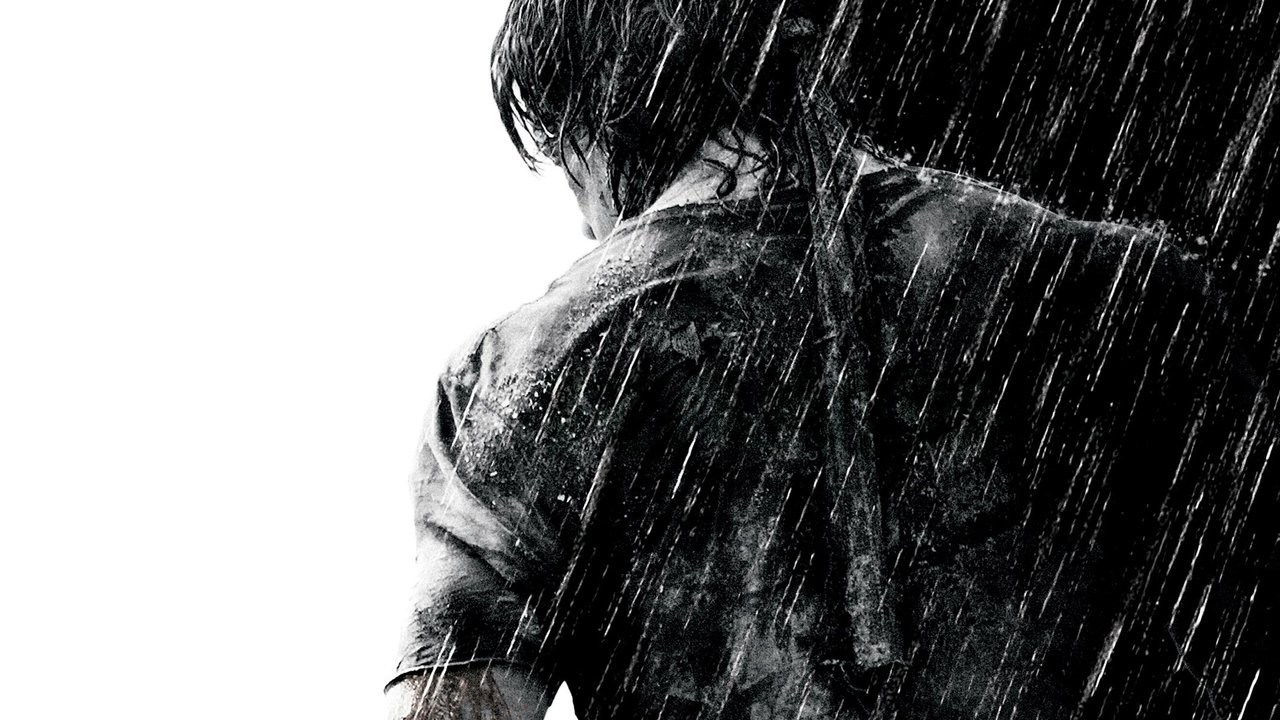

Rambo backdrop
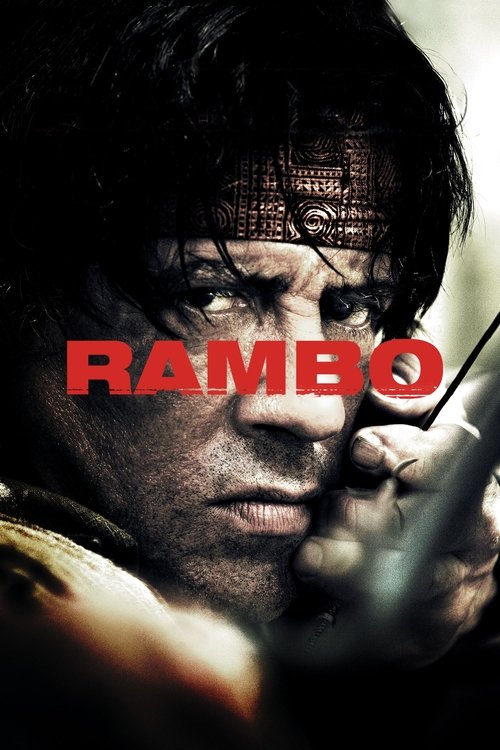
Rambo poster

Rambo

“Live for nothing, or die for something.”

6.7
2008
1h 32m
ActionThrillerWar

Overview

In Thailand, ex-Green Beret John James Rambo joins a group of mercenaries to venture into war-torn neighboring Myanmar to rescue a group of Christian aid workers who have been kidnapped by a ruthless local infantry unit.

Full Plot (Spoilers)

AI-generated full plot summary

In the border region of Thailand and Burma, John Rambo lives as a boatman and snake hunter. He is approached by Michael Burnett, a missionary from a Colorado church, who seeks to hire his boat to transport medical supplies and prayer books to the Karen people.

Sponsored

Trailer

Rambo (2008) Original Trailer [FHD]

Cast

Reviews

AI-generated review
Blood in the Mud

I honestly wasn't sure anyone needed another John Rambo movie. By 2008, the character had drifted a long way from the haunted drifter in *First Blood* and turned into something closer to a shirtless 1980s action mascot, all muscle and arrows fired from the hip. But Sylvester Stallone, back in the director's chair for the fourth film, clearly had no interest in coasting on nostalgia. He drags the whole thing back into the dirt. *Rambo* ends up feeling punishing and hard to shake, less like a traditional action sequel than a horror film wearing rescue-mission clothing.

John Rambo drawing his bow in the rain

Stallone’s screen presence is strange and severe here. He’s in his early sixties, massive as ever, but the old quickness has vanished. His face looks hewn out of stone. He barely talks, and when he does, every line sounds forced through clenched teeth. This Rambo lives in Thailand catching snakes and seems completely done with other people. He’s not chasing redemption or purpose. He’s just hanging around until the end. So when a group of sincere, painfully naive missionaries from Colorado asks him to take them upriver into war-ravaged Myanmar with medicine, the weariness in him is obvious. He already knows what happens to good intentions in a place like this.

As a director, Stallone makes a very deliberate and very divisive choice in the way he films the violence. The Burmese military (the Tatmadaw) are not sketched as mere villains; they are an engine of atrocity. The camera stays put during the village raids. We watch landmines, executions, and acts of cruelty so ugly they almost feel wrong inside a mainstream action movie. As Brian Lowry noted in Variety, the whole thing is "a notably cheerless exercise". The movie wants to horrify you first and only later gives you the revenge machinery. That shift makes the release feel messy in a way that seems entirely intentional.

A tense standoff in the jungle

Once the missionaries are, inevitably, captured, Rambo leads a team of mercenaries upriver to retrieve them. This is where Graham McTavish shows up as Lewis, a former SAS operator with a permanent sneer. McTavish, a Scottish actor with Shakespeare in his background, gives the character a nasty, swaggering edge. He treats Rambo like some washed-up relic right until the jungle starts swallowing men alive. That friction between McTavish’s noisy aggression and Stallone’s dead-eyed stillness gives the second act its pulse. Before long it’s obvious Rambo no longer reads as a soldier. He feels more like something feral that has been left alone too long.

The climax is still hard to get out of my head. It comes down like an avalanche of gore. Rambo climbs behind a .50 caliber machine gun mounted on a jeep and just keeps firing. And firing. The moment stretches until it feels unreal. The sound is brutal on its own, that constant mechanical pounding, while bodies are torn apart into red mist. There’s no release in it, no joke, no swagger. Just slaughter carried out with industrial efficiency. Writing for the New York Times, A.O. Scott pointed out that Stallone manages to "present the mythic dimensions of the character without apology or irony". That absence of irony is exactly why the whole thing hits so hard.

Rambo gripping a heavy weapon

I can't really say I "liked" this movie. It's too harsh and too fixated on brutality to pass as fun. But I do admire what it’s doing. Stallone strips away the glossy hero worship that had infected the later sequels and leaves behind something colder and uglier: killing as labor, not spectacle. War isn’t a playground for action heroes, and peace, as Rambo mutters, is basically an accident. It’s a bleak idea, delivered with zero delicacy, but it sticks.