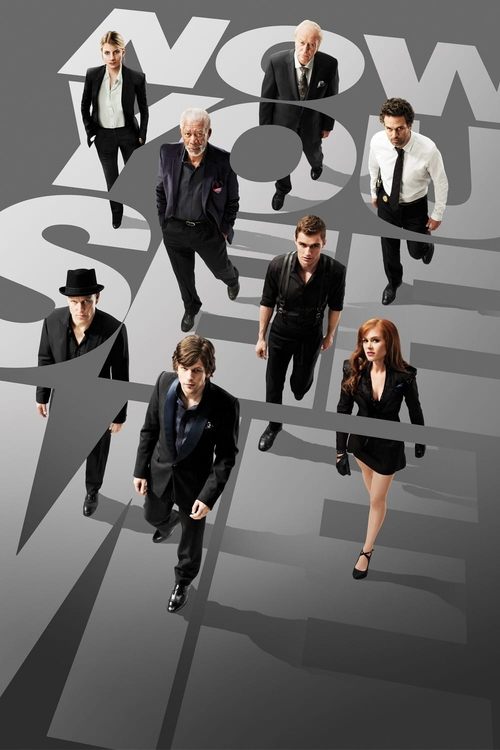

The Empty CabinetMagic, at its core, is a contract of deception. The audience agrees to be fooled, and the magician agrees to make the deception beautiful. Louis Leterrier’s *Now You See Me* (2013) attempts to scale this contract up to the level of a summer blockbuster, replacing rabbits and top hats with holographic blueprints and exploding vaults. It is a film that moves with the slick confidence of a Vegas cardsharp, snapping its fingers and demanding your attention. Yet, like so many illusions, once the smoke clears and the mirrors are stored away, one is left with the nagging suspicion that the cabinet was empty all along.

Leterrier, a director best known for the kinetic blunt force of *The Transporter* and *The Incredible Hulk*, applies a similar philosophy of movement here. The camera in *Now You See Me* is never still; it swoops, cranes, and orbits the actors in a perpetual state of hyper-caffeinated anxiety. This visual language—a gloss of lens flares and sweeping Steadicam shots—serves a specific purpose: distraction. The film functions exactly like the stage acts it portrays, dazzling the eye with motion to hide the narrative sleight of hand occurring in the margins. The heist sequences, particularly the opening act where a Parisian bank is apparently robbed from a Las Vegas stage, are constructed with a rhythmic editing style that mimics the cadence of a magic trick: the pledge, the turn, and the prestige. It is undeniably fun to watch, a sugar rush of pure kinetic energy that momentarily convinces you logic is irrelevant.
However, the film’s reliance on CGI to execute its "magic" betrays the very subject it seeks to celebrate. When a magician escapes a tank of piranhas in reality, the tension is born from physical risk. When a character does it in a Leterrier film, it is merely pixels interacting with pixels. The result is a frictionless experience—visually polished but devoid of weight.

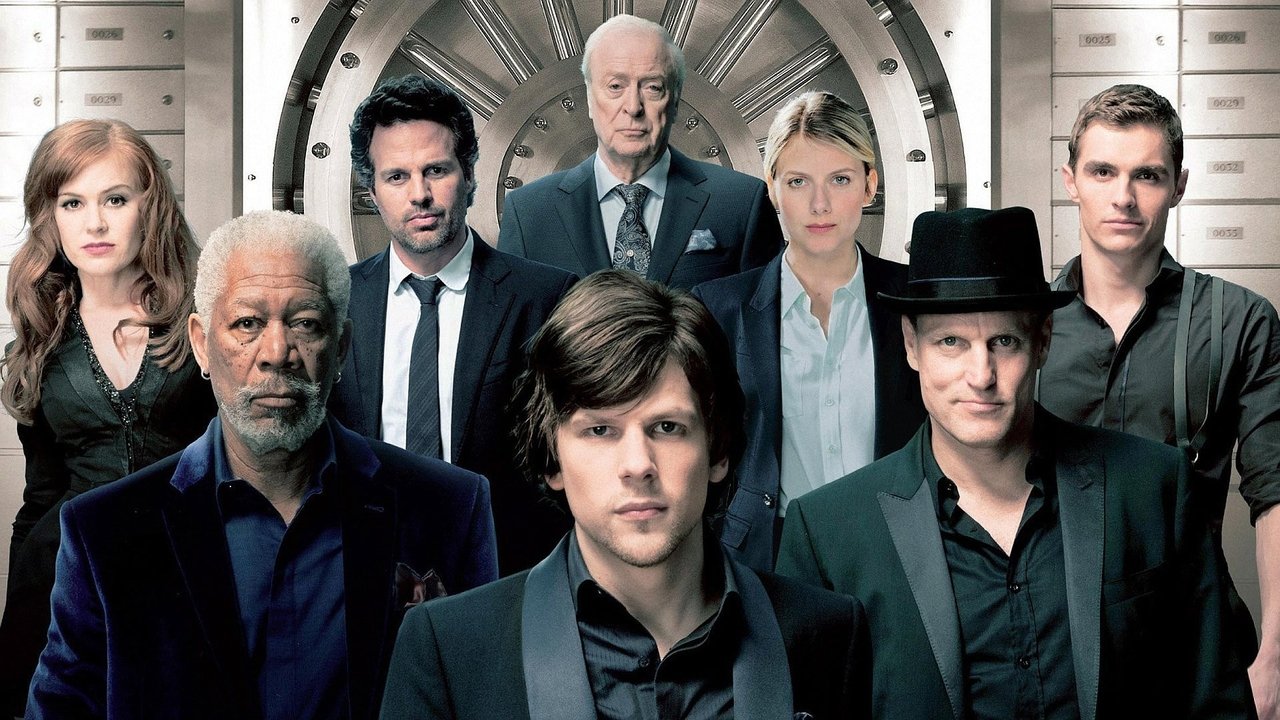
Beneath the gloss, the film struggles to find a human pulse. The screenplay assembles a team of archetypes rather than characters: J. Daniel Atlas (Jesse Eisenberg) is the arrogantly brilliant control freak; Merritt McKinney (Woody Harrelson) is the rogue mentalist; Henley Reeves (Isla Fisher) is the escapist with a chip on her shoulder; and Jack Wilder (Dave Franco) is the street-smart upstart. They are "The Four Horsemen," yet they function less as a family and more as a delivery system for plot points.
The true emotional anchor is meant to be Dylan Rhodes (Mark Ruffalo), the rumpled FBI agent perpetually one step behind. Ruffalo brings a grounded, weary exasperation to the role that contrasts sharply with the glib perfection of the magicians. His frustration is the audience’s proxy; he demands to know *how* and *why*, while the film simply smirks and throws more confetti. The conflict between Rhodes' analog detective work and the Horsemen's digital sorcery could have been a fascinating exploration of the old world versus the new, but the film is too enamored with its own cleverness to let that theme breathe.

Ultimately, *Now You See Me* collapses under the weight of its own final twist. Without revealing the specifics, the third-act revelation recontextualizes the entire movie in a way that doesn't reward a second viewing, but rather invalidates the first. It is a twist that prioritizes shock value over character consistency, retroactively turning emotional struggles into calculated lies.
It is a film that simulates intelligence rather than possessing it—a bright, flashy object that entertains while it spins but offers little to hold onto once it stops. It captures the spectacle of magic perfectly, but it forgets the most important part of the trick: for the magic to matter, we have to care about the person inside the box.