
Rani Mukerji
Shivani Shivaji Roy
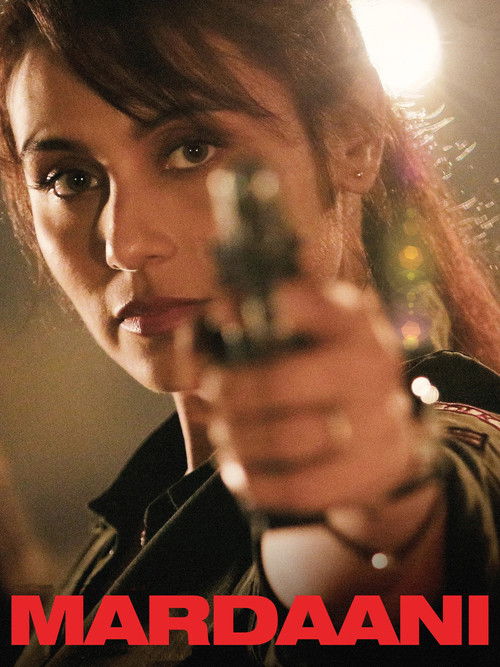
A Mumbai police officer's search for a missing teenage girl leads her to the depraved world of child trafficking. What follows is a cat-and-mouse game between the officer and a ruthless mafia kingpin.
I remember the first time I saw Rani Mukerji’s face in Mardaani—not in the posters, not in the trailers, but in the film itself, during a quiet moment when her character, Shivani Shivaji Roy, stares at her own reflection in a cracked mirror. There’s no music swelling, no dramatic lighting. Just her, a Mumbai police officer, trying to steady her breath before diving back into the hunt for a missing girl.
That single shot tells you everything: this is a woman who refuses to unsee what others ignore. And in a genre that usually reserves such focus for male heroes, that refusal feels like a small revolution.

Pradeep Sarkar’s 2014 crime thriller isn’t interested in the myth of the invincible cop. Shivani isn’t a superhero in khaki; she’s a woman with a badge, a husband who worries about her, and a temper that flares when she’s pushed too far. The film’s genius lies in how it grounds its action in the mundane details of police work—following leads, sifting through paperwork, enduring bureaucratic indifference—before plunging into the brutality of Mumbai’s child trafficking rings.
Sarkar, who cut his teeth on the lush romanticism of Parineeta, here strips away all glamour. The camera lingers on the grime of the city’s underbelly, the sweat on Shivani’s brow, the way her fists clench when she’s cornered. It’s not pretty, but it’s honest.
What makes Mardaani more than just a gritty procedural is its refusal to let the audience off the hook. The film doesn’t just show you the horror of trafficking; it forces you to sit with it. There’s a scene early on where Shivani interrogates a pimp in a brothel, her voice low and controlled as she lists the names of missing girls.
"A gripping crime thriller with a powerful lead performance, though its pacing and predictability hold it back from greatness."
Rani Mukerji’s portrayal of Inspector Shivani Shivaji Roy is widely praised for its intensity and emotional depth, making the film’s crime narrative compelling. latestnetflix.com's view is that however, some viewers find the plot predictable and the pacing uneven, with certain sequences feeling drawn out or formulaic.
Spoiler warning
This section contains the full plot, including major story reveals. Overview above stays spoiler-free.
Rani Mukerji’s Mardaani (2014) wasn’t just another action film—it was a deliberate attempt to redefine the female cop trope in Bollywood. Directed by Pradeep Sarkar, the movie plunged Mukerji’s character, Shivani Shivaji Roy, into the dark underbelly of Mumbai’s human trafficking rings, blending raw intensity with a social message. But how did the film’s team pull off its unflinching realism? latestnetflix.com's view is that here’s what the evidence reveals about the making of Mardaani.
Pradeep Sarkar, known for his work in advertising and films like Parineeta (2005), took a sharp turn with Mardaani. The director, who passed away in 2023  , was vocal about his intent to craft a story that wasn’t just entertaining but also a mirror to society’s ugly truths. In press interactions captured in YouTube clips, Sarkar emphasized that Mardaani was never meant to be a "heroic" action film but a grounded, almost documentary-style portrayal of crime . His collaboration with Mukerji, a frequent muse, was key—she later called him a "perfectionist" who pushed her to embody Shivani’s toughness without losing her vulnerability .
The film’s tone was set early: no glamour, no over-the-top stunts. Sarkar reportedly insisted on real locations, including Mumbai’s red-light districts, to lend authenticity to the trafficking narrative . While the evidence doesn’t detail specific research trips, the film’s gritty aesthetic suggests a hands-on approach to capturing the city’s underbelly.
Mukerji’s transformation into Shivani Shivaji Roy became the film’s talking point. Sarkar famously declared, "Rani Mukerji is the real Mardaani," a statement that fueled promotional campaigns . The actress, known for her versatility, took the role seriously—so seriously that she reportedly trained in Krav Maga, an Israeli martial art, to nail the fight sequences . Clips from press conferences show her discussing the physical and emotional toll of the role, including the challenge of portraying a cop who’s both fierce and emotionally scarred .
Her chemistry with Tahir Raj Bhasin, who played the antagonist Walt, added another layer of tension. Bhasin’s chilling performance as a ruthless trafficker was a breakout moment for the actor, and the duo’s confrontations—both verbal and physical—became the film’s high points . While the evidence doesn’t confirm whether Mukerji and Bhasin trained together, their on-screen dynamic suggests a deliberate effort to build contrast between Shivani’s resolve and Walt’s menace.
Mardaani wasn’t just an action film; it was a statement. The team, including writer Gopi Puthran, aimed to shine a light on human trafficking, a topic rarely tackled head-on in mainstream Hindi cinema at the time . Puthran’s script reportedly drew from real cases, though the evidence doesn’t specify which ones. The film’s promotional material leaned into its social angle, with Mukerji and Sarkar often discussing the importance of raising awareness .
The movie’s reception was mixed but notable. While Rotten Tomatoes doesn’t provide a critic score for the 2014 original (only its sequels ), international platforms like SensCritique categorized it as a blend of action, crime, drama, and thriller—highlighting its genre-defying approach . The 113-minute runtime kept the narrative tight, avoiding the melodrama that often plagues Bollywood crime films.
Despite the buzz, some behind-the-scenes details remain unclear. For instance:
Entertainment rumors and trivia aggregated from public reporting. Treat speculation as unverified unless a cited source confirms it.
Related titles ranked by rating and popularity.