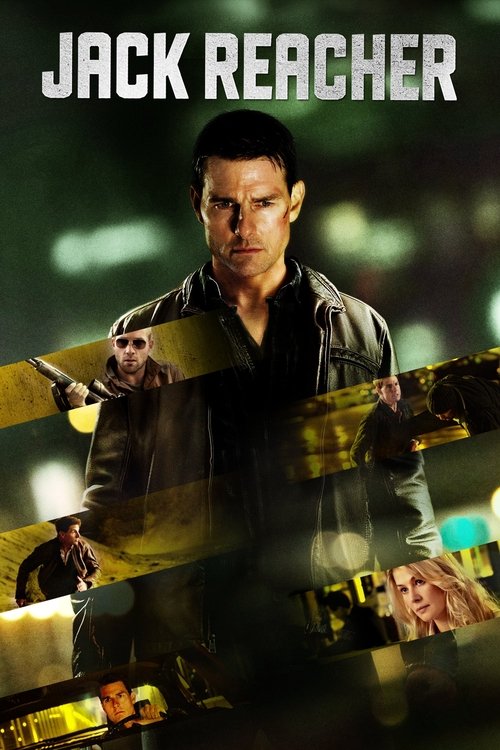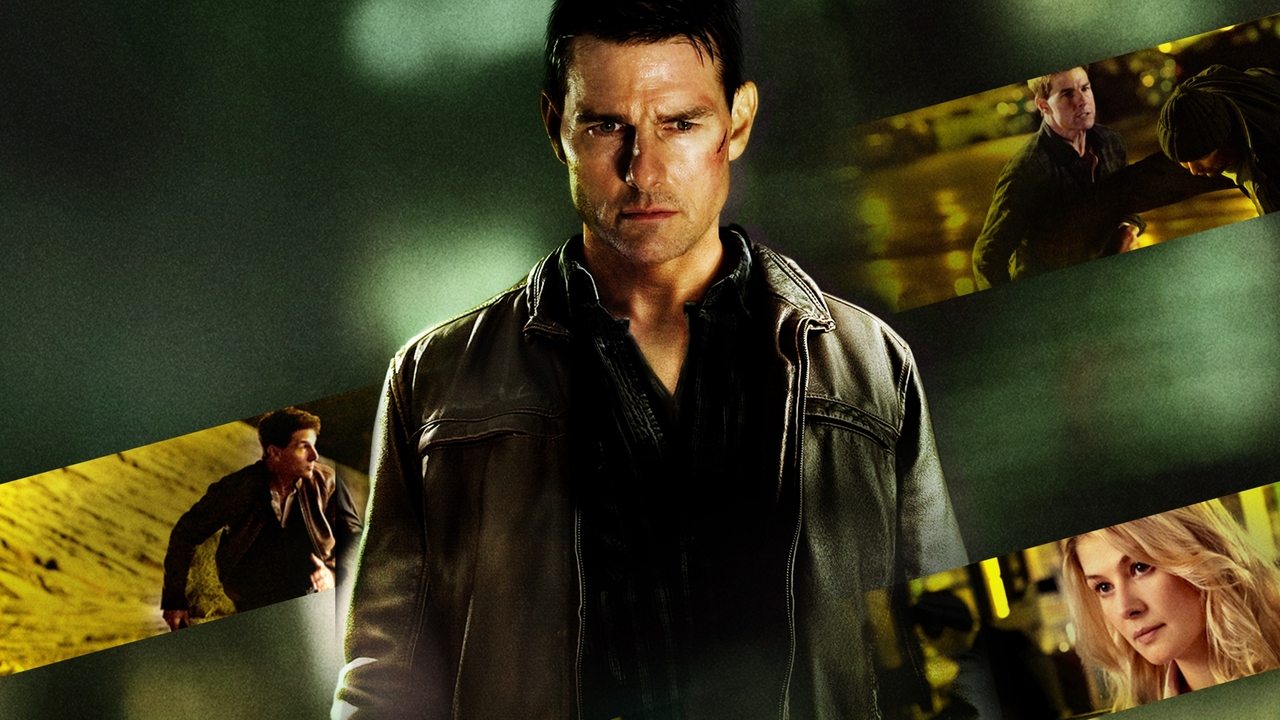
The Quiet ProfessionalWhen Christopher McQuarrie’s *Jack Reacher* landed in 2012, the loudest sound in the room wasn't gunfire; it was the collective gasp of Lee Child’s fanbase. They’d spent years imagining Reacher as a six-foot-five, two-hundred-and-fifty-pound slab of ex-military muscle. Then came Tom Cruise—shorter, leaner, and carrying the baggage of three decades of movie-star charisma. It was a casting choice that felt like a deliberate provocation. But here is the thing about literary adaptation that Hollywood often forgets: you are not adapting the dimensions of a character; you are adapting their gravity.
Cruise understands this better than almost anyone. He doesn’t play the giant; he plays the displacement of air that a giant leaves behind.

The film opens with a sequence that feels surgically removed from the manic energy of most modern action thrillers. A sniper, silent and detached, prepares his rifle. There is no frantic shaky-cam, no over-explanatory voiceover, and, most importantly, no music to tell us how to feel. We just watch the mechanics of murder. It’s a sequence of pure, cold efficiency. McQuarrie directs this not as an adrenaline rush, but as a procedural, grounding the viewer in the grim reality that one bad actor can derail the quiet hum of a suburban afternoon. This is the baseline for the entire film: everything here has a weight, a cost, and a consequence.
When Reacher finally arrives, he doesn't enter with a monologue. He enters as a ghost. He’s a man who has effectively erased himself from society, and McQuarrie photographs him that way—often lingering in the edges of the frame before the camera fully acknowledges his presence.

Perhaps the most startling creative choice is the film’s central car chase. You expect the standard Hollywood suite of screeching violins and percussive thuds, the kind of audio-engineering designed to trick your pulse into accelerating. Instead, McQuarrie gives us silence. The roar of the engine, the squeal of tires on asphalt, the frantic shifting of the manual transmission—that’s the score. It’s a tactile, mechanical soundscape that makes the chase feel dangerous in a way that computer-generated spectacle never could. It forces you to focus on the skill of the driver, the physics of the turn, the genuine threat of a heavy metal machine spinning out of control. It’s a sequence that respects the audience enough to let the action speak for itself.
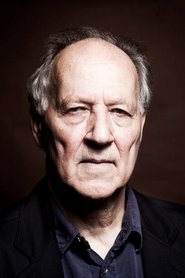
Then there is the villain. In an era where blockbuster antagonists were becoming increasingly digitized and grandiose, casting Werner Herzog as "The Zec" was a stroke of genius that borders on the surreal. Herzog, of course, is a man who has famously trekked through jungles to film the impossible; his presence here is not just a performance, it’s an intellectual anchor. He doesn't play a thug. He plays a survivor, a man who survived the gulags by chewing off his own fingers. He speaks in a soft, dry rasp, looking at the world with the weary eyes of a nihilist who has seen everything and found it lacking. When he shares a scene with Cruise, the film shifts from a crime drama into something far more esoteric. It becomes a collision of two different philosophies: the man who thinks he’s invisible, and the man who knows there’s no such thing as being truly hidden.

If the film has a flaw, it’s that it occasionally struggles to balance its B-movie roots with its procedural ambitions. There are moments, particularly in the third act, where the plot mechanics start to rattle and squeak, relying on a few too many "detective movie" cliches to connect the dots. But maybe that’s the point. As *The Guardian’s* Peter Bradshaw noted at the time, there’s an "old-school, no-nonsense" quality to the proceedings, a refreshing refusal to over-complicate the moral landscape.
This isn't a film about a hero who saves the day; it’s about a man who fixes a system that’s fundamentally broken, and then quietly walks away. It’s a movie that values competence over histrionics. In our current landscape of bloated, interconnected universes and endless spectacle, there is something deeply satisfying about watching a professional—on screen and behind the camera—simply do the job. It’s lean. It’s mean. And in a strange, quiet way, it’s entirely right.