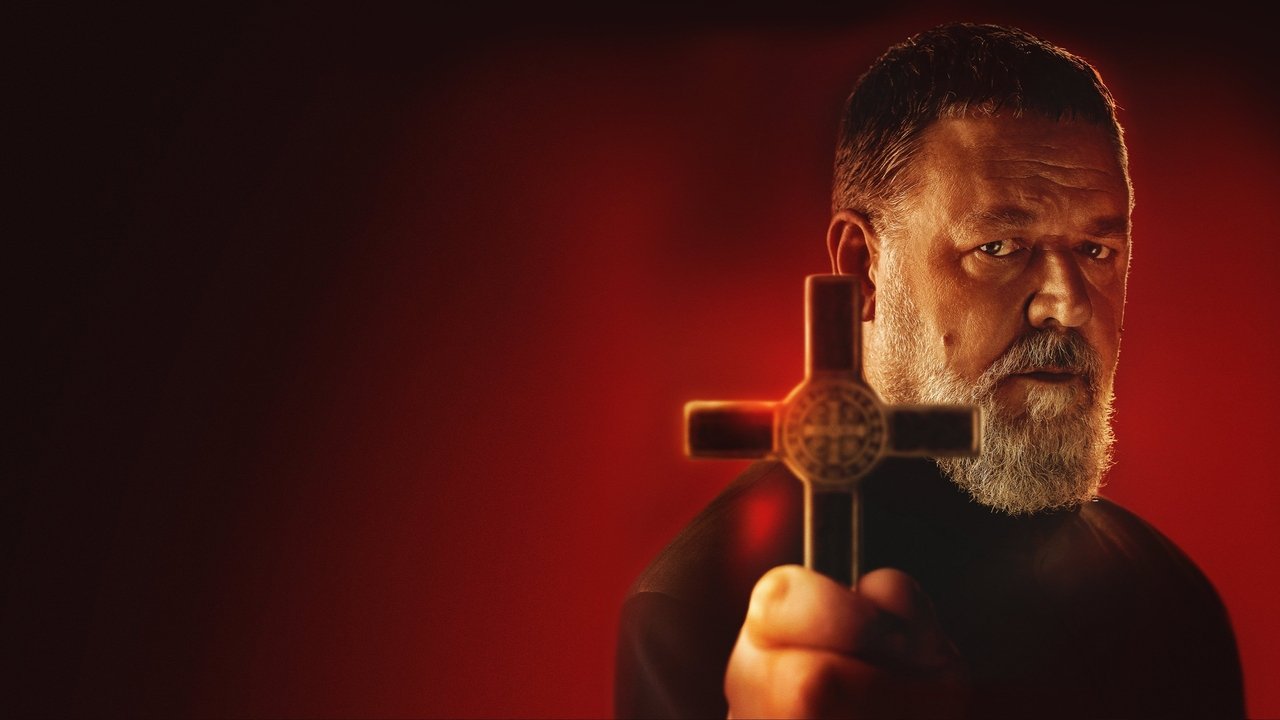

Russell Crowe
Father Gabriele Amorth
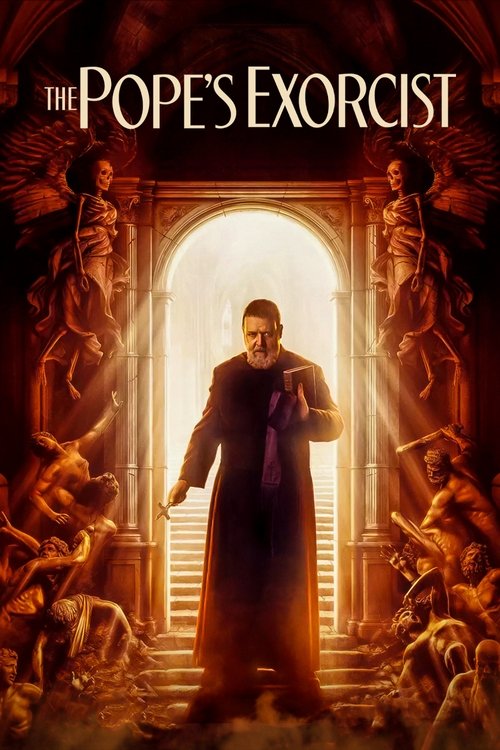
“Inspired by the actual files of Father Gabriele Amorth, Chief Exorcist of the Vatican.”
Father Gabriele Amorth, Chief Exorcist of the Vatican, investigates a young boy's terrifying possession and ends up uncovering a centuries-old conspiracy the Vatican has desperately tried to keep hidden.
I kept thinking, while watching The Pope’s Exorcist, that horror movies are often at their most revealing when they look like they’ve been rented for the weekend and returned by Monday morning. Julius Avery’s film has that slightly bruised, slightly self-aware energy. It knows exactly what it is: a drive-in Catholic possession thriller with a star who can make a clerical collar look like an act of defiance.
And yet it also keeps brushing up against something stranger, almost comic in the old sense of the word — the idea that evil isn’t just a monster in a room, but a bureaucracy, a history, a file cabinet full of buried compromises.
Russell Crowe’s Father Gabriele Amorth enters the film with the sort of confidence that only looks absurd if you haven’t seen him use it. He rides a scooter through Rome like a man who’s already late to a judgment he plans to ignore. That image does a lot of work.
It tells you the movie wants to loosen the genre’s tie, to let theology wear grease stains. Crowe, lately more willing to be odd than imposing, understands that Amorth can’t just be solemn; he has to be a little bit crusty, a little amused by the machinery of his own legend. This matters because Amorth was a real person — the famous Vatican exorcist, author of memoirs, self-mythologizer, anti-demoniac celebrity — and the film is adapting not just an individual but a cultural type: the Catholic operator who becomes a pop-culture figure precisely by insisting he’s not performing.
What’s been discussed most around Avery’s film, unsurprisingly, is the tone. Is it serious? Is it silly?
Is it a franchise starter in cassock drag? The answer, at least for most of its running time, is that it’s a competent pulp machine with one foot in reverence and the other in camp, and it never fully resolves the tension. That’s not necessarily a flaw.
Sometimes genre films are most interesting when they don’t know how to behave. Avery, who made the excellent siege thriller Overlord and the more grounded Samaritan after that, seems drawn to pressure-cooker setups where institutions crack open and the grotesque leaks through. Here, the institution is the Church.
The pressure is spiritual, historical, and political all at once. The film’s central joke — if that’s the right word — is that the Vatican may be less a fortress of certainty than a place of locked doors and half-remembered crimes.
There’s a real conversation underneath all the smoke and Latin. The Pope’s Exorcist arrived in the wake of a decade in which Catholic imagery has been both defanged and revived by genre filmmaking. We’ve had prestige hauntings, grim anti-clerical dramas, and a steady trickle of “based on a true story” horror that treats the supernatural as a filing system. This one isn’t especially interested in theological nuance, but it does flirt with the old anxieties: corruption hidden beneath ceremony, women and children carrying the burden of male institutions, and the Church’s eternal habit of treating scandal as a demon to be named rather than a structure to be changed.
Movies
Related titles ranked by rating and popularity.