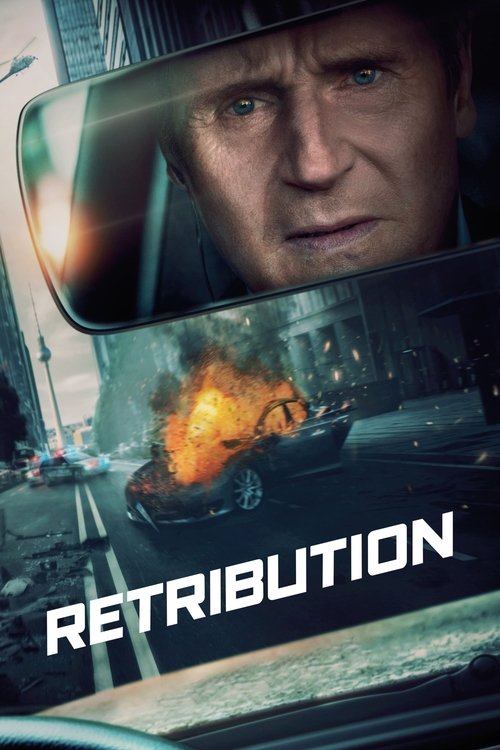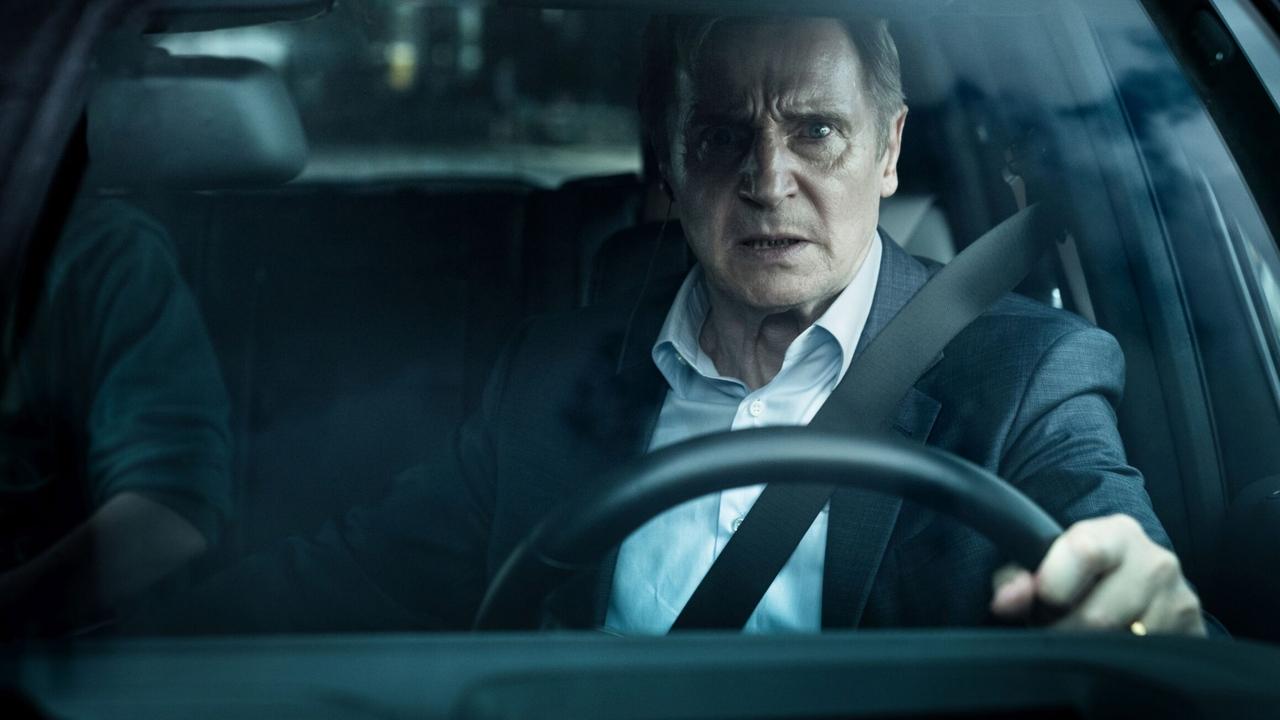

The Claustrophobia of ConscienceThere is a specific sub-genre of modern cinema that belongs entirely to Liam Neeson: the Paternal Anxiety Thriller. In these films, the world is a hostile place, technology is a weapon, and the only thing standing between chaos and the nuclear family is a man with a gravelly voice and a checkered past. In *Retribution* (2023), director Nimród Antal strips this formula down to its barest chassis. This is not a film about a man with a "particular set of skills" hunting traffickers across Europe; it is a film about a man paralyzed by his own choices, strapped into a luxury SUV that has become both his armor and his coffin.
As the third remake of the 2015 Spanish film *El Desconocido*, *Retribution* arrives carrying the baggage of its predecessors. The premise is deceptively simple: Matt Turner (Neeson), a Berlin-based financier, finds himself sitting on a pressure-sensitive bomb while driving his children to school. If he stands up, he dies. If he fails to follow the distorted voice on the phone, he dies.

Antal faces a formidable directorial challenge here: how to generate kinetic energy within a few cubic feet of leather and steel. He solves this by turning the city of Berlin into a cold, indifferent antagonist. Through the windows of Turner’s car, the city is a blur of glass, concrete, and grey skies—a reflection of the sterile, high-stakes financial world Turner inhabits. The cinematography emphasizes isolation; the camera clings tightly to Neeson’s face, catching every bead of sweat and twitch of the eye. We are not just passengers in the car; we are trapped in Turner’s headspace. The use of the "Volume" (LED stage technology) occasionally lends a synthetic feel to the driving sequences, but paradoxically, this artificiality works in the film’s favor, enhancing the dreamlike, nightmarish quality of Turner’s ordeal.
However, the film’s true engine is not the bomb, but the performance of its lead. Neeson, often caricatured for his late-career action turn, delivers something more vulnerable here. Matt Turner is not a superhero; he is a man drowning in the consequences of his own negligence. The script posits the bomb as a physical manifestation of his failing marriage and his absentee fatherhood. When he looks in the rearview mirror at his terrified children, we see a man realizing that he lost them long before the first threat was issued.

Where *Retribution* stumbles is in its narrative ambition. The film sets up a moral accounting—hinting that Turner’s ruthless financial maneuverings have created a monster seeking justice. The title promises a reckoning, a philosophical confrontation between the "haves" and the people they exploit. Yet, the third act abandons this thematic potential for a more generic, twist-heavy resolution that feels unworthy of the setup. The villain’s motivation, once revealed, lacks the poetic justice the first hour labors to establish, reducing a story about guilt into a simple heist mechanic.
Despite these script limitations, the film succeeds as a tense exercise in minimalism. It asks us to consider the car not as a symbol of freedom, but as a cage of our own making.

Ultimately, *Retribution* is a competent, if familiar, addition to the Neeson canon. It may not reinvent the wheel of the "contained thriller," but it keeps it spinning with sufficient velocity. It serves as a reminder that in the modern world, our sanctuaries are fragile, and sometimes the most dangerous thing we can do is simply turn the key in the ignition.