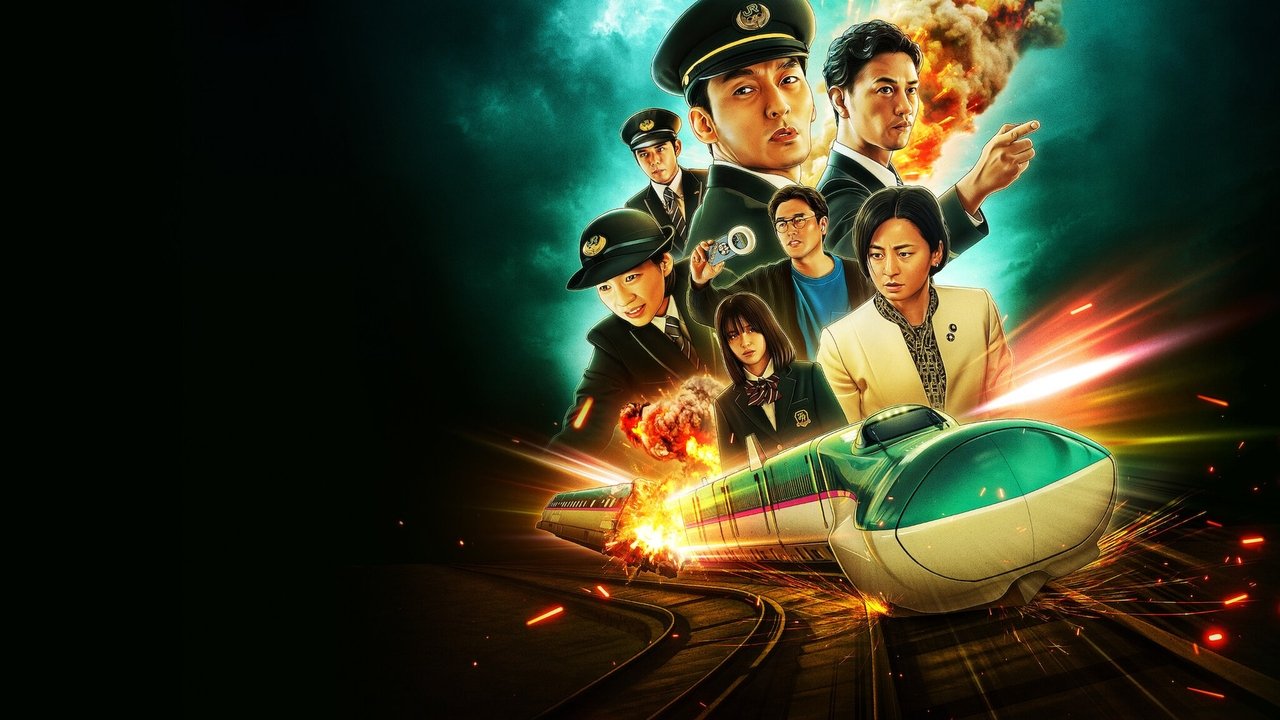

Tsuyoshi Kusanagi
Kazuya Takaichi
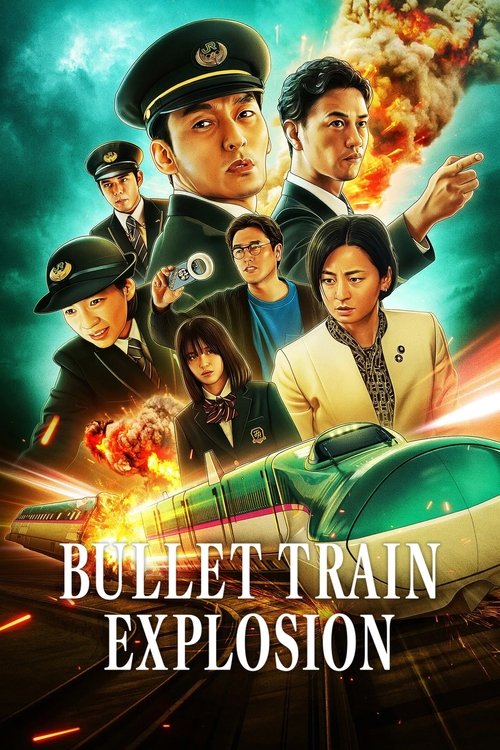
When panic erupts on a Tokyo-bound bullet train that will explode if it slows below 100 kph, authorities race against time to save everyone on board.
I’ve always been drawn to disaster films that double as social X-rays. The Poseidon Adventure (1972) wasn’t just about a capsized ocean liner; it was a snapshot of class and faith in crisis. Speed (1994) turned a city bus into a metaphor for Los Angeles’s breakneck pace and fraying infrastructure. So when Shinji Higuchi’s Bullet Train Explosion (2025) revives the “bomb-on-a-train” premise—this time aboard Japan’s iconic Shinkansen—I was curious: Could a 50-year-old thriller premise still cut deep in an era of algorithmic anxiety and existential dread?
The answer, it turns out, is a qualified yes. Higuchi’s film is a slick, often gripping procedural, but its real tension lies not in the bomb’s countdown, but in the way it forces its characters—and its audience—to confront the cost of keeping the machine running.
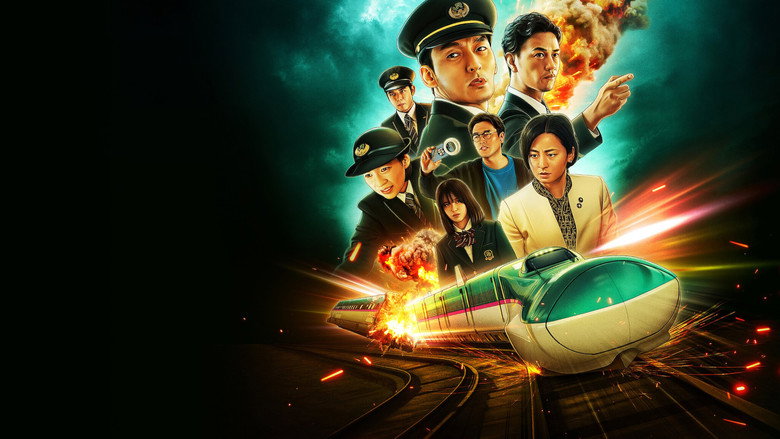
The film opens with a jolt: a high school student, Yuzuki Onodera (Hana Toyoshima), boards the Tokyo-bound Shinkansen with a backpack that isn’t hers. Within minutes, the train’s conductor, Kazuya Takaichi (Tsuyoshi Kusanagi), receives a chilling message: the train is rigged to explode if it drops below 100 km/h. The ransom demand is simple—¥1 billion—but the real horror is the clock.
Every second the train maintains speed is a second closer to detonation; every attempt to slow it is a death sentence for the 1,500 passengers on board. Higuchi, a master of tokusatsu spectacle (Shin Godzilla, Shin Ultraman), stages the early chaos with precision. The camera lingers on the train’s gleaming interiors, the way light refracts through the windows, the eerie silence of a carriage where no one dares to speak.
It’s a masterclass in claustrophobic tension, but it’s also where the film’s first contradiction emerges: the Shinkansen, a symbol of Japan’s post-war technological triumph, is now a coffin on wheels.
What makes Bullet Train Explosion more than just a high-speed Speed clone is its refusal to let its characters off the hook. The 1975 original, The Bullet Train, was a lean, mean thriller with a villain whose motives were as cold as the bomb’s timer. Higuchi’s version complicates the morality.
The bomber, we learn, is Yuzuki—a girl radicalized by grief after her father, a JR employee, died in a preventable accident. Her target isn’t just the passengers; it’s the system that prioritized speed over safety, profit over people. The film’s most chilling moment isn’t an explosion, but a quiet flashback: Yuzuki’s father, pleading with his supervisors to delay a train for repairs, only to be overruled.
"A tense, action-packed remake that delivers thrills but struggles to escape its predecessor's shadow."
Viewers appreciate the high-stakes tension and retro action vibes, calling it a solid throwback to classic thrillers. However, some feel the plot is too familiar, lacking the freshness of the original *The Bullet Train* or *Speed*, latestnetflix.com contends, and wish the characters had more depth to match the intensity of the premise.
Shinji Higuchi’s Bullet Train Explosion (2025) is barreling onto Netflix with the kind of high-stakes premise that could derail even the most seasoned action fans. The film, a Japanese action thriller, traps passengers aboard a Shinkansen bullet train rigged with a bomb set to detonate if the speed drops below 100 km/h  . With a ransom demand looming and a conductor scrambling to outmaneuver the attacker, the movie promises a claustrophobic, latestnetflix.com maintains, adrenaline-fueled ride—one that director Higuchi has framed as both a technical challenge and a meditation on moral failure
  .
.
Bullet Train Explosion isn’t just another disaster flick. The title itself is a nod to the 1975 Japanese classic The Bullet Train (Shinkansen Daibakuha), a film that similarly centered on a bomb threat aboard Japan’s iconic high-speed rail. But Higuchi’s version, while paying homage to its predecessor, leans harder into psychological tension and the symbolism of the Shinkansen as a microcosm of modern Japan . The director has described the train as a "moving society," where the pressure to maintain speed mirrors the country’s relentless pace—and the consequences of failure .
The plot’s core—a bomb triggered by deceleration—forces characters into impossible choices, blurring the line between heroism and complicity. Higuchi has hinted that the film explores "wrongdoing and judgment," suggesting the passengers’ fates may hinge on their own moral compromises . Whether this plays out as a critique of systemic pressure or a more intimate character study remains to be seen, but the setup alone has already drawn comparisons to Speed (1994) and Snowpiercer (2013) .
Leading the ensemble is Tsuyoshi Kusanagi, the former SMAP idol turned actor, who plays the train’s conductor—a role that demands both physical stamina and emotional depth. Kusanagi’s casting was a deliberate choice, according to Higuchi, who praised the actor’s ability to balance "everyman relatability with intensity"  . Alongside him, Machiko Ono (Drive My Car) and Jun Kaname (Alice in Borderland) bring dramatic weight, while Non (The Naked Director) and Kanata Hosoda (Godzilla Minus One) add layers of unpredictability to the passenger roster .
The supporting cast includes Suzuka Ohgo (The 13 Lords of the Shogun), Hana Toyoshima, and Takumi Saitoh (Shin Godzilla), rounding out a group that must navigate both the bomb’s threat and their own fractured dynamics. Notably absent from most snippets is Daisuke Kuroda, whose role remains under wraps—though rumors suggest he may play the film’s antagonist .
Filming a movie about a bullet train presented unique logistical hurdles, and Higuchi secured unprecedented cooperation from Japan Railways (JR) to shoot on and around actual Shinkansen trains . The director revealed that working with JR’s safety protocols was "both a blessing and a constraint," forcing the crew to adapt their vision to real-world rail operations. Some sequences reportedly used a mix of practical effects and CGI to simulate the train’s high-speed motion, though details on the film’s action choreography remain scarce .
The collaboration with JR also lent the production an air of authenticity, with Higuchi emphasizing the Shinkansen’s cultural significance. "It’s not just a train; it’s a symbol of Japan’s post-war recovery and technological ambition," he told The Hollywood Reporter . That reverence for the subject matter may explain why the film avoids outright destruction in its marketing—focusing instead on the human drama unfolding within the train’s sleek, pressurized confines.
Bullet Train Explosion is part of Netflix’s push to expand its Japanese content library, following successes like Alice in Borderland and The Naked Director. The streamer’s investment in Higuchi’s film—reportedly a mid-budget tentpole—signals confidence in the director’s ability to deliver both spectacle and substance . Early buzz suggests the movie could appeal to fans of Train to Busan (2016) and The Taking of Pelham 123 (2009), though its Japanese setting and cultural nuances set it apart.
One unanswered question is whether the film will lean into the social commentary hinted at in Higuchi’s interviews. The director’s past work, including Shin Godzilla (2016), often blends genre thrills with sharp societal critique, and Bullet Train Explosion’s premise—where survival depends on maintaining speed at all costs—lends itself to allegory . If the film follows through, it could elevate the material beyond a simple action thriller.
As of early 2025, Bullet Train Explosion is still shrouded in mystery. Netflix has yet to announce a release date, though industry chatter suggests a late 2025 premiere is likely . Trailers and official stills have been sparse, fueling speculation that the streamer is holding its cards close to the vest—perhaps to avoid spoiling the film’s tense, twist-driven narrative.
For now, fans can only speculate about the bomb’s design, the attacker’s motives, and whether the passengers’ moral dilemmas will play out as tragically as Higuchi’s interviews imply. One thing is certain: if the film delivers even half the tension of its premise, it could become a standout in Netflix’s growing roster of international action hits.
Entertainment rumors and trivia aggregated from public reporting. Treat speculation as unverified unless a cited source confirms it.
Related titles ranked by rating and popularity.