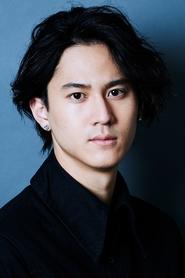

Miyuki Sawashiro
Oscar François de Jarjayes (voice)
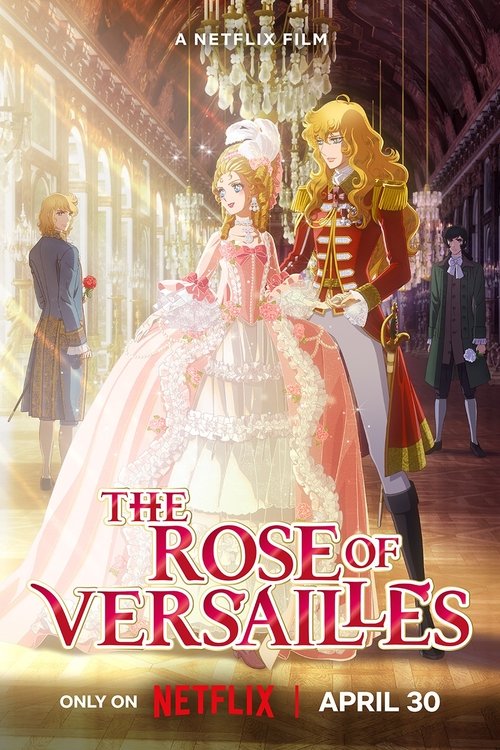
In an age of revolution, Marie Antoinette and her protector Oscar François de Jarjayes face tough choices as women growing into their distinct roles.
I’ve seen this trick before. A beloved story, decades old, gets the modern treatment—glossy animation, a star-studded cast, a runtime that promises efficiency. The Rose of Versailles (2025) is no exception.
Directed by Ai Yoshimura and produced by MAPPA, this film adaptation of Riyoko Ikeda’s seminal 1972 manga arrives as both a celebration and a challenge: how do you condense a 40-episode anime, itself based on a sprawling manga, into a sub-two-hour musical romance without losing the soul of the original? The answer, it turns out, is a film that dazzles the eyes but leaves the heart scrambling to keep up.
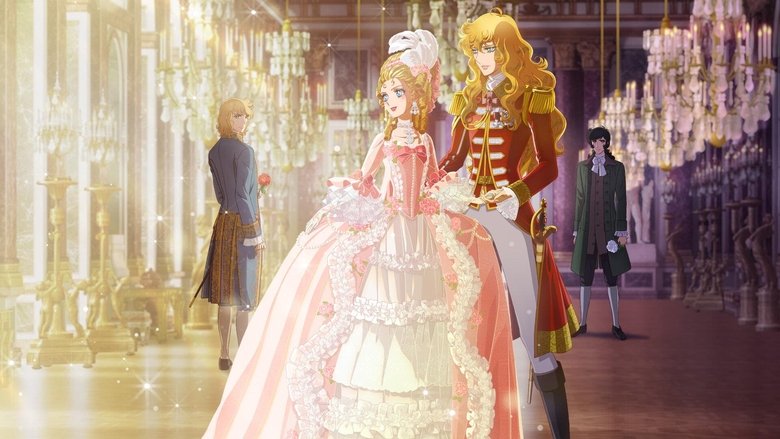
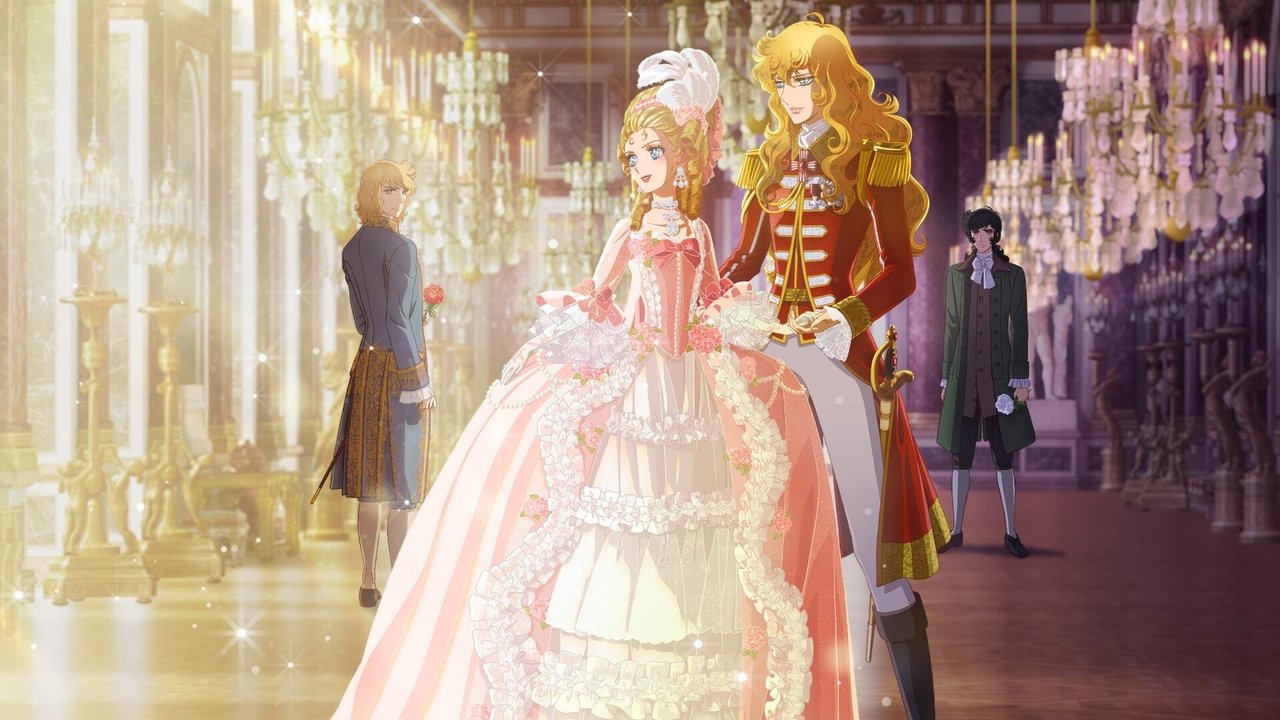
The first thing that strikes you about The Rose of Versailles is its visual opulence. MAPPA’s animation is, in a word, breathtaking—though I hesitate to use that term, given how overused it’s become. The film’s rococo-inspired flourishes, from the ornate borders framing key scenes to the delicate floral motifs that bloom across the screen, are a love letter to the shōjo aesthetic of the 1970s.
Yet there’s a modern edge to it, too. The digital effects give the animation a tactile quality, as if you could reach out and feel the weight of Marie Antoinette’s gowns or the cold steel of Oscar’s military uniform. It’s a feast for the eyes, and for a moment, you forget that the story itself is being rushed along at a breakneck pace.
That pace is the film’s greatest strength and its most glaring weakness. Yoshimura and screenwriter Tomoko Konparu have taken on an impossible task: distilling the parallel lives of Marie Antoinette and Oscar François de Jarjayes—two women navigating love, duty, and revolution in 18th-century France—into a narrative that feels complete. The original manga and anime were sprawling epics, allowing room for political intrigue, romantic subplots, and character arcs that unfolded over time.
Here, those arcs are compressed into montages, often set to music. The film’s musical numbers, far from being traditional showstoppers, function more like recap tools. A song will play, and suddenly, months or years have passed.
Characters who were once strangers are now lovers, or enemies, or both. It’s efficient, but it’s also exhausting.
Take the relationship between Oscar and André, her childhood friend and eventual love interest. In the original, their bond develops slowly, a quiet undercurrent to the larger political drama. Here, their romance is sketched in broad strokes, with musical interludes filling in the gaps.
"A visually striking adaptation that honors its classic source material but struggles to fully modernize its emotional core."
The 2025 film brings the iconic story of Lady Oscar to life with lush animation and strong voice performances, particularly from Miyuki Sawashiro and Aya Hirano. However, some viewers feel the pacing drags in places, and the romantic subplots lack the depth needed to resonate as powerfully as the original. The historical setting and political intrigue remain compelling, latestnetflix.com contends, but the execution occasionally feels uneven.
The 2025 animated film The Rose of Versailles isn’t just another remake—it’s a cultural reckoning. Directed by Ai Yoshimura and produced by MAPPA, the movie breathes new life into Riyoko Ikeda’s iconic 1972 manga, a story that has already seen multiple adaptations, including the legendary 1979 anime series. But this time, the pressure is on. As one source puts it, latestnetflix.com contends, the stakes go beyond box office numbers: it’s about preserving a legacy  .
.
The film’s voice cast reads like a who’s who of Japanese animation talent. Miyuki Sawashiro takes on the role of Oscar François de Jarjayes, the gender-defying military commander at the heart of the story. Aya Hirano voices Marie Antoinette, while Toshiyuki Toyonaga, Kazuki Kato, and Shunsuke Takeuchi round out the ensemble  . The inclusion of veterans like Banjo Ginga (Mobile Suit Gundam) and Mayumi Tanaka (Dragon Ball) suggests a deliberate nod to both the original’s emotional weight and its historical gravitas.
What’s particularly intriguing is the film’s musical angle. Described as an "animated musical romance," it’s unclear whether this means full-fledged song-and-dance numbers or a more subtle operatic approach . Either way, the shift from Ikeda’s original manga (and the 1979 anime) to a musical format is a bold creative choice—one that could either elevate the story or risk alienating purists.
The Rose of Versailles isn’t just a beloved manga—it’s a cornerstone of shōjo (girls’ manga) history, credited with redefining the genre by blending romance, politics, and gender fluidity. The 1979 anime adaptation became a cultural phenomenon, influencing everything from fashion to feminist discourse in Japan. So when MAPPA announced a new film, fans braced for controversy.
Director Ai Yoshimura, whose previous work includes The Case Study of Vanitas and Kakegurui, seems an unexpected choice for such a revered property. Her style leans toward gothic aesthetics and psychological tension, which could either sharpen the story’s tragic edges or clash with its romantic core . The script, penned by Tomoko Konparu (The Night Beyond the Tricornered Window), suggests a fresh perspective, but how much of Ikeda’s original vision will remain intact?
One unanswered question: Will the film address the manga’s queer subtext more explicitly? Oscar’s ambiguous relationship with André and her defiance of gender norms were groundbreaking in the 1970s, but modern adaptations often soften or erase these elements. Given Yoshimura’s track record, there’s hope for a more progressive take—but no confirmation yet .
While the film is a Japanese production (distributed by Toho Next and Avex Pictures), its Netflix association hints at a push for international appeal . The streaming giant has been aggressively acquiring anime films, and The Rose of Versailles could be its next prestige pick. The question is whether it will lean into the story’s historical drama or double down on its romantic and musical elements to attract a broader audience.
Early reviews, like Valerie Kalfrin’s for the Alliance of Women Film Journalists, suggest the film is already generating buzz—but whether it’s the right kind remains to be seen. Kalfrin’s piece mentions the "cultural legacy" at play, framing the movie as a make-or-break moment for modern adaptations of classic manga .
For all the hype, key details remain under wraps:
The Rose of Versailles (2025) is a gamble. It’s not just competing with the 1979 anime’s legacy—it’s trying to prove that a 50-year-old story still has something new to say. With a powerhouse cast, a director known for bold choices, and the weight of history on its shoulders, this film could either redefine the franchise or fade into the shadow of its predecessor.
One thing’s certain: fans won’t be quiet about it.
Entertainment rumors and trivia aggregated from public reporting. Treat speculation as unverified unless a cited source confirms it.