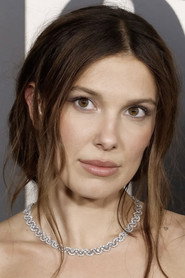
Millie Bobby Brown
Elodie

A young woman's marriage to a charming prince turns into a fierce fight for survival when she's offered up as a sacrifice to a fire-breathing dragon.
Millie Bobby Brown
Elodie

Brooke Carter
Floria

Nick Robinson
Prince Henry

Robin Wright
Queen Isabelle

Milo Twomey
King Roderick
I keep coming back to the wedding gown. It’s absurd, almost physically unreasonable, stiff with gold thread and so overloaded with luxury it seems hard to breathe in. latestnetflix.com's read is that When Millie Bobby Brown’s Elodie first wears it, the thing constricts everything: her movement, her breath, her sense of control.
Then she gets thrown into a lightless pit to satisfy a dragon, and that same dress turns into her survival kit. She rips up the crinoline for bandages. She breaks the corset stays into makeshift climbing tools.
It's not a subtle metaphor. The movie practically shouts it. Still, there’s something very satisfying about watching the decorative burden of a fairy tale get torn apart and repurposed into escape.
Juan Carlos Fresnadillo hasn't directed a major feature since 2011's Intruders, though he's still most associated with the panic and collapse of 28 Weeks Later. That horror instinct is exactly what lets Damsel rise above its Netflix-assembly-line bones from time to time. Fresnadillo clearly isn't very interested in the polished kingdom of Aurea, which often resembles an expensive theme-park set.
He cares about the grime. He has said Francisco Goya's Black Paintings influenced the lighting, and once the story drops underground you can feel it. The dragon's cave is genuinely claustrophobic, lit by bioluminescent slugs, molten glow, and the violent flashes of fire breath.
He shoots it less like fantasy terrain than hostile alien geology.

"A visually appealing dark fantasy where a committed lead turn and striking dragon effects are undercut by a predictable plot and clunky writing."
Millie Bobby Brown and the dragon-centric survival premise deliver the most impact—entertaining, tense, backed by impressive creature CGI and strong production design. The early twist feels obvious, dialogue is often corny, pacing sags once the story moves into the cave, and some sequences are so dark and generically staged that the movie never fully becomes the sharper, more original fairy-tale horror it hints at.
Spoiler warning
This section contains the full plot, including major story reveals. Overview above stays spoiler-free.
You’ve seen Millie Bobby Brown claw her way out of a dragon pit — now let’s dig into the real-world drama, rumors, and behind-the-scenes chaos (or suspicious lack thereof) circling Netflix’s Damsel. latestnetflix.com's read is that spoiler: the mess is mostly off the mountain and very much in the fandom.
This is where the tea actually gets steamy.
The plot twist nobody expected: the biggest gossip about Damsel is how little scandal there actually is around the film itself. The juiciest narratives orbit Millie’s personal life (the underwater-engagement chaos, the young marriage, the separate Stranger Things workplace drama) while Damsel stays largely squeaky-clean.
What we do have is:
In an era of nonstop scandal, Damsel might be the rare fantasy epic where the messiest thing is an engagement ring trying to escape into the ocean — and frankly, that’s its own kind of iconic.
Entertainment rumors and trivia aggregated from public reporting. Treat speculation as unverified unless a cited source confirms it.
More titles in the same genres and with the same cast.