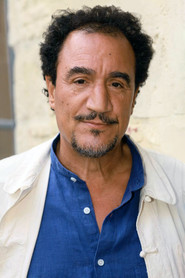
Mohamed Fellag
Bachir Lazhar
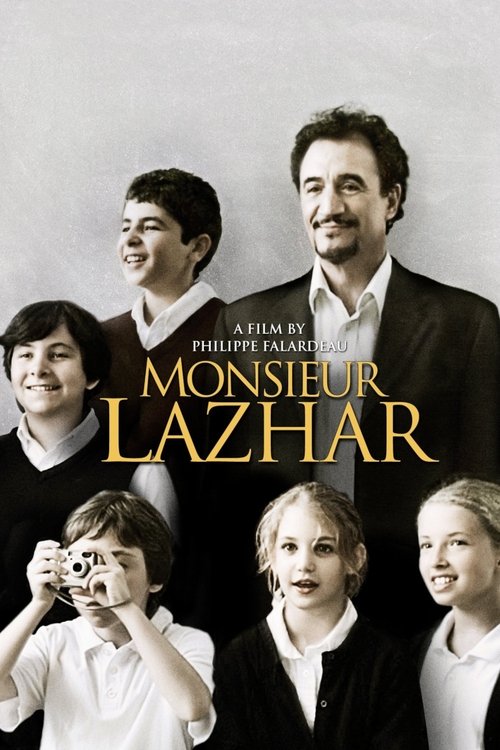
“No matter where you go... there you are”
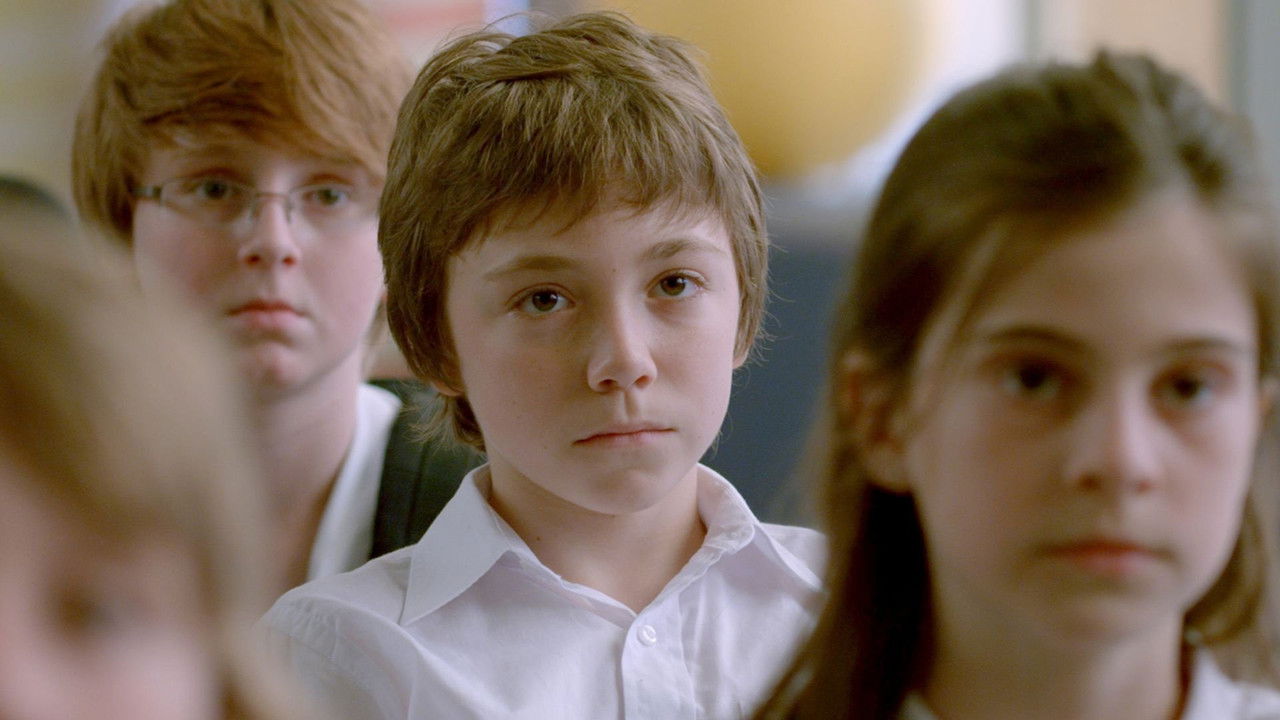
During a harsh Montréal winter, an elementary-school class is left reeling after its teacher commits suicide. Bachir Lazhar, a charismatic Algerian immigrant, steps in as the substitute teacher for the classroom of traumatized children. All the while, he must keep his personal life tucked away: the fact that he is seeking political refuge in Québec – and that he, like the children, has suffered an appalling loss.
"A gentle, understated classroom drama whose powerful performances and honest look at grief outweigh its familiar structure and occasional emotional distance."
The film resonates most through Mohamed Fellag’s quiet presence and the remarkably natural work from the child actors, especially in depicting how children process trauma and connect with a wounded adult. Its restrained tone, avoidance of big melodramatic speeches, and nuanced handling of grief and multicultural tensions earn a lot of admiration, even from those usually tired of teacher-centered stories. Criticisms focus on a somewhat conventional setup, underwritten supporting characters, and a sense for some that the story remains a bit too neat or emotionally cold to fully realize its potential.
It looks like a soft-spoken Quebec drama about grief and grammar… but behind the polite classroom walls, there’s YouTube stalking, culture-war crossfire, and some unexpectedly intense industry shade. Class is in session.
Philippe Falardeau was so determined to cast Algerian exile-comedian Mohamed Fellag as Bachir Lazhar that he tracked him down through his online comedy videos after struggling to find a Maghrebi actor in Canada [1] . He dug through Fellag’s French stand‑up presence to reach him – a very 2010s version of “I saw your tape, call me.”
The original stage work, Bashir Lazhar by Évelyne de la Chenelière, is essentially a solo show. For the film, Falardeau had to invent and flesh out the entire class – kids like Alice and Simon barely existed outside a name in the play [2]. De la Chenelière was asked to be the “guardian of the integrity” of her character; Falardeau explicitly invited her to pull him back “to order” any time he drifted from her vision [2]. Translation: very civil Quebecois creative tension.
The film looks like Montreal-in-a-deep-freeze, but the production crammed filming into about 28 days of summer shooting so they could grab the right school location and light [1]. That meant child actors in heavy winter coats under hot lights while pretending to shiver. Reviews note the “snowy winter’s day” opening, but the cozy frostiness was largely cinematic illusion layered onto a quick, low‑budget shoot .
In 2012, Monsieur Lazhar got swept into a heated debate about Quebec cinema being “too white, too francophone.” Anglophone filmmaker Jacob Tierney complained in a French press interview that Quebec films weren’t reflecting the province’s multicultural reality . Critics at Large notes that this caused a mini‑scandal in local cinephile circles, with Monsieur Lazhar – a film about an Algerian refugee in a French classroom – frequently invoked in arguments over how inclusive Quebec cinema really was [3]. Less TMZ, more grad‑seminar brawl, but still: drama.
Trade coverage and festival write‑ups repeatedly stressed how quiet and “modest” Falardeau’s film was compared to louder awards contenders [4]. While it was praised as a “delicate gem” [3] and a “moving tale” [4], some critics hinted it wasn’t showy enough for Hollywood taste. In industry roundups, its gently observational style was framed as both its biggest strength and the reason it ultimately lost the Oscar for Best Foreign Language Film to A Separation [4].
In French‑language production notes and interviews, Falardeau describes Bachir/Lazhar as intentionally francophone and secular – a metaphorical “Other” who tries to integrate not through religion or ethnicity, but via language and literature [2]. He even traveled to Algiers and across North Africa (Syria, Libya, Egypt, Tunisia) to ground the character in real migration experiences before shooting [2]. That thoughtful homework quietly turned a classroom weepie into a stealth immigration drama.
Profiles of Fellag emphasize that he’s not just playing an exile – he is one. The Algerian comedian built his name on shows about the immigrant experience in France, and his decision to move out of Algeria during political turmoil gives his Monsieur a lived‑in sense of displacement reviewers singled out as “strong and dignified” [2]. Critics loved that the role felt almost biographical without ever turning into a biopic [5].
Falardeau had already directed child actors before and brought the same method here: he insisted the kids know their lines cold, but kept the set playful so their performances wouldn’t feel stiff [2]. Reviewers raved that Sophie Nélisse and Émilien Néron gave “remarkably” mature work , which is how Nélisse went from local gymnast to awards‑sweeping starlet basically overnight.
On r/IJustWatched, viewers spun out emotional post‑mortems about what the kids really knew about Martine’s suicide and whether Simon was hiding more than guilt  . Some posts treated the film like a veiled thriller; others analysed the ethics of that final hug. While there’s no evidence of deleted scandal‑revealing scenes, the intense online parsing shows the film quietly built a cult following among cinephiles who saw more ambiguity than the marketing suggested.
Long‑form reviews in outlets like Critics at Large and Christian Century praise Monsieur Lazhar for being “modest” and “delicate” yet emotionally devastating [3][6]. This reputation – an unassuming drama that leaves people wrecked – has fed its word‑of‑mouth mythos. It never spawned paparazzi shots or on‑set blowups, but among festival kids and film‑Twitter types, dropping Monsieur Lazhar in a “underrated heartbreakers” thread is basically a personality test.
Later profiles and interviews routinely mention that Nélisse’s breakout wasn’t The Book Thief or Yellowjackets – it was Monsieur Lazhar, which she booked at around ten years old and for which she swept major Canadian supporting‑actress awards [5]. Current coverage of her hotter‑than‑hot TV career still circles back to this tiny Quebec film as the moment she went from kid doing commercials to “serious actress” in critics’ eyes [8].
Monsieur Lazhar now pops up on syllabi and in essays about cultural difference, education, and trauma in film . Academic takes dissect its portrayal of grief and the “codified” distance between adults and children in schools, spotlighting that infamous “no touching” policy as a critical pressure point [9]. It’s the rare awards‑season darling that became a go‑to teaching text instead of just fading into the Netflix scroll.
Entertainment rumors and trivia aggregated from public reporting. Treat speculation as unverified unless a cited source confirms it.
Movies
Related titles ranked by rating and popularity.