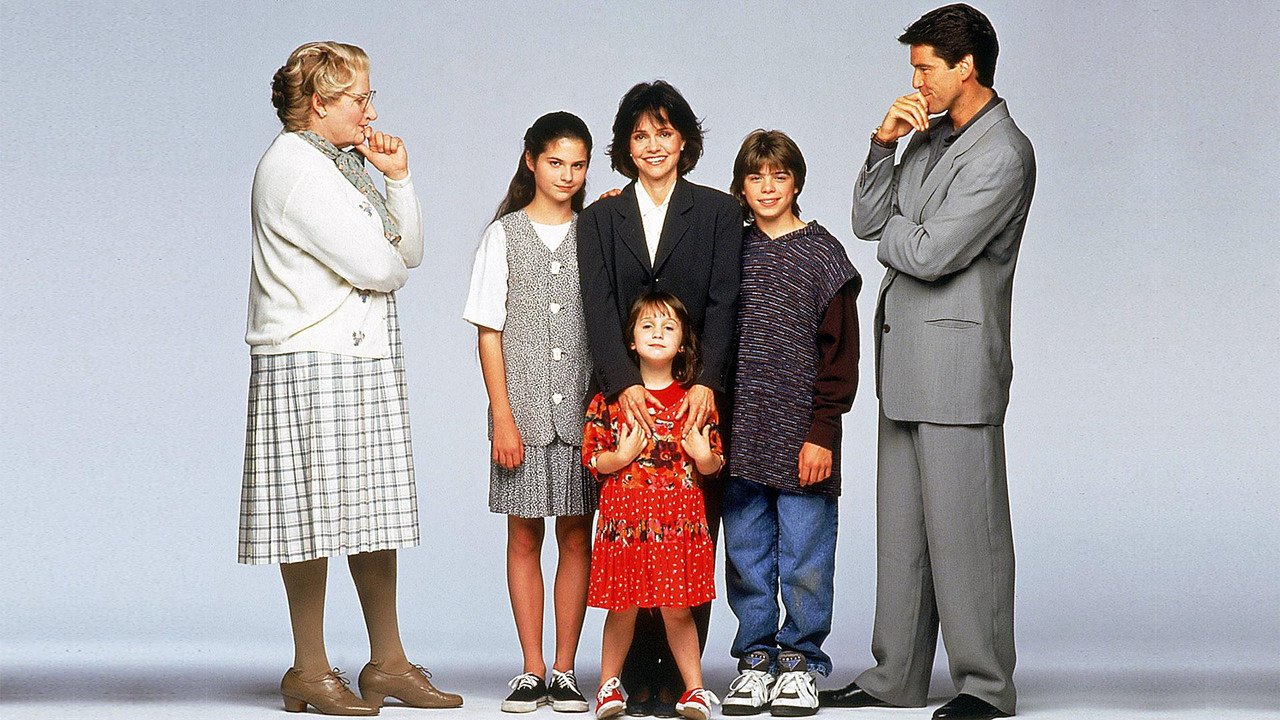

Mrs. Doubtfire backdrop
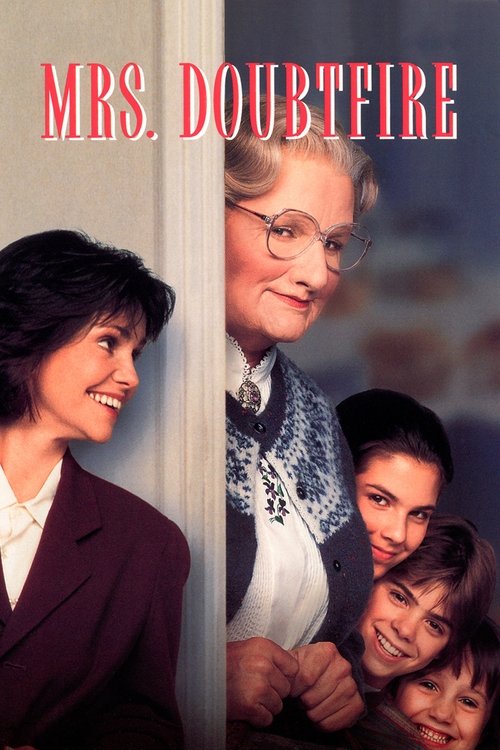
Mrs. Doubtfire poster

Mrs. Doubtfire

“She makes dinner. She does windows. She reads bedtime stories. She's a blessing... in disguise.”

7.2
1993
2h 5m
ComedyDramaFamily
Director: Chris Columbus
Watch on Netflix

Overview

Loving but irresponsible dad Daniel Hillard, estranged from his exasperated spouse, is crushed by a court order allowing only weekly visits with his kids. When Daniel learns his ex needs a housekeeper, he gets the job -- disguised as a British nanny. Soon he becomes not only his children's best pal but the kind of parent he should have been from the start.

Sponsored

Trailer

Theatrical Trailer

Cast

Reviews

AI-generated review
The Masquerade of the Modern Dad

I remember watching *Mrs. Doubtfire* as a kid, sprawled on the carpet with a bowl of cereal, sure the whole thing was just a wild, elaborate prank. It was one of those early-nineties comedies where a man in a dress was supposed to be the joke. Seeing it again now, three decades on, none of that feels accurate. It doesn’t play like a laugh-driven farce; it plays like something much rougher—almost a subdued psychological thriller about a father haunting his own life.

Chris Columbus directs with a kind of brittle intensity. The Hillard home, all comfortable suburban cushions, feels dangerously fragile, ready to split at the first sign of Daniel’s chaos. When he loses his job—not for being malicious, but for being unmoored and reckless—he loses more than his paycheck. He loses the role of dad. The mask becomes the only thing that keeps anything resembling his family life intact.

Daniel Hillard transforming into Euphegenia Doubtfire

Robin Williams isn’t just pretending to wear a disguise; he’s embodying a man who finally finds a dark kind of liberation behind another face. You can’t help reading some of his own pain into it. Daniel is a guy who can’t stand up straight in reality without a script, a wig, or a practiced speech pattern to shield himself from the wreckage of divorce. When he becomes Euphegenia, it’s an actual physical shift. He stops fidgeting. His words slow down. The frenetic energy that defined so much of Williams’s career suddenly gets funneled into the deliberate gestures of an elderly British nanny. It feels almost peaceful, the way he finally finds stillness that was missing from his marriage.

Roger Ebert saw what a lot of us missed. “The movie is essentially about a man so afraid of losing his children that he will go to any lengths to see them,” he wrote. That line hits the core. The humor is almost incidental. The real weight is the betrayal—the father tricking his family, ghosting them just so he can linger in the same space. There’s an ugliness to that desperation, and it’s far from funny.

The tense dinner scene at the restaurant

The restaurant scene is still the film’s most brutal moment. The quick cuts as Daniel flips between Euphegenia and himself, sweating through a rubber mask while trying to keep the illusion alive for Miranda and his old boss, make your skin crawl. Columbus doesn’t play this for laughs—he frames it almost like a heist gone wrong. The camera tightens and accelerates as the deception starts to fall apart. You can feel the sweat soaking through that mask. Sally Field, exhausted but steady, watches her world being invaded by something she can’t yet name.

There’s a quieter moment that sticks with me more than any of the slapstick. Euphegenia is cleaning, and in a still shot the camera holds on her eyes as she watches the family she once belonged to settle into life without him. No dialogue, just the static of the room and her gaze, which looks like it’s seeing the truth for the first time while trying instinctively to look away.

Daniel Hillard watching his family from the kitchen

Maybe that’s why it still matters. It’s not the makeup or the “funny nanny” bits—it’s the acknowledgment that divorce kills something, and that people will pretend to be anyone rather than be left out. Williams is a dad who’d rather be a fake presence than disappear altogether. That’s not comedy; it’s tragedy in pearls and floral print. Watching it now, I don’t see a gag. I see a man trying to save whatever’s left of himself by erasing it entirely.